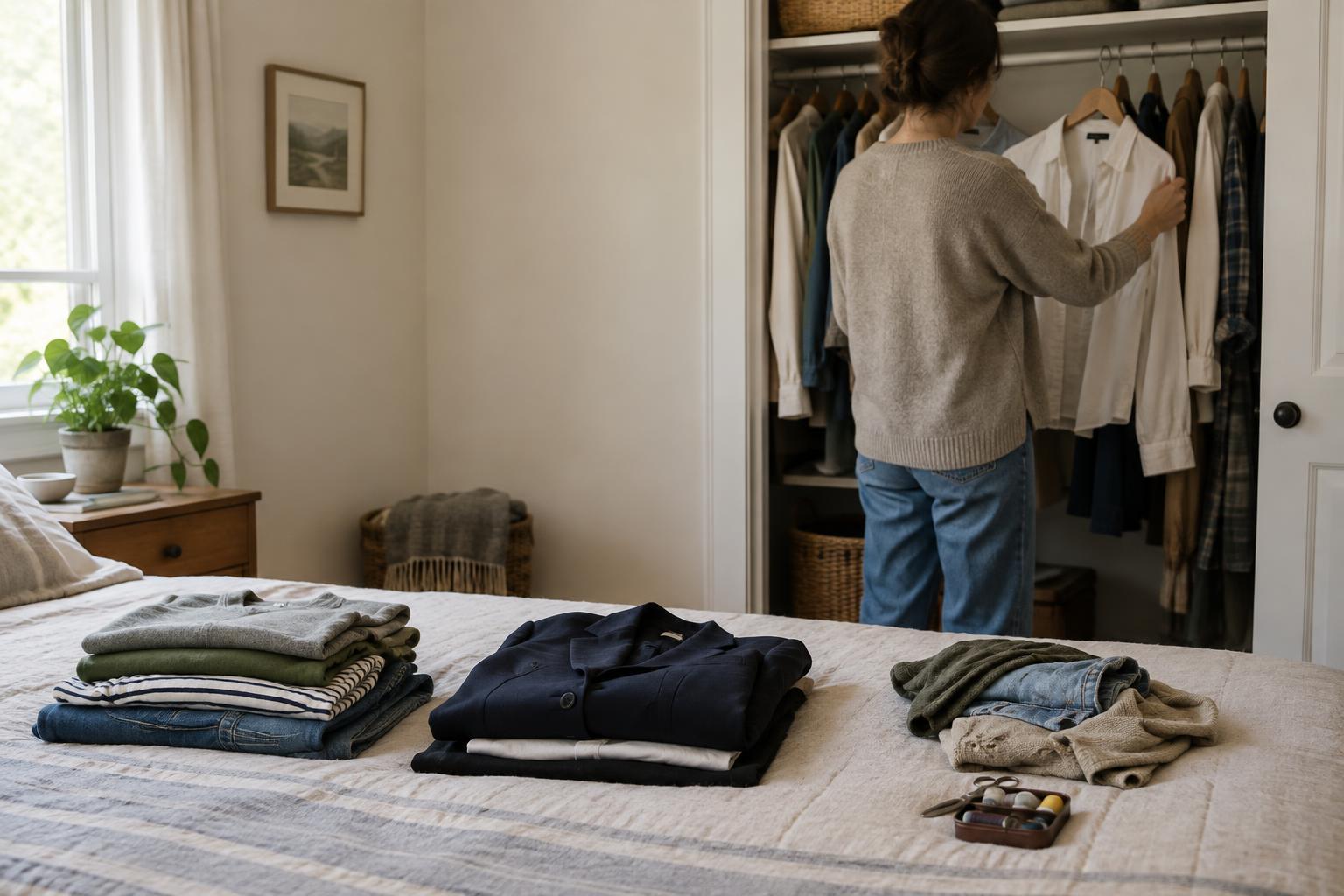
Look beyond the care label
A care label tells you how a garment is meant to be cleaned, but not whether that process fits your life. An item that needs hand washing, careful drying, pressing, or a trip to a cleaner may be easy for one person to maintain and burdensome for another. The useful question is not whether the garment is objectively high-maintenance. It is whether you can care for it consistently without turning each wear into a chore.
Start with what happens after you take it off. Does it go into your usual laundry basket, or sit on a chair because it needs a separate wash? Does it require drying space you rarely have? Is it comfortable to wear as it is, or do you leave it unworn because it needs ironing first? The gap between your intended routine and your actual routine often explains why a garment stays in the closet.
Count the effort of each wear
Think of care as part of a garment's everyday cost in time, attention, space, and supplies. A sweater that dries flat might need a clear surface for a day or more. A shirt that creases easily might need pressing before you can leave the house. A delicate piece may require you to sort it separately and remember where to put it when the wash is done. None of these tasks is necessarily unreasonable, but several together can make an item hard to reach for.
Frequency matters too. Extra care for an occasional outfit may feel manageable; the same care for a shirt you hoped to wear every week may not. Ask how many times you have worn the item recently, what stopped you on days you considered it, and what you would need to do before wearing it again. Be honest about your capacity rather than planning around an ideal version of your routine.
Try a realistic care routine before deciding
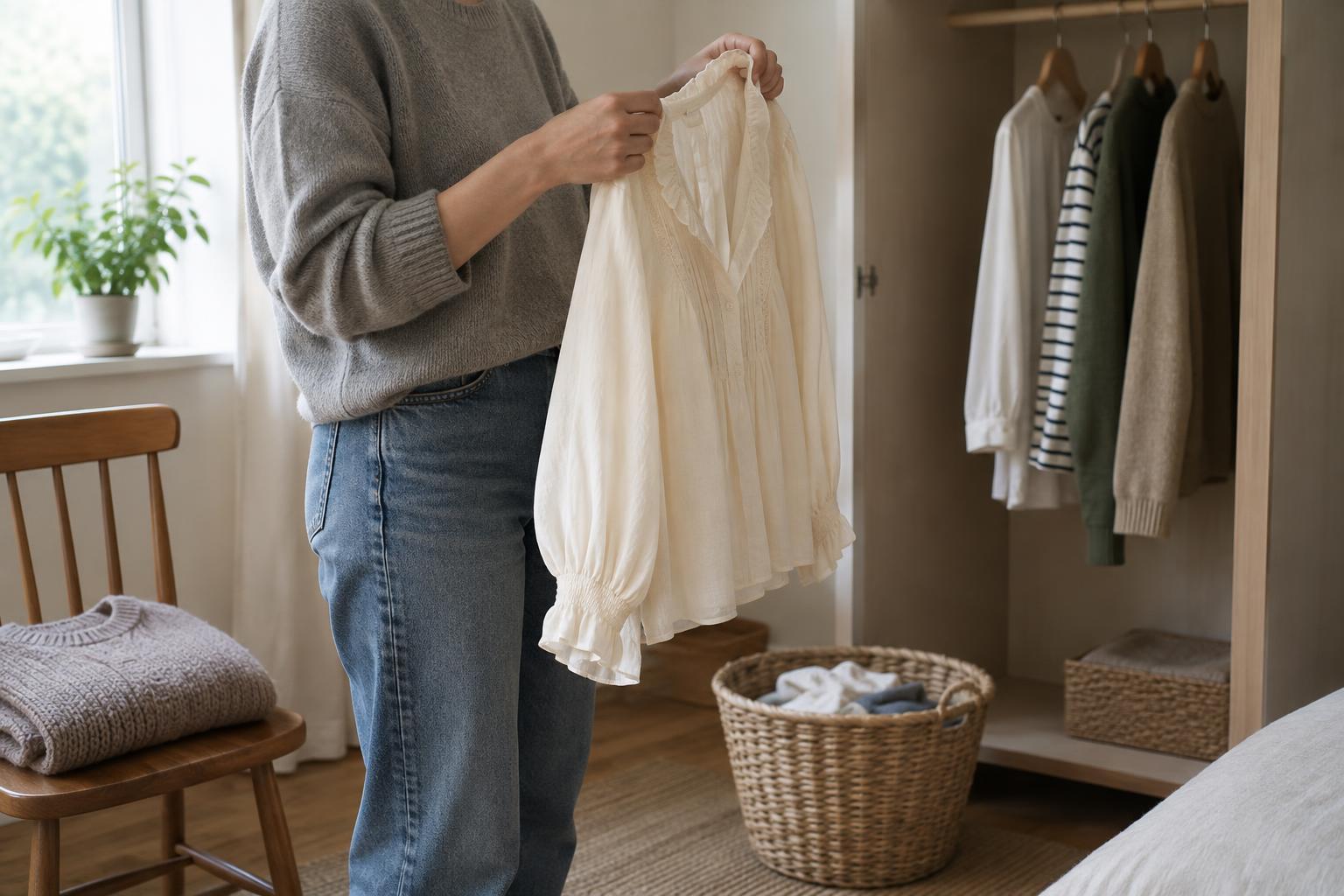
If you like the garment, look for a simpler routine that still respects its care instructions. You might wear a washable layer underneath, air it between suitable wears, spot-clean a small mark when appropriate, or group similar delicate items into one laundry session. Check the label before changing how you wash or dry it; an easier method is only useful if it does not put a valued garment at unnecessary risk.
Give the revised routine a short trial. Put the garment where you can see it, choose a suitable occasion to wear it, and follow through on the care afterward. Notice whether the process feels straightforward or whether the item ends up waiting in a pile again. A trial tells you more than a promise to be more organized. It can also reveal a specific obstacle, such as a missing drying rack or a repair that needs attention.
Decide what earns a place in your wardrobe
Care requirements are one factor, not a rule that every garment must be easy to wash. You may gladly make room for an item you wear often, love, and can maintain. You may also decide that a beautiful piece is not worth the repeated effort. Consider whether it serves a distinct purpose, whether you have easier alternatives, and whether keeping it supports the wardrobe you actually use.
It is reasonable to keep a small number of special-care items if you have a clear plan for them. Give each one a place to hang or fold, and make sure you know what its next care step is. If an item needs cleaning before it can be stored or passed on, deal with that step rather than leaving the decision half-finished. The goal is not a wardrobe with no upkeep; it is one whose upkeep you can handle.
Let an item go with care, then shop with that lesson
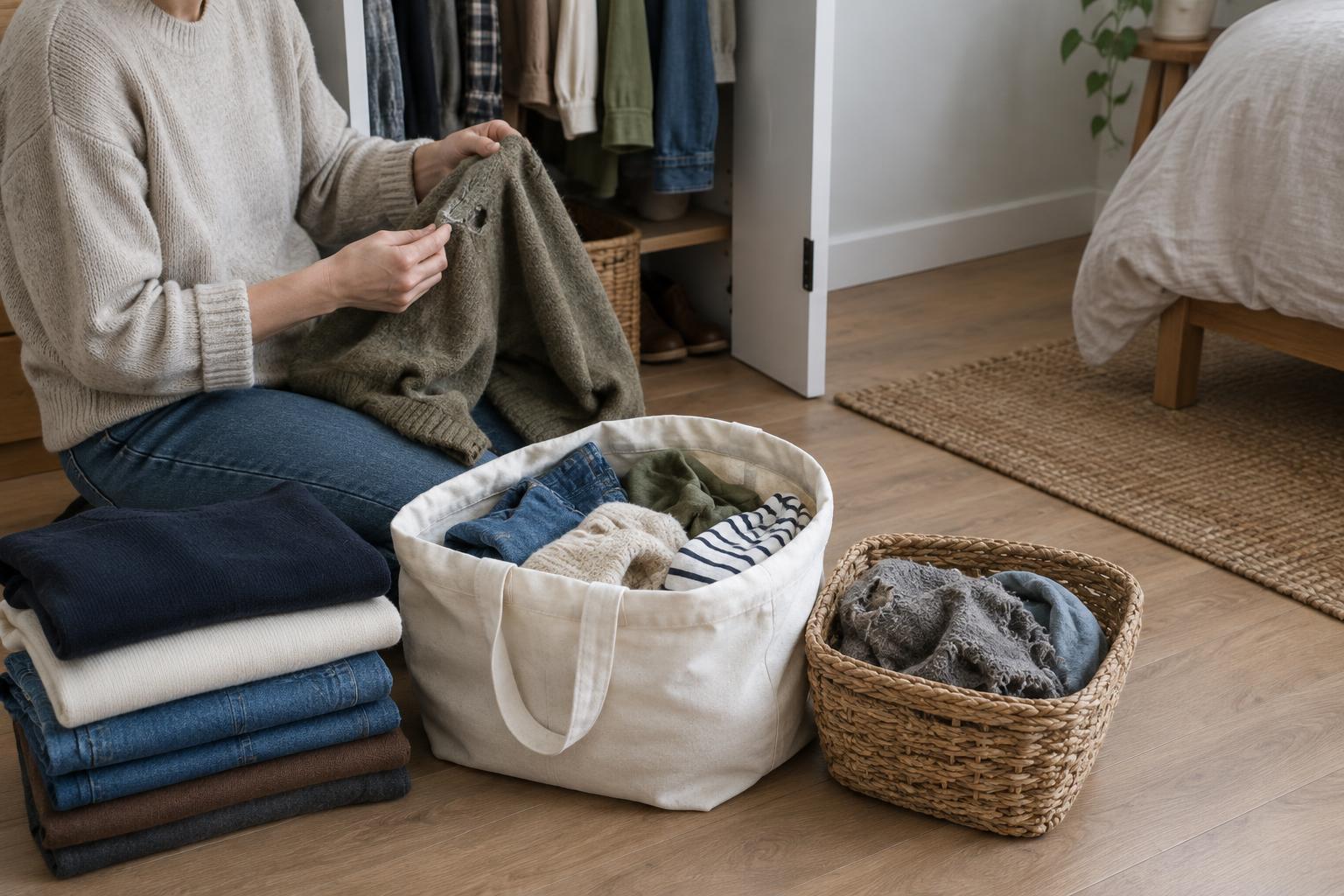
If a garment no longer fits your routines, consider offering it to someone who may enjoy caring for it. If it is clean and in wearable condition, a secondhand shop, clothing swap, or direct handoff may be appropriate. Be clear about care needs and any flaws. If it needs repair, decide whether you will do that first; otherwise, look for a suitable textile collection option where available rather than assuming an unwearable piece can be donated for resale.
Use what you learned the next time you consider buying clothes. Read the label before checkout, feel whether the fabric seems prone to creasing or snagging, and picture the item on laundry day—not just on the day you wear it. Secondhand finds deserve the same check. Passing on a tempting piece whose upkeep does not fit your life can prevent another seldom-worn item from entering your closet.