Start with the condition, not the destination
When you edit a wardrobe, it is tempting to make one large pile labeled “get rid of.” A more useful first step is to look at each item closely. Is it clean and wearable? Does it need a small repair? Is the fabric badly worn, stained, or damaged? The answers matter more than where you originally hoped the item would go.
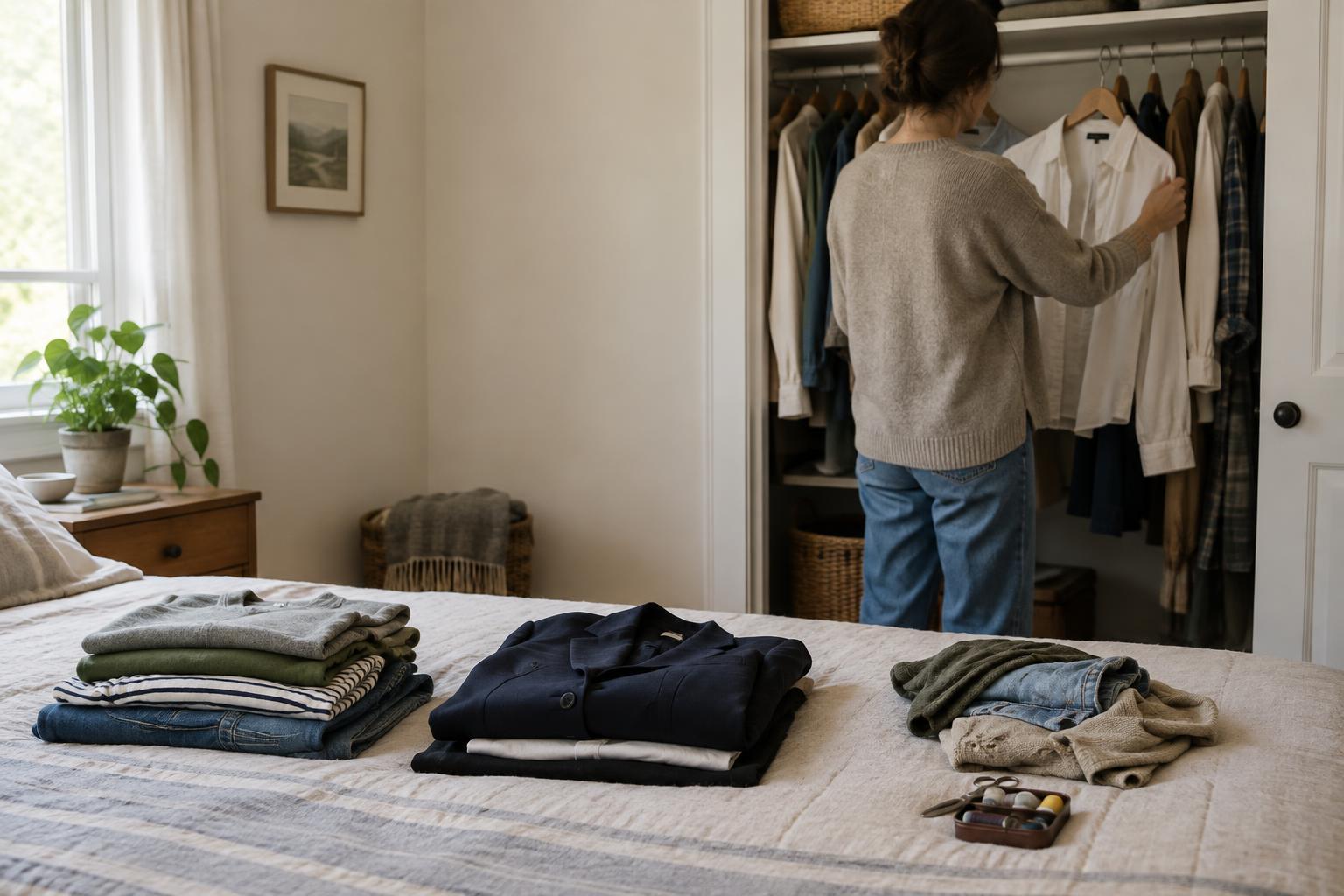
Set aside clothes you still use, including pieces that serve a specific purpose even if you wear them rarely. Put repairable items in a separate, manageable pile. A loose button or open seam may be worth fixing if you like the garment and expect to wear it afterward. If you have postponed the same repair for a long time, decide whether you will do it soon rather than letting it return to the closet indefinitely.
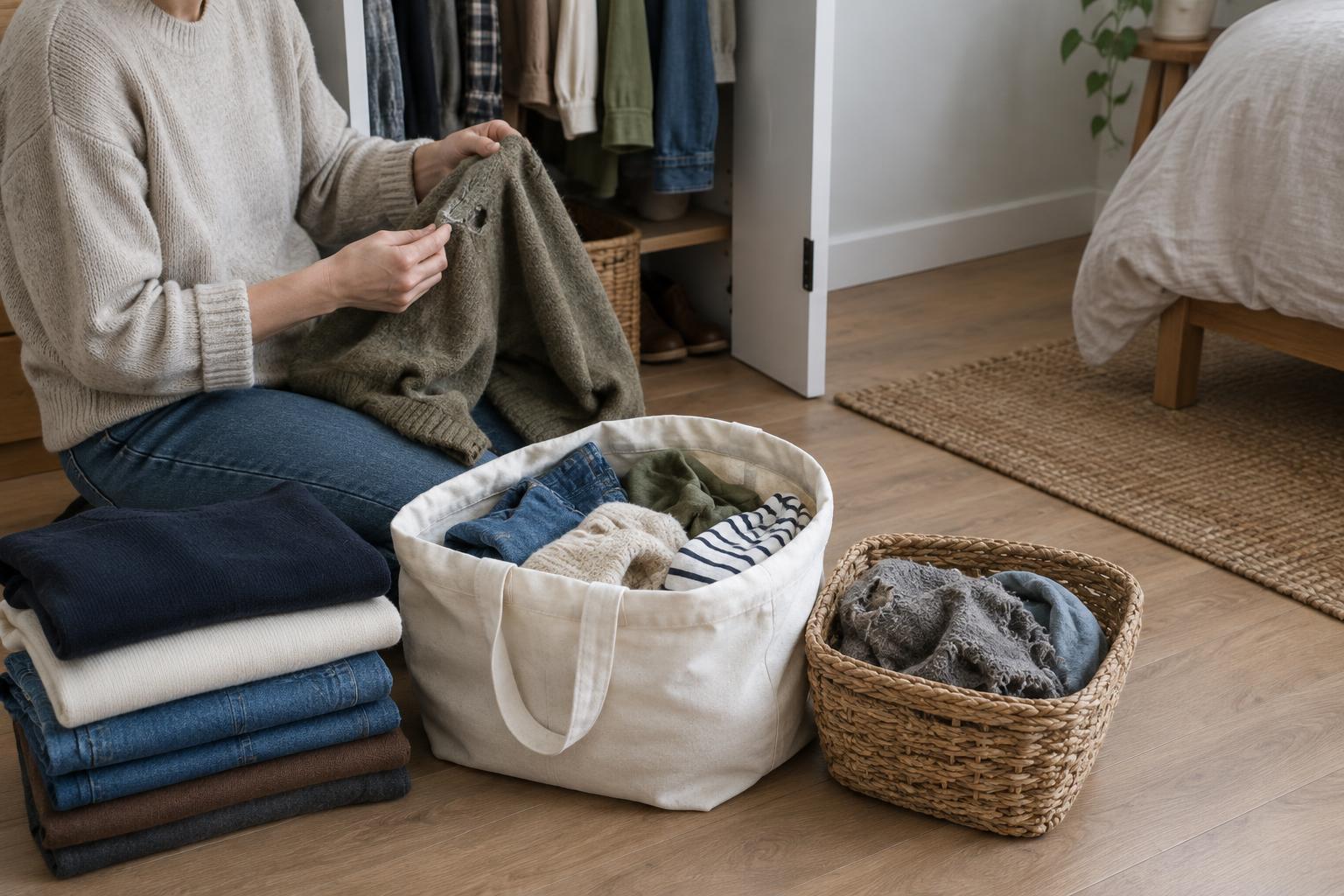
For everything else, make three groups: wearable items you might resell, wearable items you would rather give away, and textiles that are no longer suitable to wear. This simple sort helps you choose a next step without treating every unwanted piece as equally useful to someone else.
Resell items when the effort makes sense
Resale can work well for clothes in good condition that someone is likely to seek out, such as a well-made coat, a nearly new pair of shoes, or a recognizable style with a clear size. Before listing an item, check it for flaws, wash it according to its care label, and describe its condition honestly. Clear photos and useful measurements help a buyer decide whether it will fit their needs.
Consider the time involved as well as the possible return. Photographing, messaging, packing, and arranging a handoff can be worthwhile for some pieces but burdensome for a bag of inexpensive basics. A consignment shop may handle parts of the process, though its acceptance rules and payment terms will differ. Choose a route you can realistically follow through on.
Give yourself a deadline for unsold items. If a piece has sat in a listing for weeks and you do not want to adjust the price or try another venue, move it to the donation pile if it remains wearable. The goal is to put the clothing back into use, not to create a second wardrobe made of things you are waiting to sell.
Donate clothes someone can actually wear
Donation is a good option for clean, functional clothing you do not want to sell. Check pockets, fasten closures, and make sure paired items stay together. A quick wash and careful bagging can make the handoff easier. Avoid donating pieces with heavy stains, persistent odors, extensive wear, or damage that makes them unusable unless an organization specifically says it accepts them.
Before dropping off a bag, check the recipient’s current guidelines. Charities, community groups, and clothing exchanges may accept different types of items, sizes, or seasonal clothing. If you have a particular organization in mind, its stated needs should guide what you bring. Giving an item directly to someone who wants it can also be a straightforward way to keep it in circulation.
Donation is not a guarantee that every piece will find a wearer. Sorting costs time and space for the receiving group. Be selective rather than using a donation bin as a way to avoid deciding whether an item is still usable.
Use textile recycling for worn-out pieces, where available
Clothes that are too worn to resell or donate may have another route through a textile collection program. Rules vary: one collector may accept torn clothing and household linens, while another may take only specific fabrics or items in a particular condition. Look for local instructions and follow them rather than assuming that any bag labeled “textile recycling” can take everything.
Keep textiles dry, and check whether the program excludes items contaminated with paint, oil, or other substances. Do not put clothes in a standard recycling bin unless your local service explicitly permits it; those bins are generally meant for other materials. If no suitable collection option exists, a worn cotton shirt might serve as a cleaning rag before disposal, but keeping every scrap is not necessary.
Recycling is a useful possible outlet, not a reason to buy more than you need. Materials and construction can affect what a program can process, and collection does not promise that every item will become new clothing.
Let the clear-out inform what comes in next
As you sort, notice patterns. Are you passing along clothes that do not fit your daily routine, fabrics you dislike caring for, or duplicates you rarely reach for? A brief note about why pieces left your wardrobe can help you make more useful choices later. It may also show that a small repair or a different way of wearing something would meet a need better than another purchase.
A successful wardrobe edit does not require selling every valuable item or finding a perfect destination for every worn-out one. It means making honest decisions, keeping wearable clothes in use when you can, and respecting the limits of local donation and recycling options. The simplest follow-through is often the best: sort carefully, choose a realistic route for each group, and take the bags to their destinations.