What a trial box can tell you
Some clothes are easy to keep or pass along. The difficult ones are pieces you rarely wear but still feel you might need: a jacket from an earlier job, a dress for an imagined occasion, or trousers that almost fit. A trial box gives these items a temporary place outside your everyday wardrobe. You are not deciding their fate immediately; you are seeing whether you reach for them when they are no longer in front of you.
The method works best as a small experiment, not a rule that says anything unworn must go. Clothes have different uses, and some are needed only in particular weather or for occasional events. A trial box can help you notice what you actually miss while leaving room for those realities.
Choose items that genuinely leave you undecided
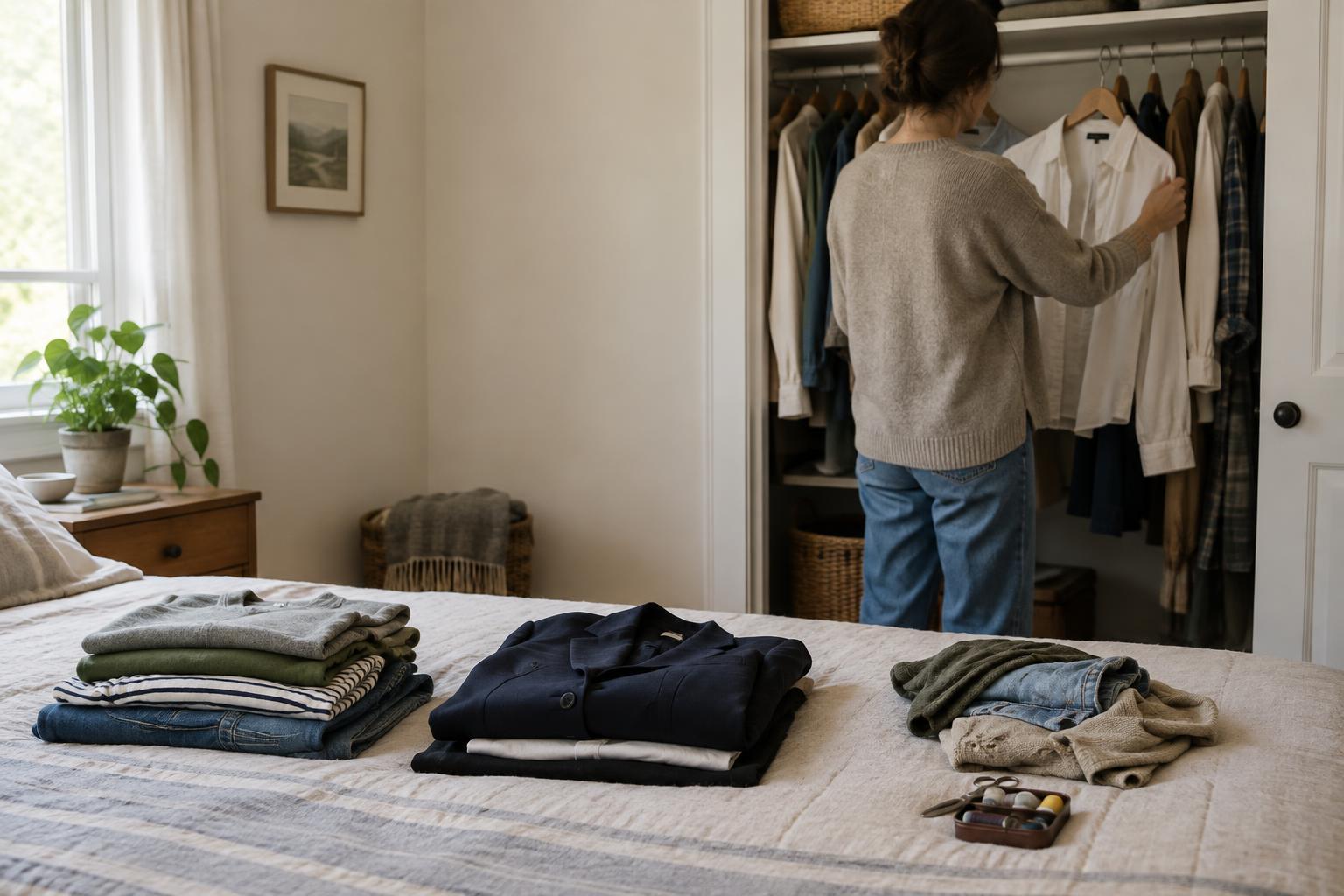
Start with a manageable group of clothes you have hesitated over more than once. Good candidates include duplicates you tend to overlook, pieces you like in theory but seldom choose, and items you have been keeping for a version of your life that no longer fits your routine. If something needs a simple repair, decide whether you are willing to do it before putting it in the box; otherwise, the box may just postpone that decision.
Keep daily essentials, suitable work clothes, and weather-specific items accessible while you need them. Sentimental clothing may deserve a separate decision, since its value is not necessarily measured by wear. The aim is to make your wardrobe easier to use, not to create an obstacle when you get dressed.
Pack it so the experiment has an end
Use a clean, dry container and pack only clean, dry clothes. Write down what is inside, either on a sheet of paper or in a note you can find later. Label the box with a review date that gives you enough time to live without the items. If it contains seasonal clothing, choose a date after you have had a fair chance to need it in that season.
Store the box somewhere accessible rather than burying it. You should be able to retrieve a piece if you want it. Taking something out is useful information, not a failure. Notice why you needed it: did you enjoy wearing it, or was it simply the only suitable option available? You do not need a detailed tracking system. A short note about anything you retrieve is enough to make the review more useful.
Review what happened, not just what stayed packed
When the review date arrives, open the box and consider each item on its own. Did you look for it? Would you choose to wear it now? Is it comfortable and in usable condition? Do you have something else that serves the same purpose better? An item can stay in the box untouched and still be worth keeping if it fills a real, infrequent need. Equally, wanting to keep something out of guilt does not mean it has to return to your wardrobe.
If a piece came out of the box, ask whether wearing it confirmed its place in your life. Sometimes an item is useful once but not worth keeping for another year. If you cannot make a decision yet, identify the specific reason and choose a time to revisit it. That is more helpful than resealing the whole box without a plan.
Give the decisions a practical next step
Put clothes you choose to keep back where you can see and use them. If they need mending or alteration, place them with your repair supplies and decide whether you are likely to follow through. A garment is not ready for regular use simply because you want it to be.
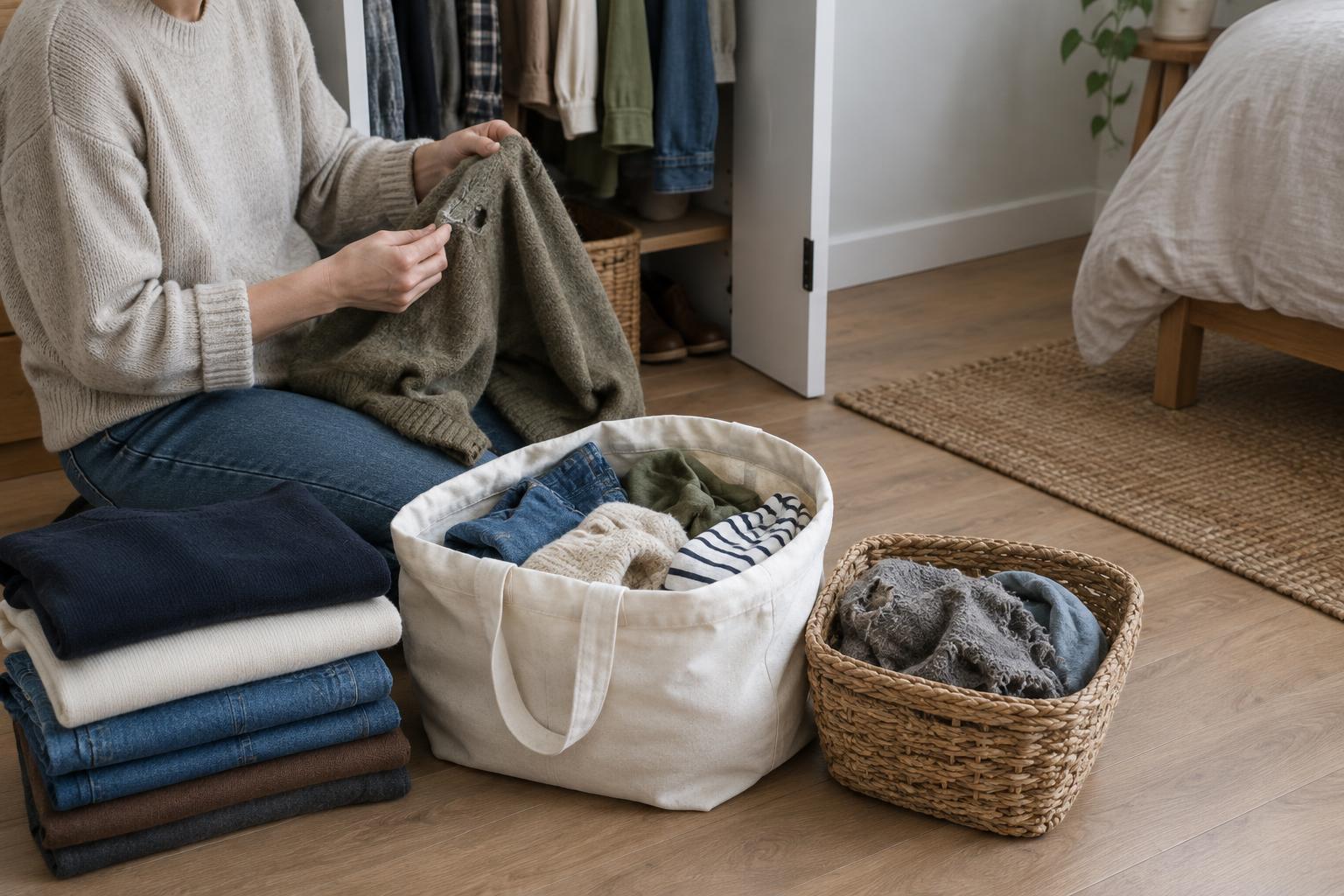
For clothes you no longer want, choose an appropriate route based on their condition. Wearable items might be offered to someone who wants them, sold secondhand, or donated where accepted. Check local requirements before setting aside damaged textiles for collection, since options vary. The trial box has done its job when it helps you make clearer decisions—not when it makes your wardrobe as small as possible. Keep what serves you, and let the rest leave in a considered way.