Start with a plan for the extra food
Leftovers are useful when you know what they are and when you will eat them. Before clearing the table, decide whether each dish is likely to become tomorrow’s lunch, an ingredient in another meal, or a portion for the freezer. That small decision makes it less likely that an unmarked container will be forgotten at the back of the fridge.
Clean utensils and containers matter, too. Use a fresh spoon to pack food rather than one that has been used for eating, and keep leftovers separate from raw meat and its juices. If food has sat out at room temperature for more than two hours, the safer choice is to discard it. In very hot conditions, such as temperatures above 90°F (32°C), shorten that limit to one hour. Putting food away promptly is more useful than trying to rescue it later.
Cool food promptly, without waiting for it to reach room temperature
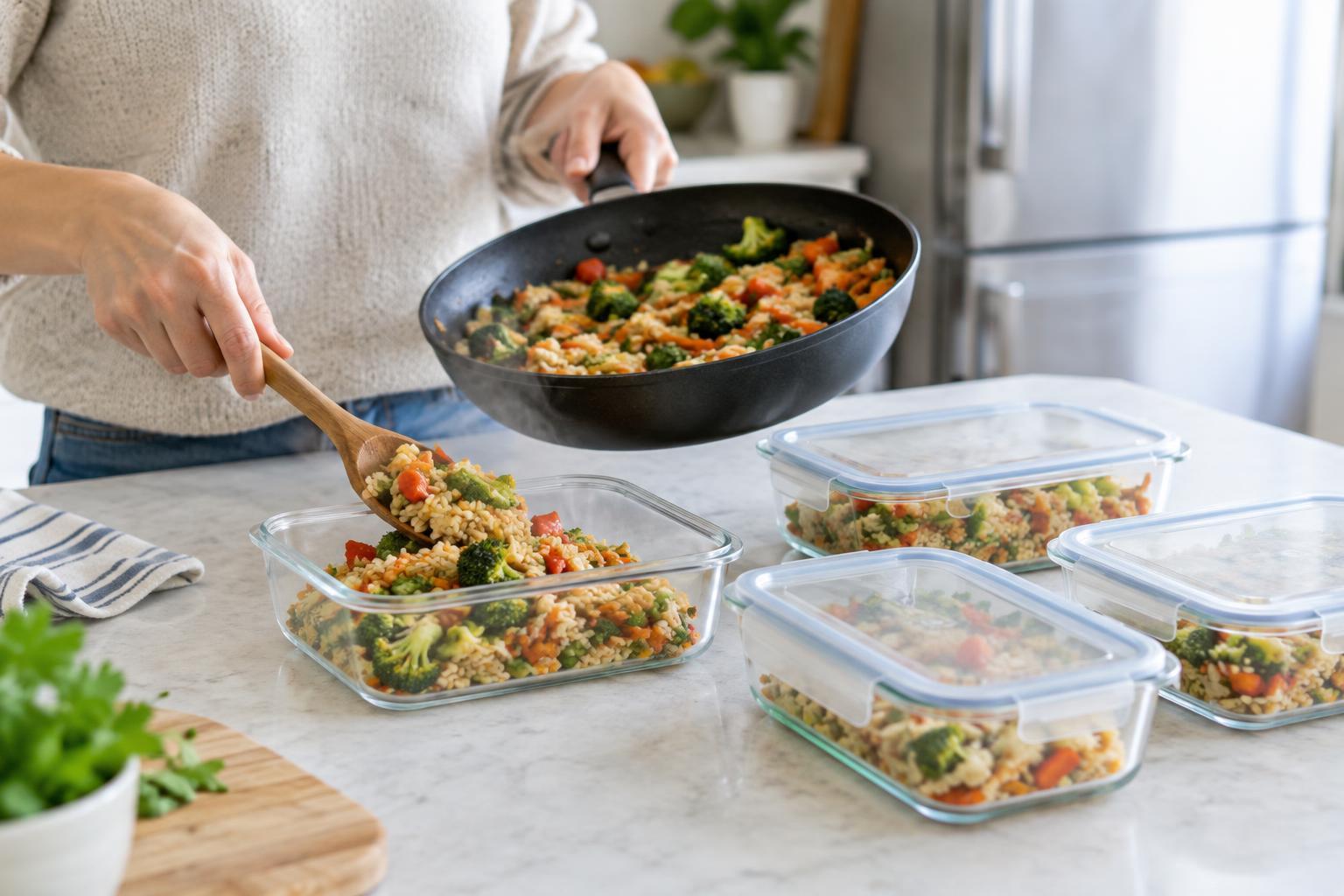
A large, deep pot of soup or rice can stay warm in the middle long after its surface feels cool. Divide big batches into smaller, shallow containers so heat can escape faster. You can refrigerate warm food in shallow portions; there is no need to leave it on the counter until it is completely cold. For a particularly large batch, setting the pot in an ice-water bath and stirring can help it cool before you portion it.
Use containers that close well and leave enough space in the fridge for air to circulate. A refrigerator thermometer can help you check that the temperature is at or below 40°F (4°C). Avoid stacking several hot containers tightly together, which can slow their cooling. Once the food has cooled, cover it securely if the lids were left loose to let steam escape.
Store portions you can actually use
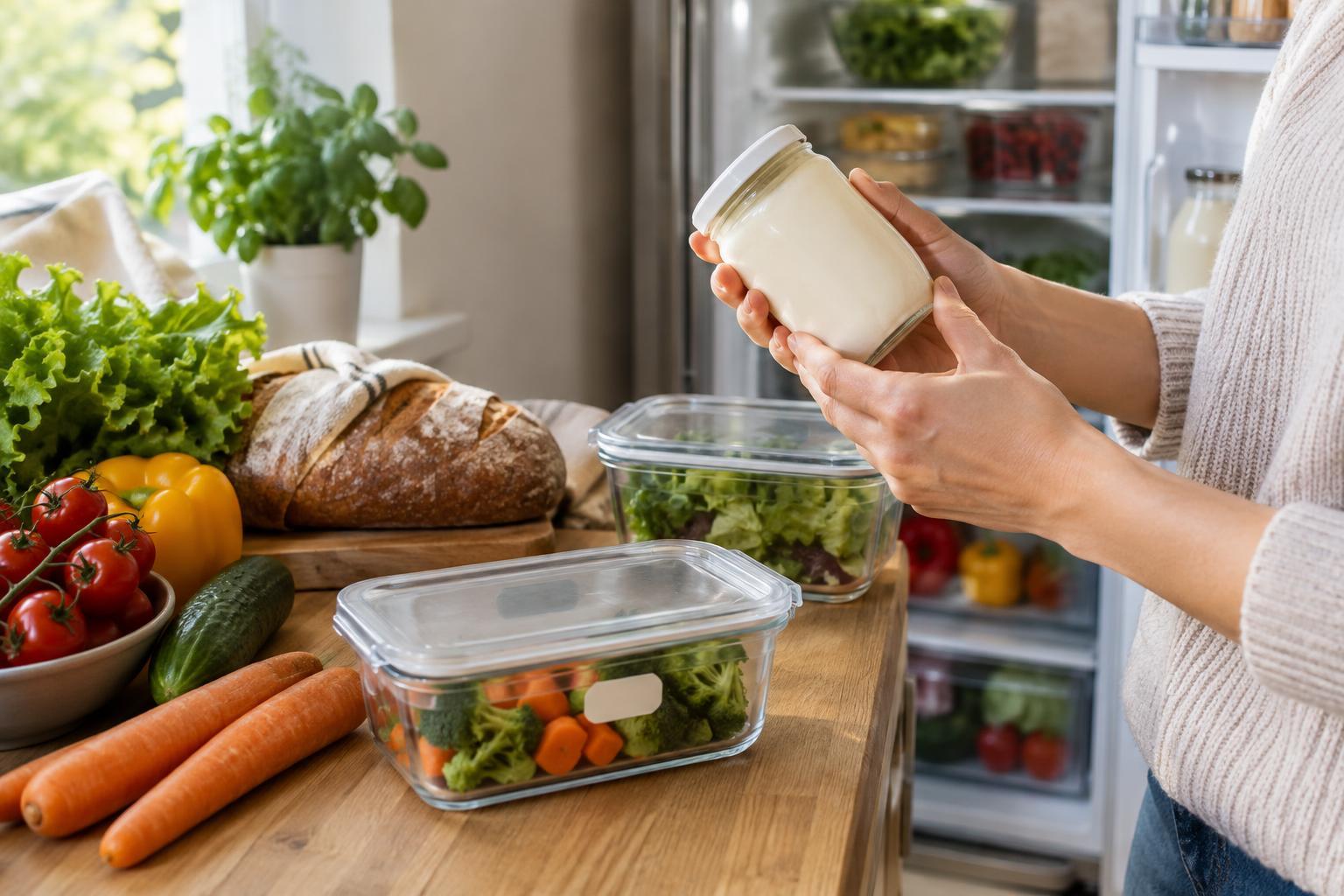
Label containers with the food and the day you stored it. As a general household guideline, use refrigerated cooked leftovers within three to four days. If you do not expect to eat a portion in that time, freeze it early rather than waiting until the last day. Keep the freezer at 0°F (-18°C) or colder, and use airtight packaging to help protect quality.
Choose portions that fit your routine: one serving for lunch, or enough for a quick family dinner. This avoids repeatedly warming a whole batch to take out a small amount. Move older containers to the front when you add new ones, and check what you already have before cooking or shopping. A simple “eat first” spot in the fridge can prevent safe, appealing food from being overlooked.
Reheat thoroughly, then serve
Reheat leftovers until they are hot throughout. A food thermometer is the most reliable way to check that the center reaches 165°F (74°C), especially for thick dishes such as casseroles. Bring soups, sauces, and gravies to a boil when reheating. In the microwave, cover food loosely, stir or rotate it partway through, and allow it to stand briefly so the temperature can even out. Check more than one spot if the portion is large.
Take out only what you intend to eat and keep the rest chilled. If you thaw frozen leftovers, the refrigerator is a convenient choice when you can plan ahead. Food thawed in cold water or the microwave should be reheated promptly. Avoid relying on smell or appearance to judge safety: food can be unsafe without obvious signs of spoilage. When you are unsure how long a dish has been sitting out or stored, discard it rather than taste it to find out.
Make waste reduction a repeatable habit
Safe storage works best when it fits everyday life. Keep a few shallow containers and a marker within reach, and make putting food away part of cleaning up after a meal. Plan one flexible leftover meal each week, such as a soup, grain bowl, or omelet, while still reheating any cooked ingredients thoroughly.
Not every leftover needs a new recipe. A clearly labeled serving that becomes tomorrow’s lunch is already a good use of the food, time, and resources that went into making it. The goal is not to keep food at all costs; it is to make sensible portions, store them promptly, and enjoy them while they are still safe to eat.