Take a quick inventory before choosing meals
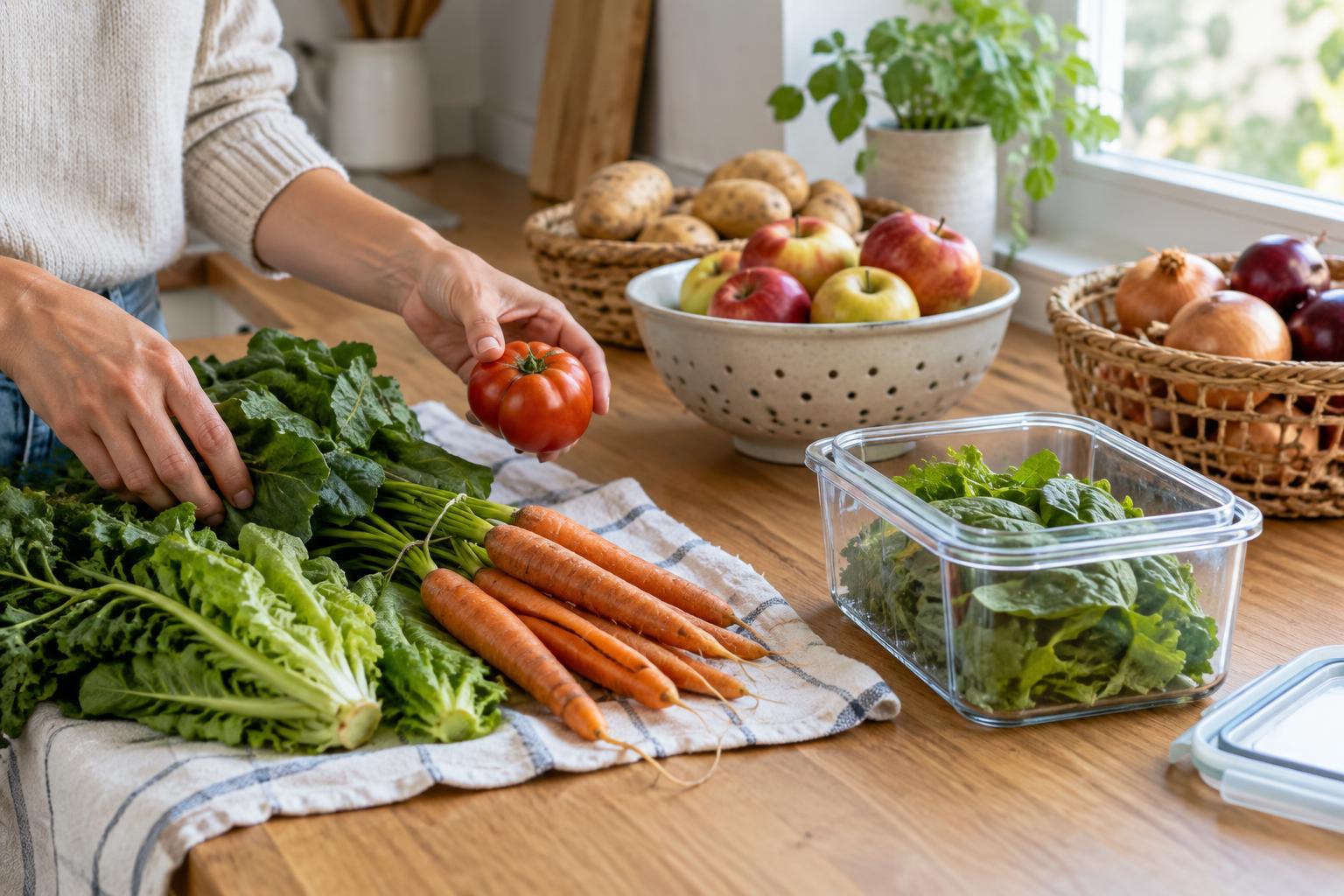
Meal planning often starts with a blank page and a list of recipes. A less wasteful approach starts by opening the fridge. Look for produce that is softening, cooked food that needs using, and small amounts of ingredients left from earlier meals. Then check the freezer and pantry for foods that could help turn those items into dinner.
Keep the inventory simple. Write down only the ingredients you might overlook, grouping them as “use soon,” “use later” and “staples.” You do not need to count every grain of rice. The aim is to make the food you already own visible before buying more. Put the most urgent items where you will notice them, rather than letting them disappear behind newer groceries.
Build meals around ingredients, not exact recipes
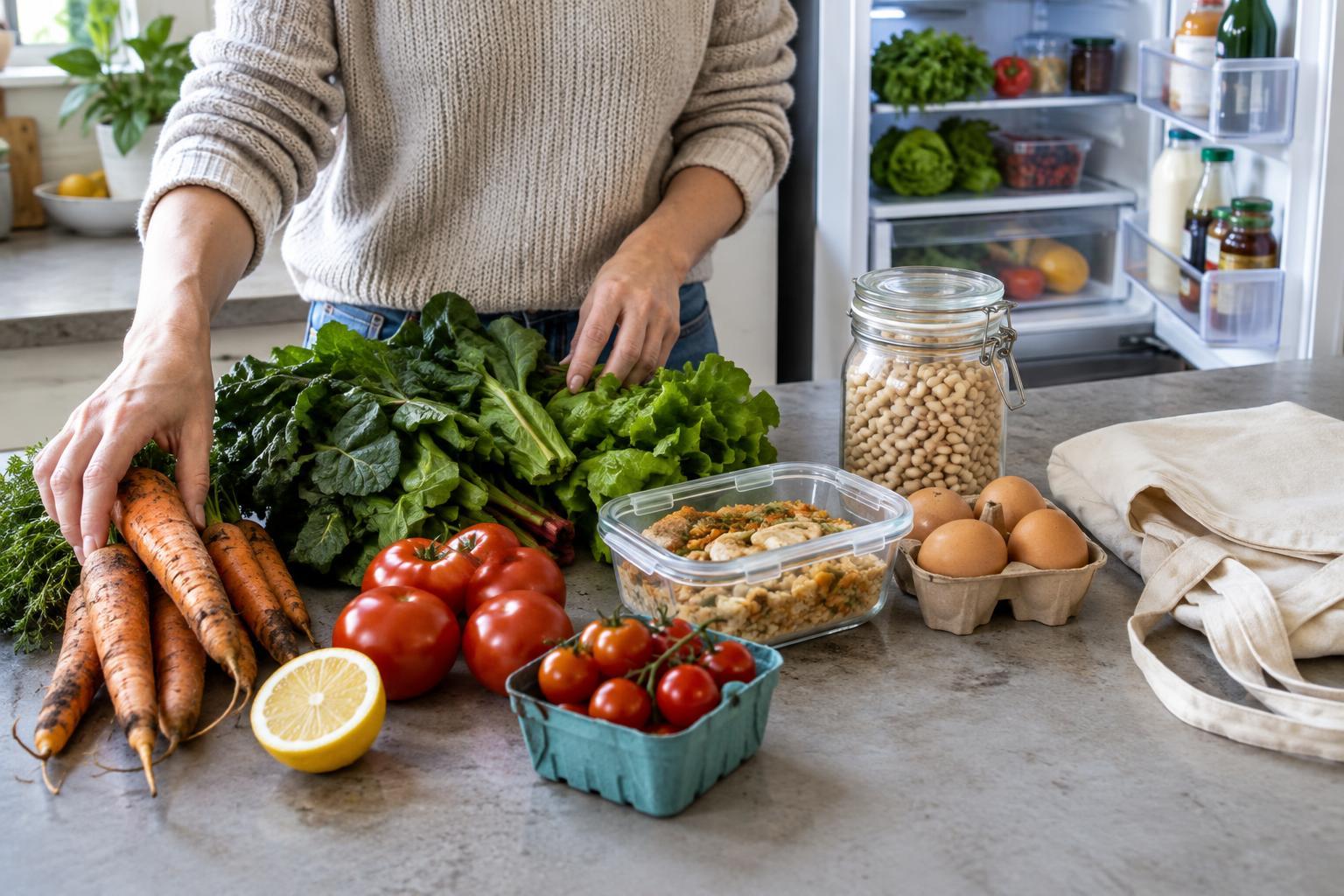
Choose two or three use-soon ingredients as the anchors for your next meals. A handful of vegetables could become a soup, a stir-fry or a filling for wraps, depending on what else you have. Cooked grains can support a bowl meal; beans can add substance to a salad or stew. Thinking in meal patterns gives you room to substitute without another trip to the shop.
Plan a few meals, but leave some space in the week. A fully assigned menu can be difficult to follow when plans change or an ingredient runs out. One flexible night lets you combine remaining portions, make a simple meal from pantry staples, or use something from the freezer. If you share meals with others, ask what they are likely to eat before planning around a large amount of one ingredient.
Shop for the gaps
Once you have a rough menu, make a shopping list of what is missing, not everything each recipe normally calls for. Check quantities as well as names: if a dish needs one onion and you have one, you may not need a bag. When possible, choose ingredients you can use across more than one meal, especially if they are sold in larger portions.
Be realistic about how much fresh food fits your week. A busy schedule may call for fewer perishable ingredients and more reliable freezer or pantry options. A good plan is not the one with the most ambitious recipes; it is the one you can comfortably cook and eat. If a tempting item has no likely place in your meals, consider leaving it for another shopping trip.
Give leftovers and perishables a clear place
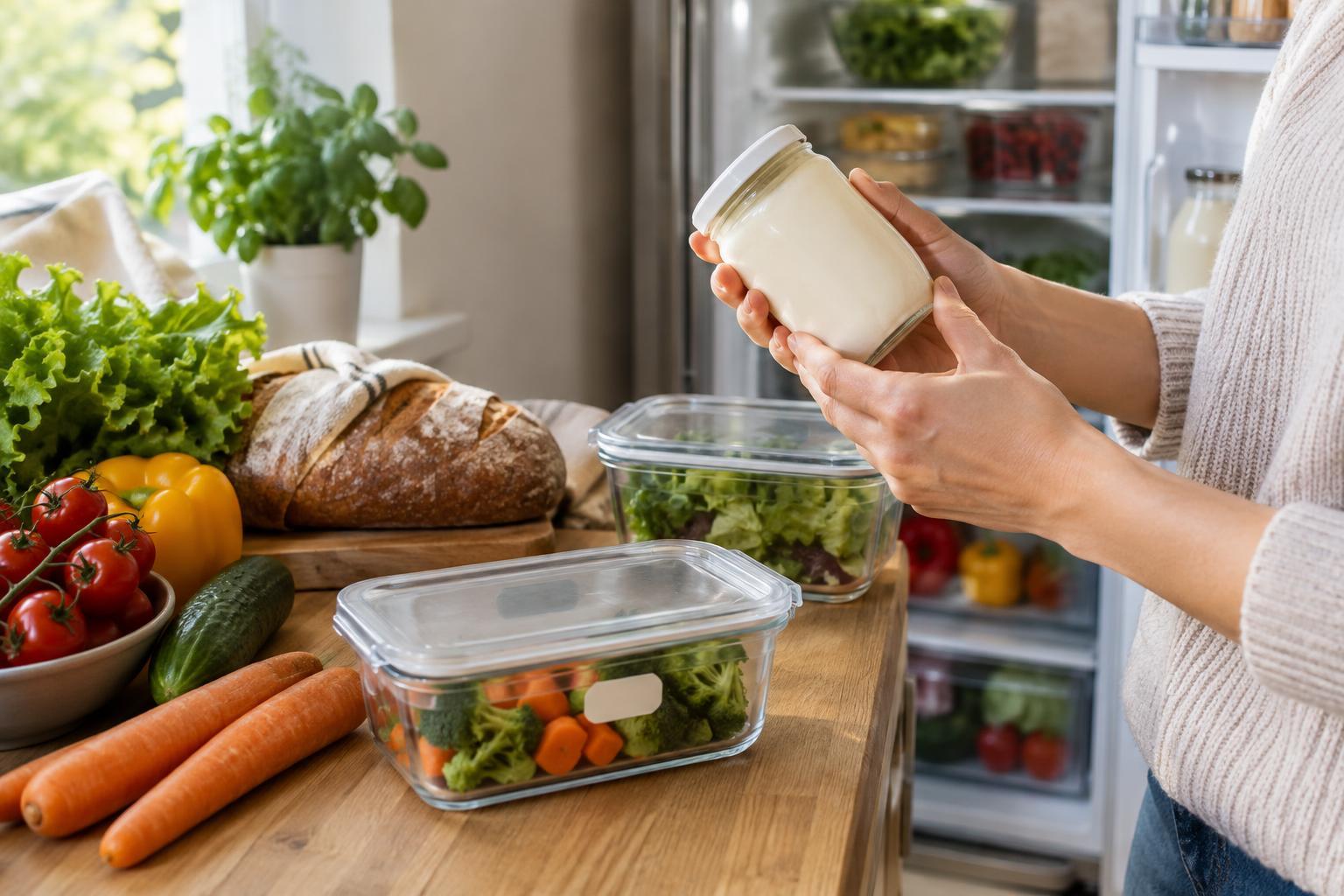
After shopping, make it easy to see what needs attention. Keep a small “use first” area in the fridge, and store food in suitable containers so it remains easy to identify. Labeling cooked leftovers with their contents and the day you made them can help you avoid guessing later. Follow food safety guidance for storage and reheating; if food looks or smells questionable, do not rely on a meal plan as a reason to eat it.
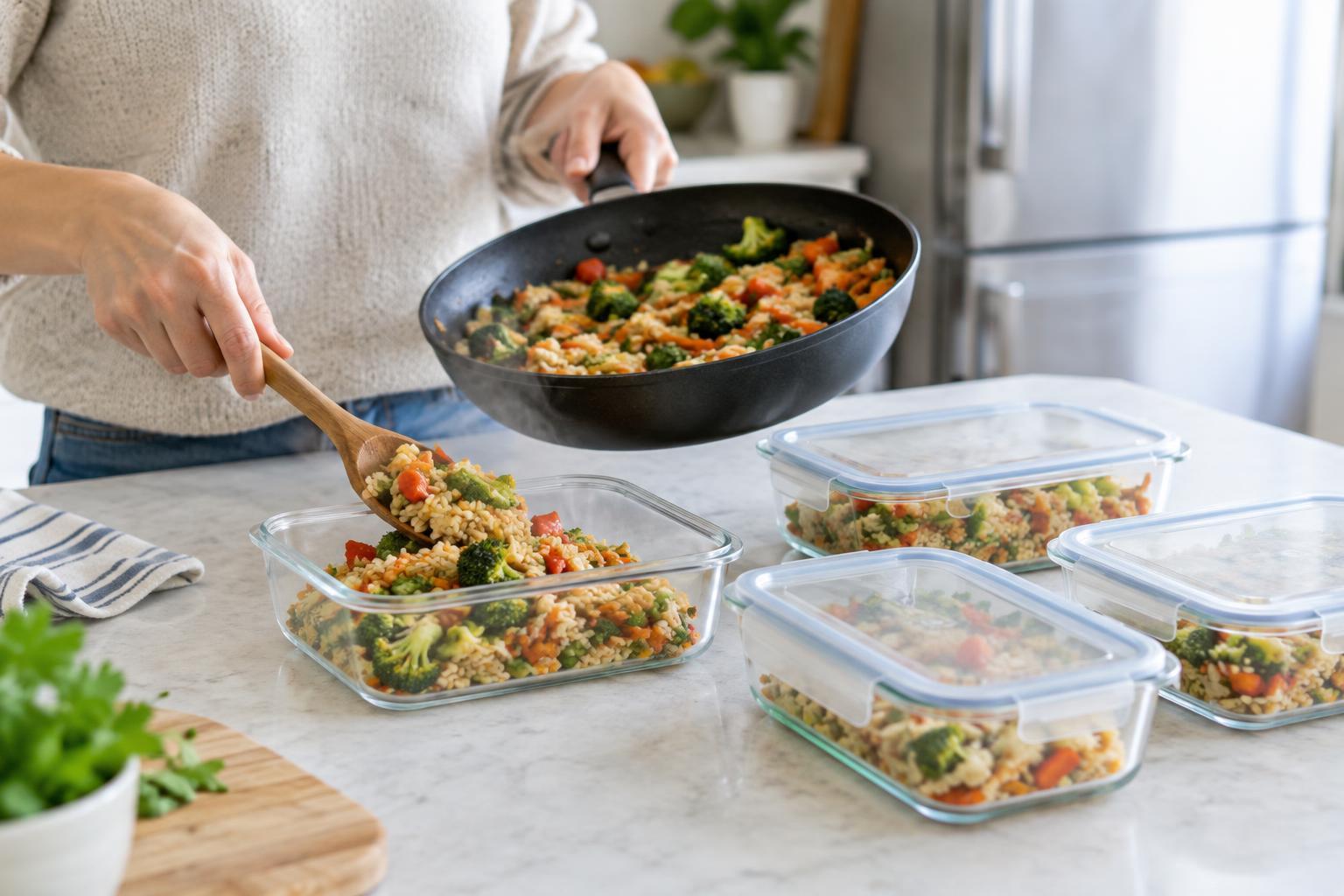
Plan the next use for leftovers while they are still appealing. Extra roasted vegetables might go into a lunch bowl, while leftover sauce could become the base for another meal. If you have more than you can reasonably eat, freezing a suitable portion early is often easier than trying to rescue it at the end of the week. Keep a note of what you freeze so it does not become another forgotten shelf.
Review what actually happened
At the end of the week, take a minute to notice what was eaten and what was not. Did you buy more greens than you could use? Did an unplanned evening out leave a cooked meal untouched? These observations are more useful than trying to make a perfect plan. They show where a smaller purchase, a different storage habit or an extra flexible meal might help next time.
Starting with what you have turns meal planning into a repeatable household habit rather than a strict set of rules. Some weeks you will still have scraps or changed plans. The goal is to make fewer avoidable purchases, use ingredients while they are useful, and let the food already in your kitchen shape what comes next.