Start with a quick sort
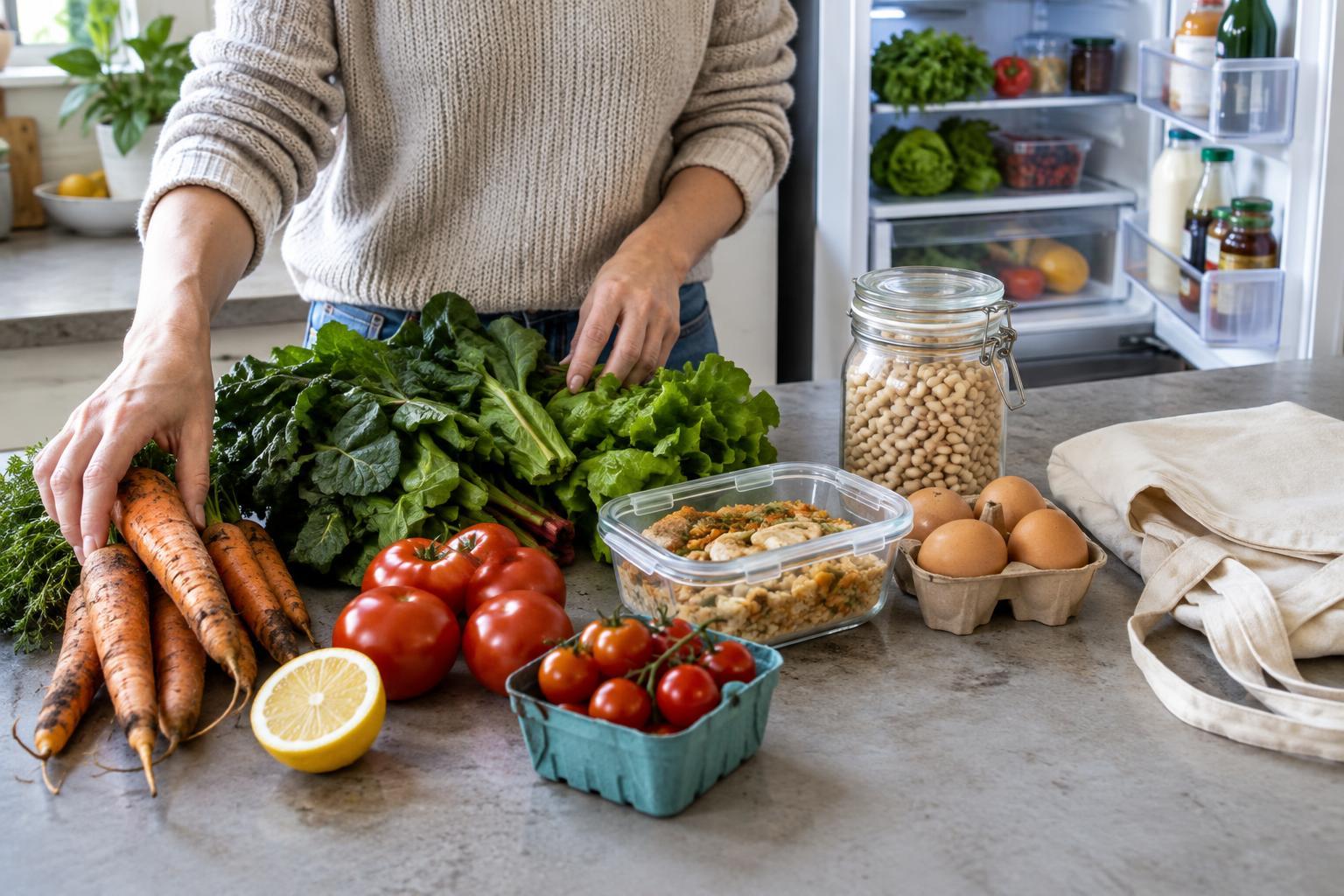
The best storage routine begins when you unpack your groceries. Check for bruised fruit, wilted leaves, or anything leaking, and plan to use those items first. One soft berry or damaged leaf can make nearby produce spoil faster, so remove it rather than putting the whole package away untouched.
Sort by storage need, not just by where there is space. Some produce keeps best in the refrigerator, while other items do better on the counter or in a cool, dark cupboard. If you are unsure about a particular item, consider how ripe it is and when you expect to eat it. Keeping produce visible and easy to reach matters, too: a well-stored vegetable cannot help reduce waste if you forget it is there.
Use the refrigerator for tender produce
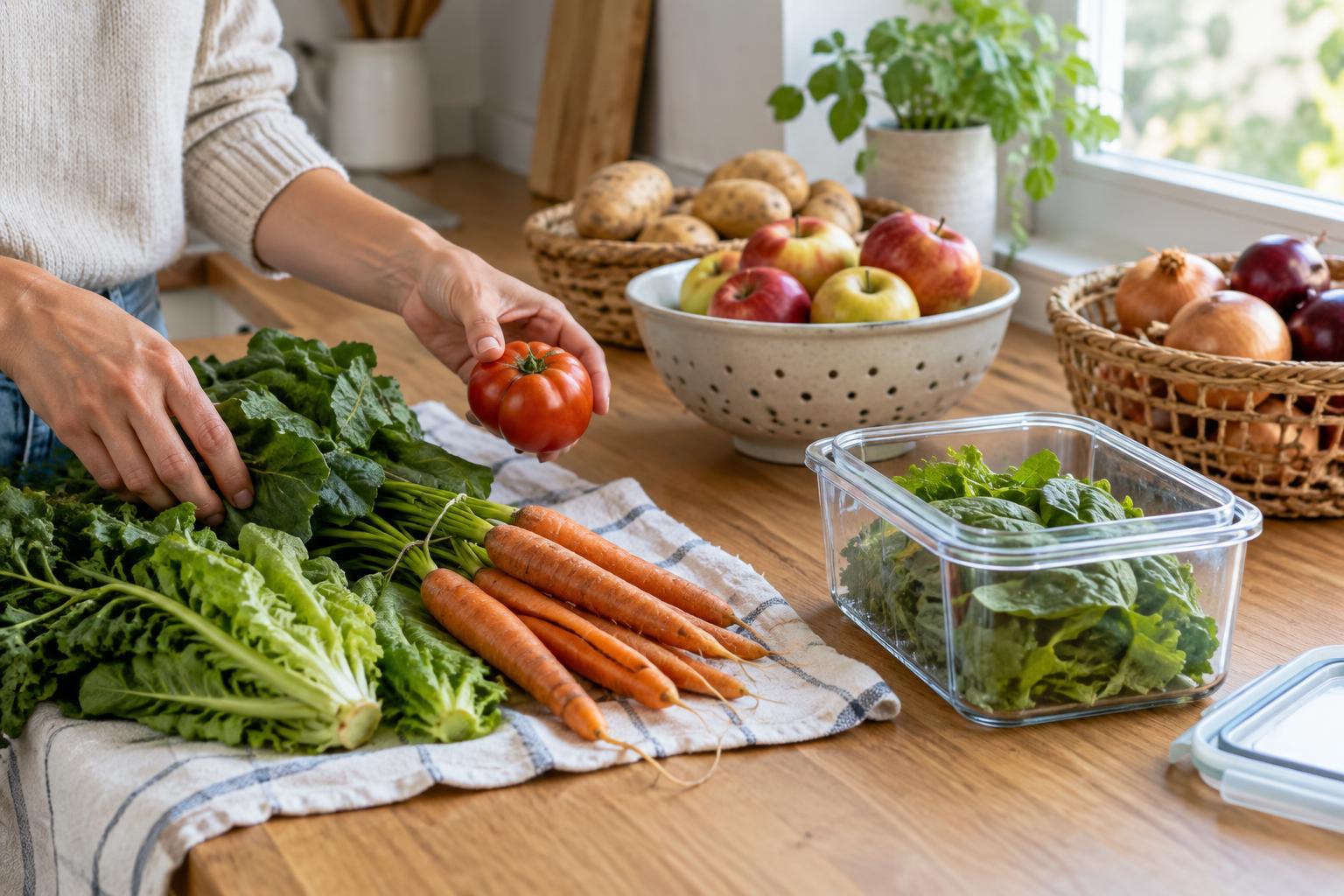
Leafy greens tend to last longer when kept cold and protected from excess moisture. Remove any damaged leaves, then store the greens in a container or bag with a clean towel to absorb condensation. The towel should not leave the leaves wet. Check it occasionally and replace it if it becomes soaked. If you wash greens in advance, dry them thoroughly before storing them.
Most berries also belong in the refrigerator. Sort out damaged ones and keep the rest in a shallow, breathable container rather than crushing them into a deep pile. Washing berries just before eating is often simpler than storing them wet. Mushrooms need a little airflow; a paper bag in the fridge is generally a better choice than a tightly sealed plastic container where condensation can collect.
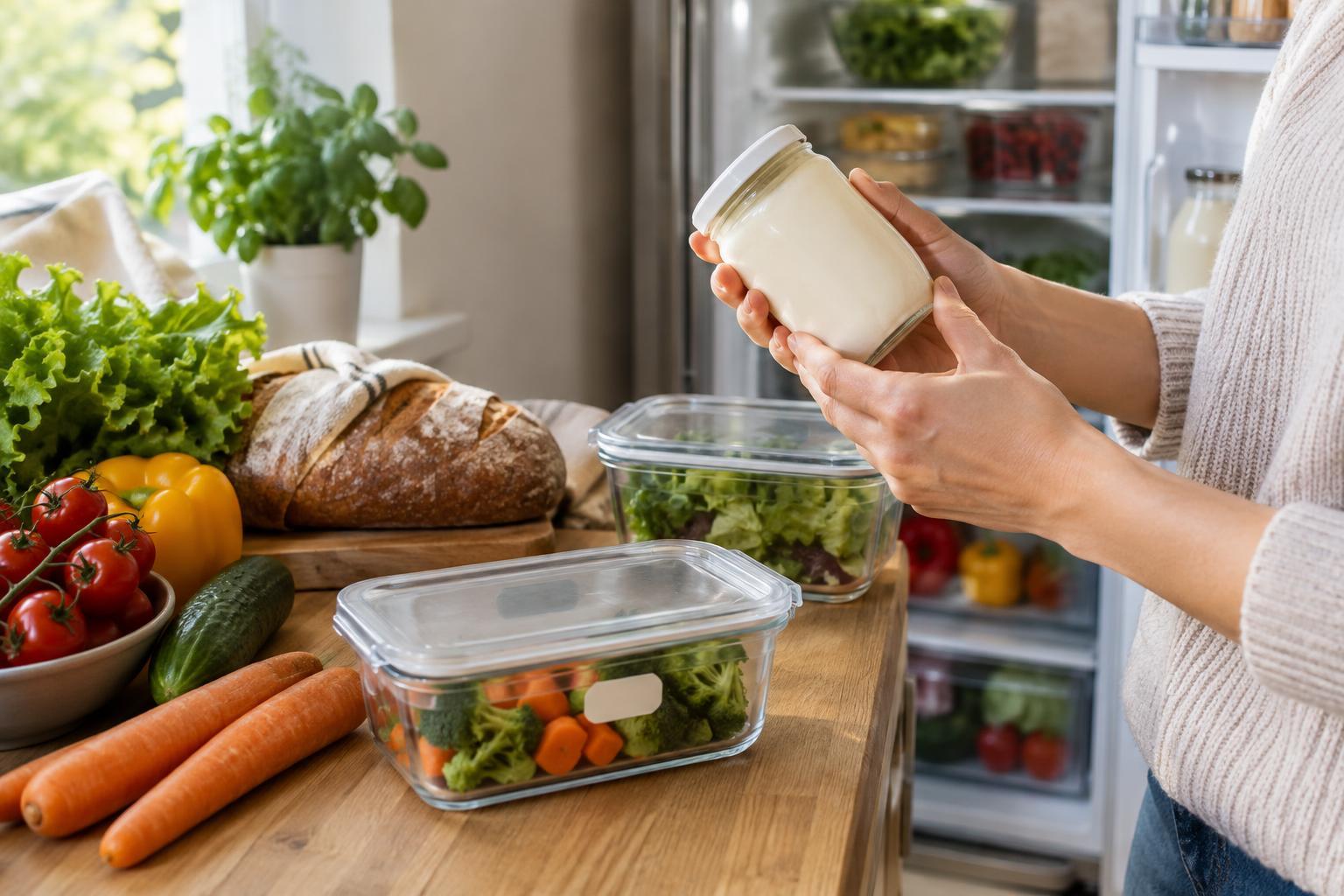
Cut produce should be covered and refrigerated promptly, even if the whole fruit or vegetable normally sits on the counter. Store it where you can see it and use it soon. A label with the day you cut it can help when several containers look alike.
Give countertop and cupboard produce the right space
Whole potatoes keep best in a cool, dark, ventilated place. Store them away from onions, which can contribute to quicker sprouting or spoilage when the two are kept together. Whole onions and garlic also benefit from a dry place with airflow rather than a sealed bag. Check these supplies regularly and remove anything soft or moldy.
Tomatoes usually develop better flavor and texture at room temperature while they are ripening. Once very ripe, refrigerating them may buy a little time; let them come toward room temperature before serving if you prefer their flavor that way. Bananas can ripen on the counter. If they become too ripe to eat fresh, peel and freeze them for a future smoothie or baking project.
A countertop is not automatically the best place for every fruit. Apples, for example, generally keep longer in the refrigerator. If you keep a few out for convenient snacking, move the rest into the fridge and refill the bowl as needed.
Manage moisture and ripening
Produce needs different amounts of moisture. Leafy vegetables can wilt when exposed to dry refrigerator air, while berries and mushrooms can deteriorate when trapped with condensation. Use bags, containers, and towels as adjustable tools rather than assuming one setup works for everything. If you see water pooling, dry the container and give the produce more airflow. If greens are drying out, cover them more securely.
Some fruits release ethylene gas as they ripen, which can speed the ripening of nearby produce. Apples and bananas are common examples. Keep them apart from greens and other items you want to hold for several days. That separation does not have to be elaborate: different drawers, shelves, or bowls can make the contents easier to manage.
Refrigerator drawers can help organize these groups, but do not pack them so tightly that you cannot see what is inside. A small amount of space makes it easier to check condition and pull out older items first.
Make using produce part of the storage plan
Storage slows waste; it does not stop ripening. Before shopping again, look through the fridge and cupboard and choose one or two meals around what needs attention. Soft tomatoes may work in a cooked sauce, tired greens in a soup, and overripe fruit in a baked dish or the freezer. Discard produce that is moldy or otherwise clearly spoiled rather than trying to rescue it.
Buying a little less can be as useful as finding the perfect container. Choose amounts that fit your usual meals, especially for delicate items, and leave room for plans to change. A simple routine of sorting, storing, checking, and using what is already at home can keep more food on your plate and less in the bin.