Start with safety, not a screwdriver
A toaster that will not heat or a blender that will not start can feel like instant clutter. Before deciding it has reached the end of its life, give yourself a few minutes to check for a straightforward cause. Keep the checks external: controls, connections, removable parts and routine cleaning. You do not need to open the housing to learn whether the appliance is worth repairing.
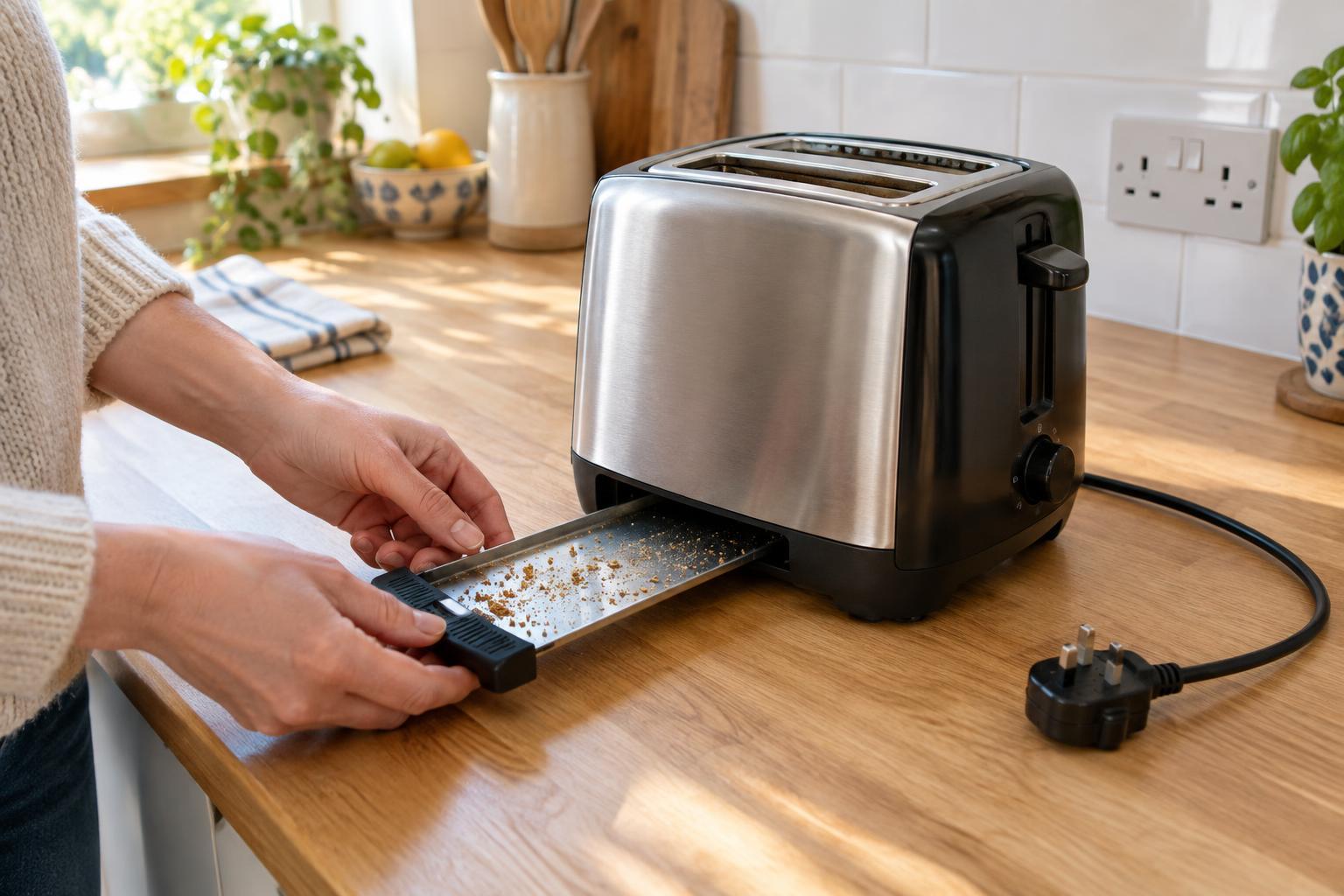
Unplug the appliance before inspecting it or clearing accessible debris. If you notice smoke, sparks, a burning smell, melted plastic, a damaged cord or plug, or signs that liquid entered an electrical part, stop using it. Do not try it again to confirm the fault. The same caution applies to a battery that looks swollen or damaged: do not charge or use the appliance, and seek appropriate repair or disposal guidance.
Avoid bypassing safety switches, removing protective covers or probing electrical components. If the next step requires any of those actions, leave it to a qualified repairer. A simple check is useful only if it does not create a bigger risk.
Check the power and the settings
First, make sure the plug is fully seated and the appliance is switched on in the way its instructions describe. Some appliances have a timer, speed selector or lid position that must be set before they run. Look for a loose removable container or attachment, but do not force anything into place.
If the outlet appears dry and undamaged, you can check whether it works with another known-working device. A switched outlet or power strip may simply be off. Do not use an outlet that is discolored, loose, hot or otherwise suspect. If a breaker or safety outlet has tripped, avoid repeatedly resetting it to keep the appliance running; an ongoing fault needs attention.
For a rechargeable appliance, check that you are using the correct charger and that the charging contacts are clean and dry. Allow the normal charging time specified in the manual. If the charger, cord or battery shows damage, stop there rather than trying a substitute that may not be suitable.
Look for routine maintenance issues
Many small appliances depend on airflow, clean contacts or freely moving removable parts. With the appliance unplugged and cool, check the user manual for cleaning steps. A clogged vacuum filter, a full dust container or a blocked air vent may affect performance. A coffee maker may need the cleaning cycle described by its manufacturer. Follow the manual rather than guessing which products or parts are safe to use.
If the appliance stopped during heavy use and feels warm, it may have a protective shutoff. Unplug it and let it cool for the period recommended in its instructions before trying it again. Clear only the accessible blockage or buildup the manual tells you how to remove. Never reach into blades or moving parts, and do not test an appliance with guards or required attachments removed.
Notice what happens when you try it after these checks. Does a light come on but the motor stay still? Does it run briefly and stop? Does one setting work but another fail? These observations can help a repairer identify the problem without repeated testing. If the appliance makes an unusual noise or smell, unplug it and stop the check.
Make repair easier to evaluate
Find the model number, purchase information if you have it, and the manual or manufacturer’s support details. A warranty may cover some faults, and the manufacturer may offer replacement parts or service options. When contacting a repair shop, describe the symptoms, what you have safely checked and whether the fault appeared suddenly or gradually. Ask about an assessment fee before bringing the appliance in.
Repair is not automatically the lowest-waste or most practical choice. Consider whether the appliance meets a real household need, whether parts are available, and whether a repairer can give you a clear estimate. If it is not repairable, ask about local options for handling electrical items rather than putting it straight in the household bin. If you replace it, choosing a model with obtainable parts and instructions may make the next problem easier to solve.