Start with the drawer’s symptoms
A drawer that resists movement is not necessarily broken. Its contents may be catching on the cabinet, a loose screw may be rubbing against a slide, or dust may have built up along the runners. A drawer that tilts or drops off one side is more likely to have a damaged track, a missing stop or a mounting problem. Notice where the trouble begins: at the front, halfway through its travel or only when the drawer is full.
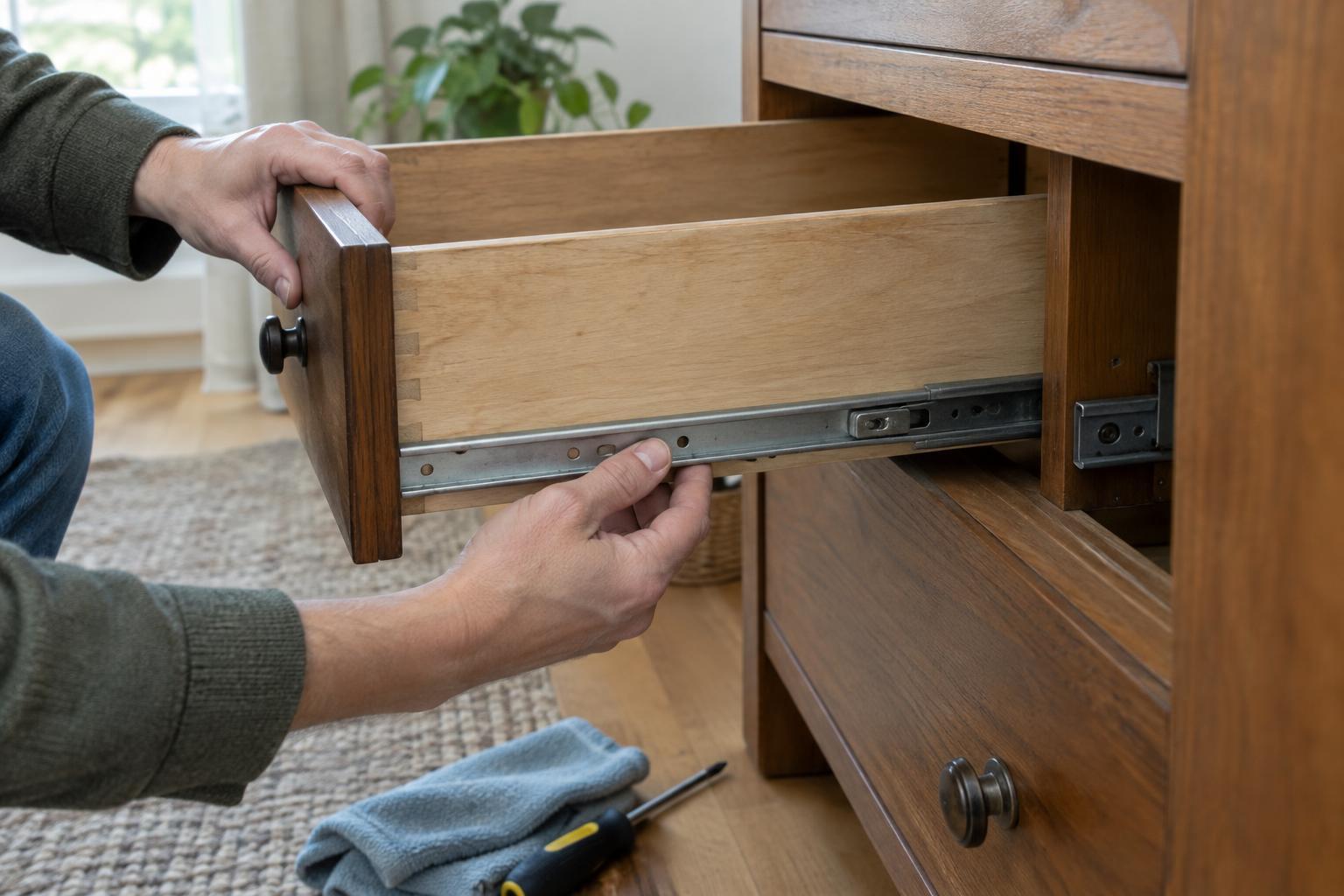
Empty the drawer before working on it. Pull it out slowly while supporting its weight with both hands. Some drawers lift out when raised slightly at the front; others have release levers on the slides. If it does not move freely, look for a catch rather than forcing it. Set the drawer on a stable surface, then check the cabinet opening for anything that has fallen behind or underneath it.
Clean and inspect the runners
Look at both sides of the drawer and the matching surfaces inside the cabinet. A wood-on-wood drawer may ride on grooves or wooden strips. A newer drawer may use metal slides with rollers or ball bearings. Before changing anything, compare the left and right sides. Check for bent metal, splintered wood, loose screws, missing rollers and tracks that no longer sit level.
Vacuum crumbs and dust from accessible areas, then wipe the runners with a slightly damp cloth and let them dry. Remove any sticky residue gently; avoid soaking wood or cabinet panels. Test the empty drawer again. If it now moves smoothly, the cause may have been debris or excess weight. Redistribute the contents so tall or heavy items do not press against the cabinet or pull one side down.
Ease a sticking drawer without creating a new problem
For wood-on-wood runners, check whether a rough spot or small splinter is causing friction. Smooth a minor rough area with fine sandpaper, working a little at a time, and clear away the dust. A light rub of plain paraffin wax on the clean contact surfaces can help them glide. Keep wax off surfaces you plan to paint or glue.
Metal slides usually need a different approach. Tighten any loose mounting screws, but do not overtighten them in particleboard or stripped holes. Make sure no screw head protrudes into the drawer’s path. If the slide has shifted, loosen its mounting screws slightly, align it with the opposite side and retighten before testing. Avoid coating the whole track with household oil: it can collect dirt, and some slide designs require a specific lubricant. If lubrication seems necessary, follow the hardware maker’s guidance where available.
Fix a drawer that slips off its track
If one side keeps dropping, check that the drawer is seated on both slides when you reinstall it. Extend the cabinet slides evenly, line up the drawer members and push straight in without twisting. Confirm that any release catches engage. A drawer that goes in crooked or binds immediately may have a slide mounted at a different height on each side.
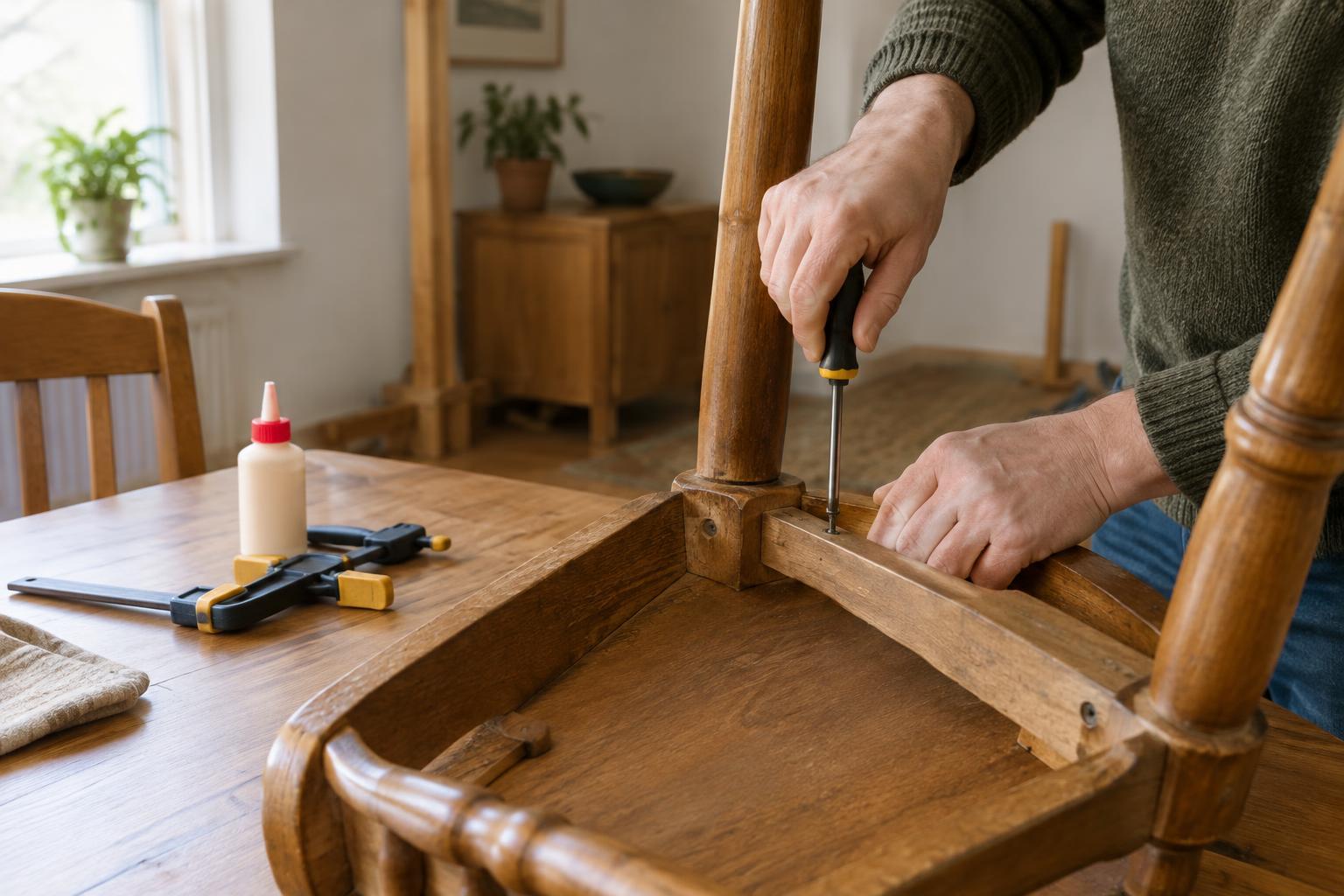
Inspect the slide mounts and the drawer itself. Loose fasteners can let a track sag; screws that spin without gripping may need an appropriate repair to the mounting hole before they can hold securely. Also check whether a wooden corner joint has opened or the drawer bottom has come loose, changing its shape. Repair those issues before adjusting the track. If a roller is missing, a slide is bent or a stop is broken, replacement is usually more reliable than repeatedly pushing the drawer back into place.
For replacement, remove a slide if needed and match its length, type and mounting arrangement. Slides commonly come as a left-and-right pair; replacing both can help them operate evenly. Bring the old hardware when shopping if you are unsure what fits. Support heavy drawers while removing or reinstalling them, and keep fingers clear of moving slide parts.
Test the repair and prevent repeat trouble
With the drawer empty, open and close it several times. It should travel without scraping, stay supported on both sides and stop where intended. Add the contents back gradually and test again. If it works empty but fails when loaded, reduce the weight and check whether the drawer or cabinet is flexing. Persistent misalignment may call for a closer look at the cabinet frame rather than another slide adjustment.
A short check now and then can keep a small problem from becoming a replacement job. Clear stray items from behind the drawer, tighten fasteners that have worked loose and avoid using an open drawer as a shelf. Cleaning and repairing the hardware you already have often restores useful life with little material and little disruption.