Find the source of the movement
A wobble is worth investigating before it becomes a break. Set the chair on a flat, firm floor and press gently on each corner of the seat. If it rocks but the frame feels solid, check whether one leg is shorter or a floor protector is missing. Move it to another spot to rule out an uneven floor. If the legs or rails shift against one another, the problem is in the chair rather than beneath it.
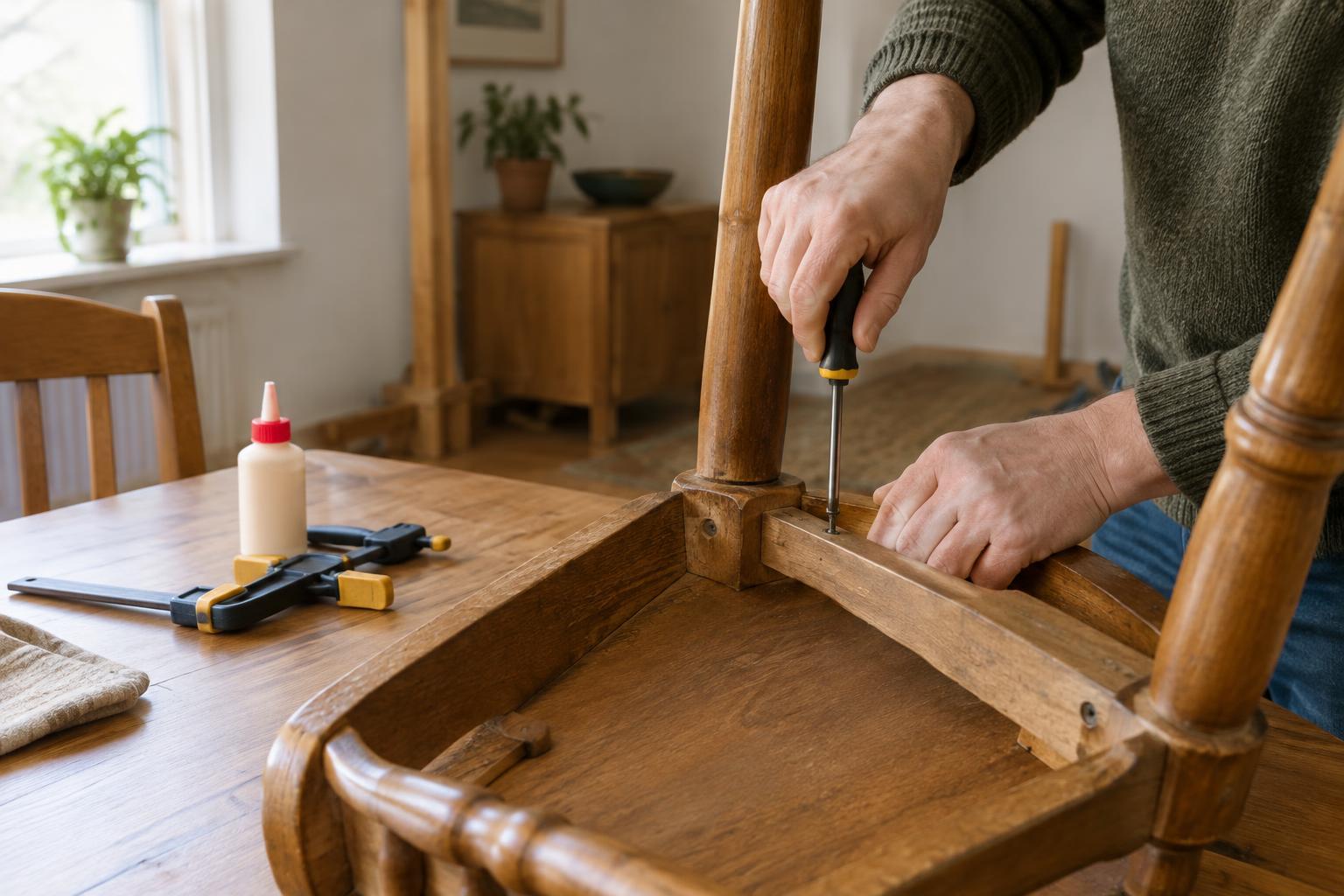
Turn the chair over on a blanket and look at where each leg meets the seat or frame. Note any gaps, loose fasteners, split wood or old glue that has pulled away. Move one part at a time with your hands; pushing hard can enlarge a damaged joint. A chair with a cracked leg, a badly split seat or several failing connections should not be used until it has been properly repaired.
Tighten hardware without overtightening
Many chairs rely on bolts or screws at the corners, sometimes behind a removable seat. Use a tool that fits the fastener snugly, and steady the chair while you turn it. Tighten each loose fastener a little at a time, then set the chair upright and test it again. Stop when the parts sit firmly together. Extra force can strip threads, crush wood or pull a bracket out of position.
If a screw spins without gripping, repeated tightening will not fix the hole. Remove it and inspect the wood and hardware before choosing a repair. A missing washer, damaged bracket or stripped threaded insert may need a matching replacement. Avoid reaching for a longer screw without checking what lies on the other side of the joint; it could emerge through the seat or split a narrow rail.
Treat glued wooden joints differently
Traditional wooden chairs often have rails or stretchers fitted into holes or slots and held with glue. If one of these joints moves, tightening nearby screws may not address the cause. Do not drive a new screw through the joint simply to stop the motion. It can split the wood, make a later repair harder and leave the original connection loose.
A sound glue repair needs contact between clean, fitting wood surfaces. If a joint can be separated without force, mark how the pieces fit, then gently remove loose, brittle glue without cutting away sound wood. Apply a suitable wood glue according to its directions, reassemble the joint, and use light, even clamping pressure to hold it in place. Wipe away excess glue and keep the chair out of use for the time specified on the product. Glue squeezed into a closed joint may not reach the surfaces that need bonding, so it is less reliable than a joint that can be opened and cleaned.
If the joint will not come apart easily, leave it intact rather than prying it open. The same applies to delicate finishes, carved parts, antiques or joints that appear to have previous repairs. A furniture repairer can assess those chairs without turning a small wobble into missing wood.
Check the chair before using it again
After tightening or repairing, place the chair on the same flat floor and repeat the gentle corner test. Look for fresh gaps as you shift a little weight onto the seat, then check that all four legs meet the floor as expected. Do not use the chair if a joint still moves, a crack opens under pressure or a fastener will not hold.
Once the chair is sound, small habits can help it stay that way. Lift it instead of dragging it by the back, and avoid leaning it onto two legs. Check accessible fasteners occasionally rather than waiting for a pronounced wobble. A careful repair can keep a useful chair in service, but knowing when to stop is part of caring for it.