Look beyond the package
A package-free display can look like the obvious low-waste choice. But the best option depends on more than what leaves the store in your bag. Products still arrive at shops in containers, and an extra trip to refill a jar uses time and transport. Most importantly, food or cleaning supplies that spoil, spill, or sit unused create waste too.
Start with a simple question: Which option helps me bring home the amount I need, keep it usable, and avoid throwing it away? Packaging matters, but it also protects goods and can make storage easier. A small packaged item you finish may be a better choice than a large refill you cannot use.
When refill shops are a good fit
Refills work especially well for products you use steadily, such as dish soap, laundry detergent, or a staple dry food. Bringing the same sturdy container back repeatedly avoids buying a new small container each time. Refilling is easiest to maintain when the shop is already on a regular route and you know roughly how much your household uses.
Check the shop’s process before filling. Containers should be clean, dry when appropriate, and suited to the product. Follow the shop’s instructions for weighing containers, and label anything that could be confused with another product. For household cleaners, do not mix different formulations in one bottle; use a clean container that can be closed securely and kept away from children and pets.
A refill is less useful if it prompts a special long journey, requires buying several new jars, or offers a quantity you cannot store safely. There is no need to build a matching container collection. Using a suitable bottle or jar you already own is often the more practical starting point.
Use bulk bins to buy the right amount
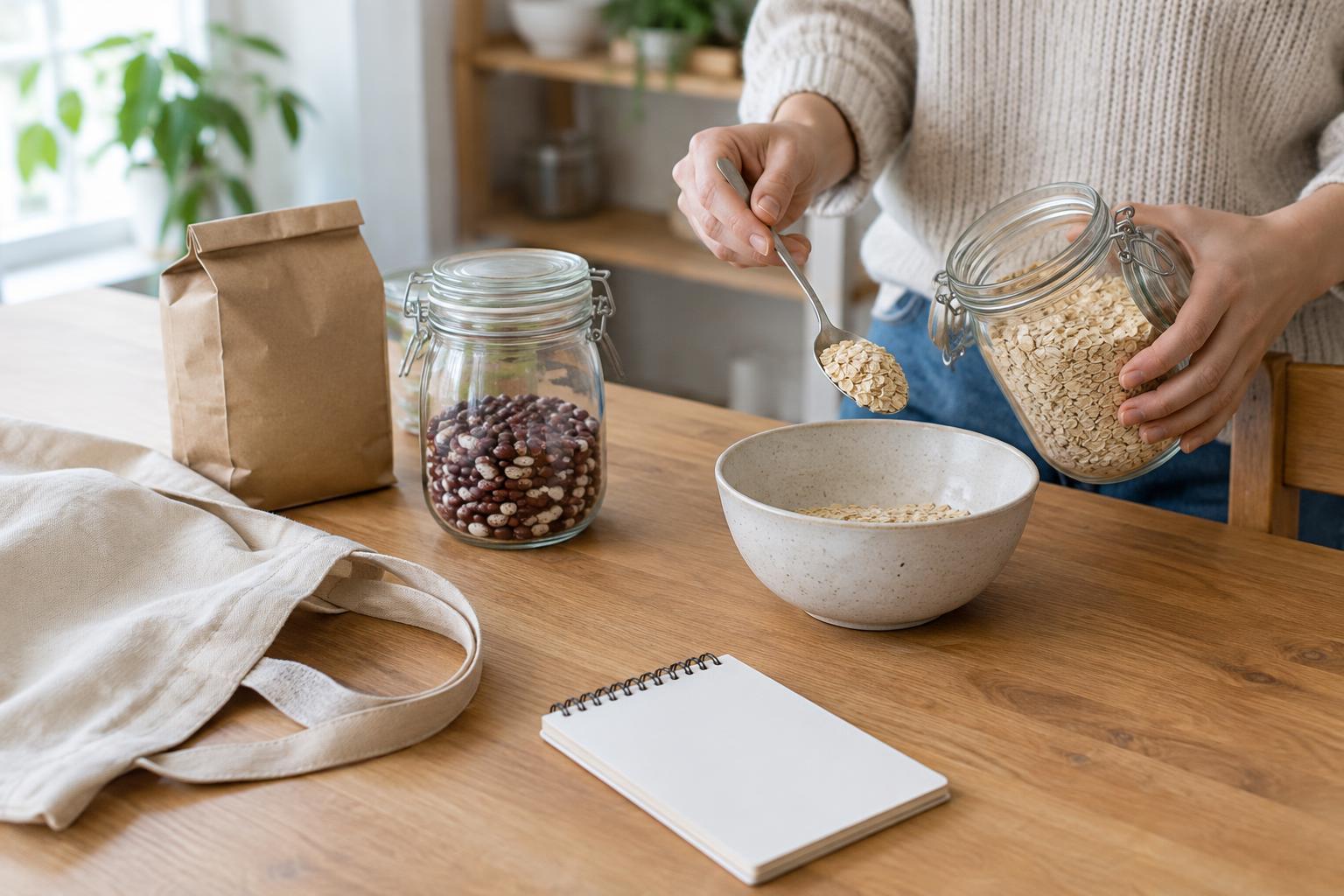
Bulk bins can help when a recipe calls for a small amount of an ingredient you rarely use. Buying a spoonful of a spice or a modest portion of grains may prevent a half-used package from lingering in the cupboard. They can also serve households that go through a staple quickly and have reliable storage space.
Before filling a bag, consider how soon you will use the food. Check that the bin area and scoops appear well maintained, and follow the store’s rules about bags and containers. At home, transfer purchases to clean, clearly labeled containers if the shopping bag will not protect them well. If you need package information for ingredients or allergens, make sure you can get it before buying.
Bulk does not have to mean buying a lot. The useful feature is control over quantity. If an appealing low-packaging option leads you to buy more than you need, choose a smaller amount—or leave it for another trip.
Why packaged goods sometimes win
Packaging can help a product stay fresh, prevent leaks, and make portions manageable. For foods you use slowly, a sealed package may reduce the chance of spoilage. It may also be the more accessible or affordable option at the shop you already visit. Choosing it is not a failure.
Compare options you will actually use, rather than ideal versions of them. A large package can reduce packaging per serving if you finish it before its quality declines. Smaller packages can be sensible when they prevent leftovers or keep an occasional-use item usable. If a package is recyclable where you live, that may be a consideration, but local collection rules vary and recycling is not a substitute for using the contents well.
Build a low-waste routine you can repeat
Try changing one routine purchase at a time. Notice how long it takes to finish, whether its container is easy to reuse, and whether a refill or bulk option fits a trip you already make. Keep a short list of staples worth refilling and items better bought in small packages. That list will be more useful than a rule that every purchase must be package-free.
Before shopping, check what is already at home and plan around it. Bring reusable containers or bags when convenient, but do not let a forgotten jar turn an ordinary purchase into a source of guilt. The most dependable waste reduction usually comes from buying an appropriate amount, storing it well, and using it up—whether it came from a refill tap, a bulk bin, or a package.