Start with the scraps you actually have
Composting is easier to sustain when the method fits your household rather than an idealized routine. For a week, notice what you throw away: vegetable peels, coffee grounds, eggshells, plate leftovers or spoiled food. Then consider how much outdoor space you have, whether you want finished compost for a garden and how often you are willing to empty a container.
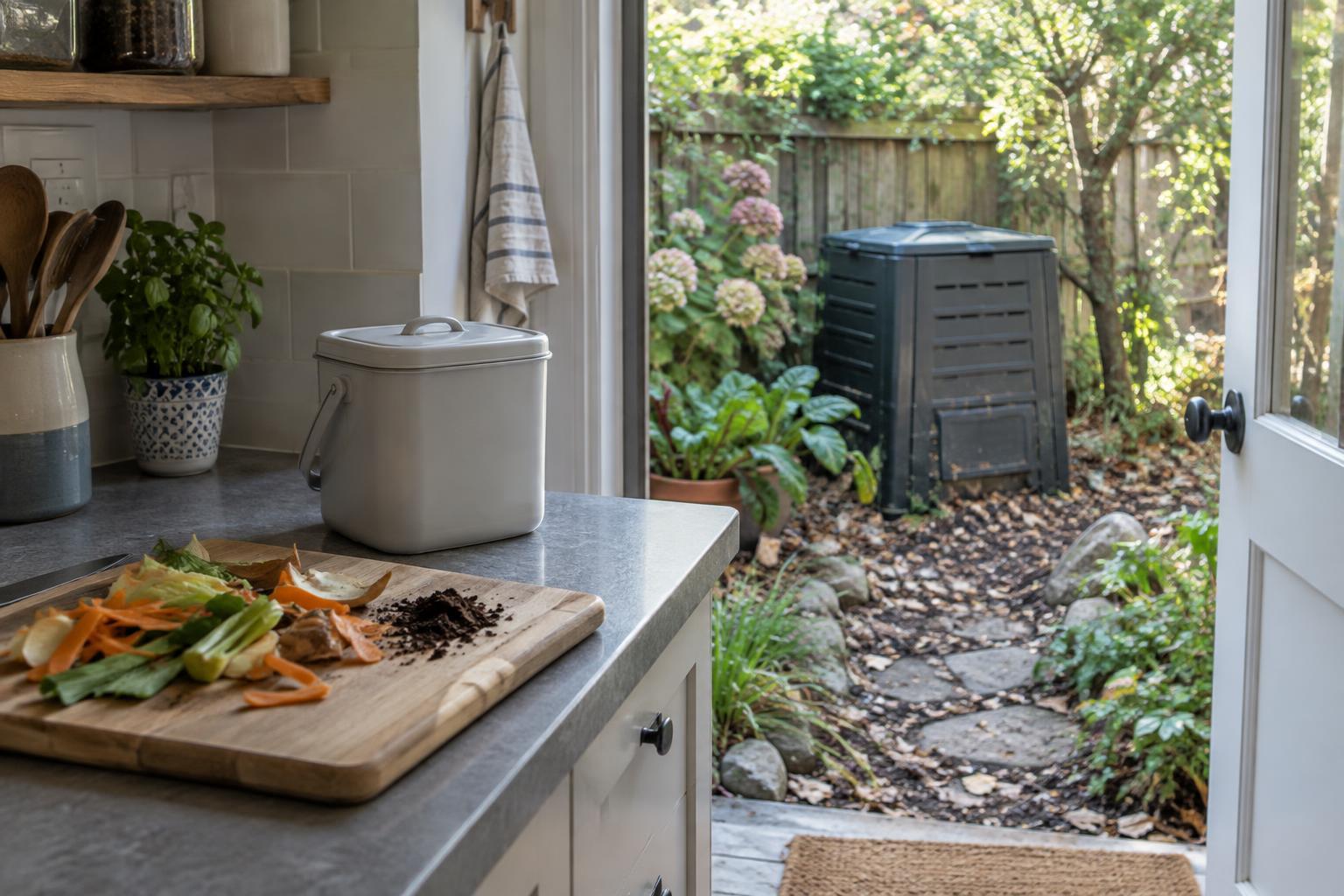
A backyard bin lets you manage the process yourself and use the finished material at home. A collection service usually means keeping scraps in a small kitchen container until they are picked up or taken to a drop-off point. The service handles processing elsewhere, so you do not need room for a compost pile. Neither option eliminates food waste at its source; buying and preparing amounts you can use still matters.
What a backyard bin asks of you
A backyard bin works well if you have a suitable outdoor spot and can add materials regularly. Most home systems need a mix of moist food scraps and dry materials such as fallen leaves or shredded, uncoated cardboard. Covering each addition of food scraps with dry material can help limit smells and make the bin less attractive to pests. The contents should be damp rather than soggy, with enough air to support decomposition.
A bin is not entirely hands-off. You may need to break up bulky pieces, add dry material when the contents look wet, or mix them occasionally if your setup calls for it. Decomposition can slow in cold weather, and finished compost takes time. If you have no use for the result, think about whether a neighbor or community garden would welcome it before committing to a bin.
Check local rules and choose a setup that suits your space and wildlife conditions. An enclosed, sturdy bin may be more practical than an open pile where animals are a concern. As a simple starting point, keep meat, fish, dairy, oils and large amounts of cooked food out of a typical backyard bin; they can be harder to manage and may attract pests.
What collection changes
Countertop collection shifts the work from managing a compost pile to sorting, storing and handing off scraps. You need a container that fits your kitchen, a place to keep it between emptying days and a pickup or drop-off schedule you can reliably follow. A lidded container makes the routine tidier, but it still needs regular emptying and washing. Some households keep scraps in the freezer until collection to reduce odors.
Accepted materials vary by program. Some processors take foods that are awkward for a home bin, while others limit collection to fruit and vegetable scraps. Do not assume that a package labeled “compostable,” a paper cup or a food-soiled wrapper belongs in the container. Check the program’s current list and follow its instructions for liners; ordinary plastic bags may create problems even when the food inside is acceptable.
If you are comparing services, look beyond the countertop container. Consider how far you must travel for drop-off, whether pickup fits your schedule, what happens if you miss a collection and whether you are comfortable with any ongoing fee. If you are a renter, it is also worth checking building rules before placing a shared collection container in a common area.
Choose the routine you will keep
Choose a backyard bin if you want compost for plants, have a suitable place for it and do not mind occasional maintenance. Choose collection if outdoor space is limited or you would rather hand scraps over than manage decomposition. Where both are available, you can combine them: put suitable plant scraps in the backyard bin and send other accepted materials to a collection program.
Begin with a small, clearly labeled container near where you prepare food. Empty it before it becomes unpleasant, rinse it, and keep the accepted-items list nearby until sorting feels automatic. If the system creates persistent smells or takes more effort than expected, adjust the container size, emptying frequency or method. The best low-waste setup is not the one that accepts the most scraps on paper; it is the one your household can use correctly week after week.