Start with what your collection service accepts
Before buying bins or printing labels, check the instructions from your local collection service or building manager. Recycling rules vary by location: an item accepted in one area may belong in the trash or require a separate drop-off elsewhere. Note which materials can go together, whether containers need to be empty, and whether bags are allowed in the recycling bin. Keep those rules close to the station rather than relying on what a package label seems to suggest.
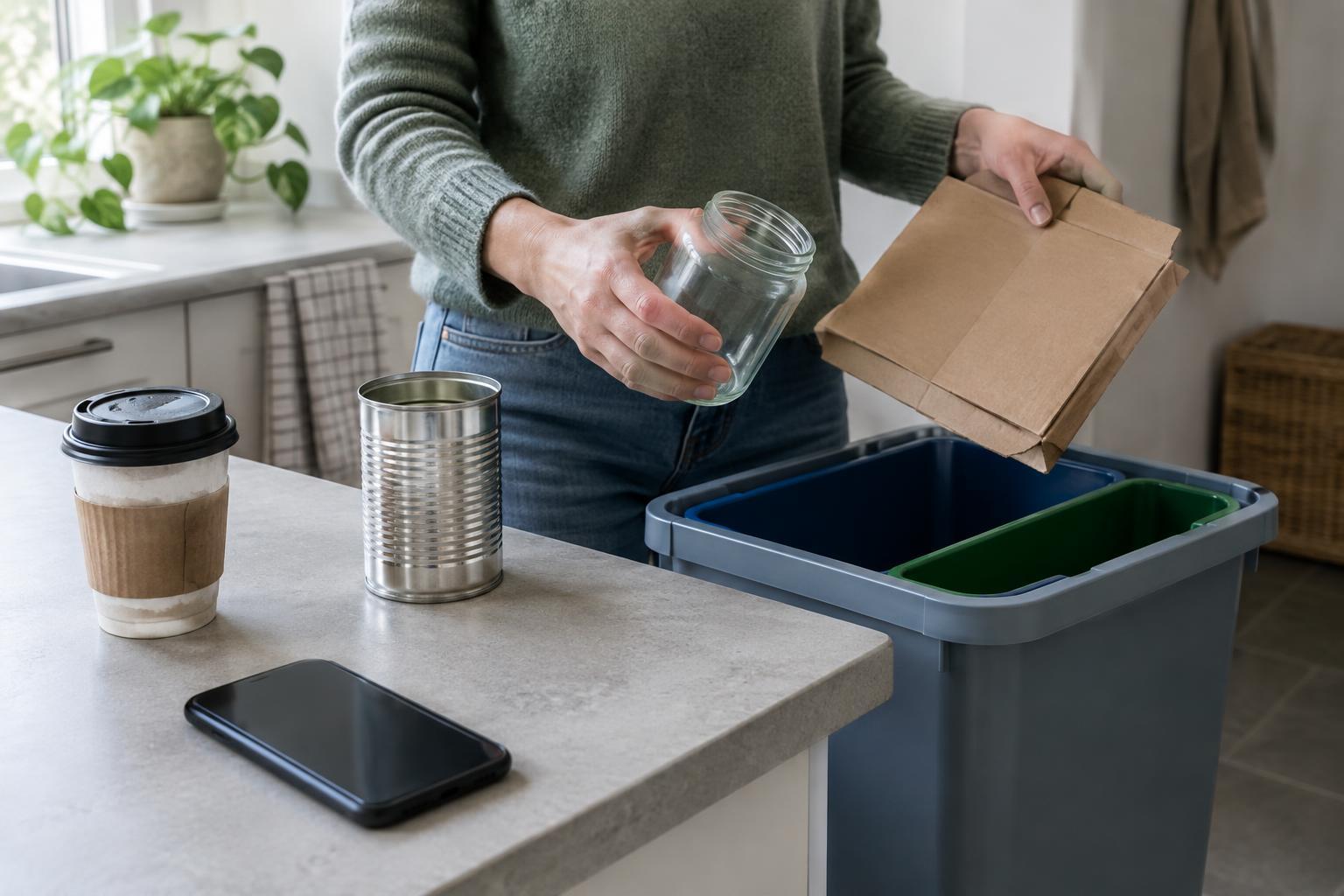
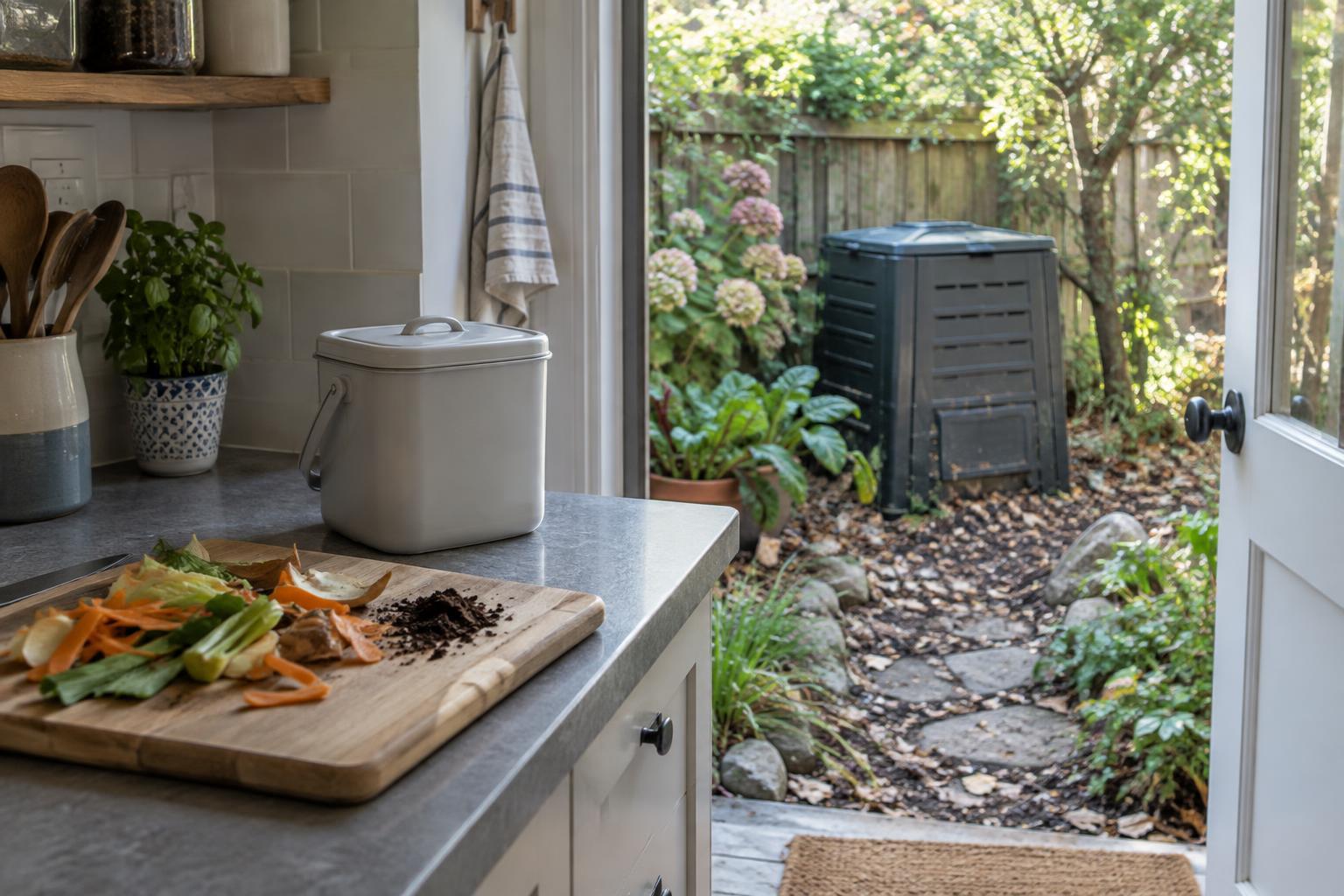
Begin with the streams your household can actually use: often trash and household recycling, with food scraps or compost only if you have a suitable collection or composting option. Batteries, electronics, paint and other potentially hazardous items may need separate handling. Give these a small, secure holding spot if needed, and check local disposal instructions before taking them anywhere.
Put containers where decisions happen
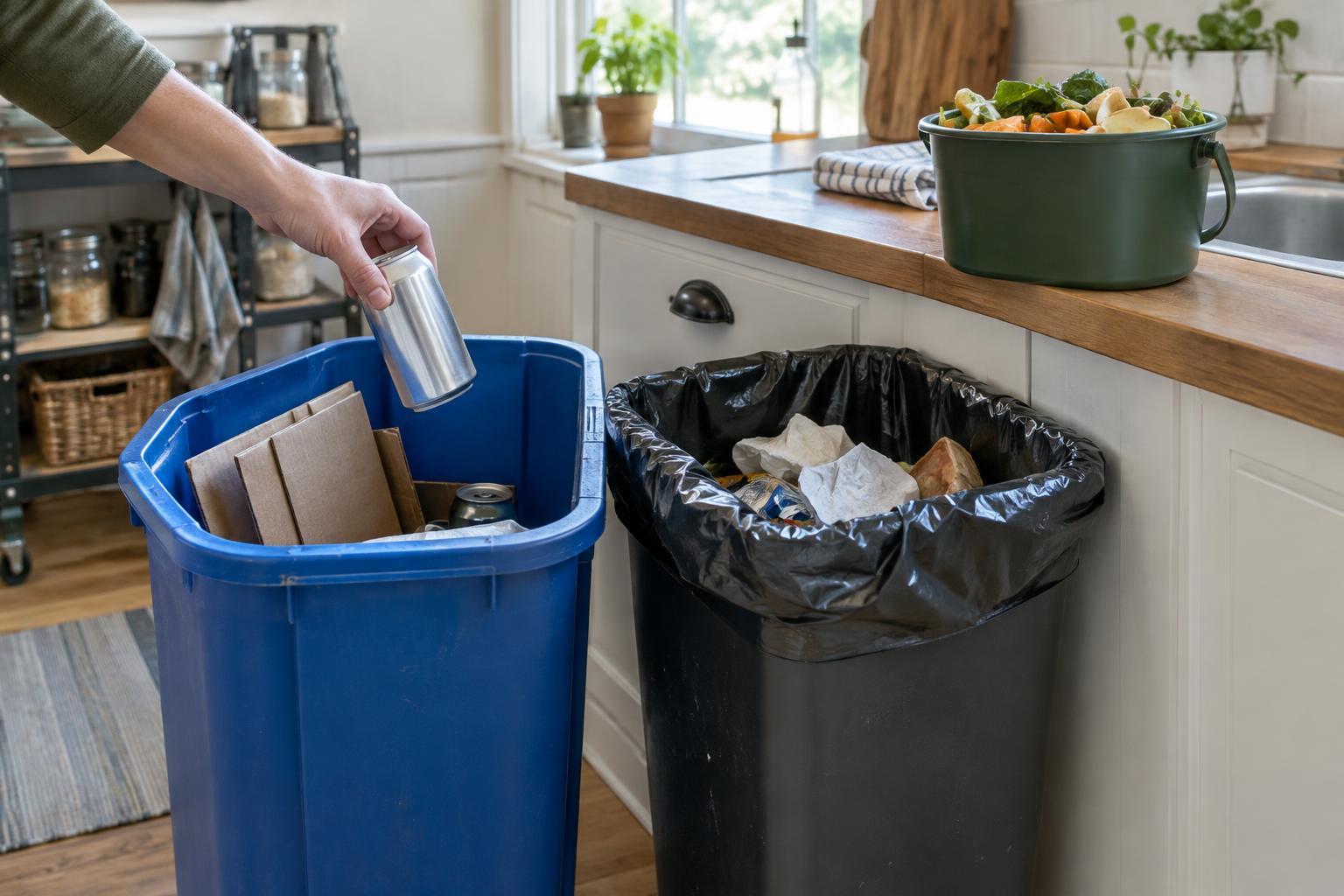
The best station is usually the one people can reach without thinking. In many homes, that means placing trash and recycling side by side in or near the kitchen. If there is a bin in a home office, bathroom or bedroom, consider whether a small recycling container belongs beside it. A lone trash can makes it easy for recyclable paper or packaging to end up in the wrong place.
Choose containers that fit both the space and the amount your household produces. A reused box may be enough for dry paper; a washable bin can work better for containers that might drip. Make sure each one is easy to lift, empty and clean. If floor space is limited, try narrow bins, a cupboard pull-out or a clearly designated shelf. A station that blocks a walkway or takes effort to open is less likely to be used consistently.
Make the labels specific and visible
Labels help most when they answer everyday questions. Instead of labeling a bin only “recycling,” list a few accepted examples based on your local rules, such as paper, cardboard, cans or certain containers. Add a short “not here” reminder for items that often cause confusion in your household. Put labels where they remain visible when the bins are in place, not only on a lid that stays open or a side facing the wall.
If several people use the station, agree on a simple default for uncertain items: set them aside to check rather than guessing. A small note on a cabinet door can hold the collection rules and any building-specific instructions. Review it when the service changes or when you notice the same sorting mistake happening repeatedly.
Build an easy emptying and cleaning routine
A good setup includes a plan for what happens after a bin fills. Decide who empties each container, where its contents go next and whether there is room to store materials until collection day. Flatten boxes if your service permits it, and keep a path clear to any outdoor bins or shared collection area. If a container routinely overflows, a larger bin or more frequent emptying may help more than another reminder.
Keep maintenance modest. Empty food or drink containers as your local guidance requires, and let wet items drain before they sit in an indoor bin. Wipe bins when spills occur and check periodically for misplaced items. The goal is not a spotless display; it is a station that stays usable without creating odors, pests or extra work.
Let the station reveal what you can reduce
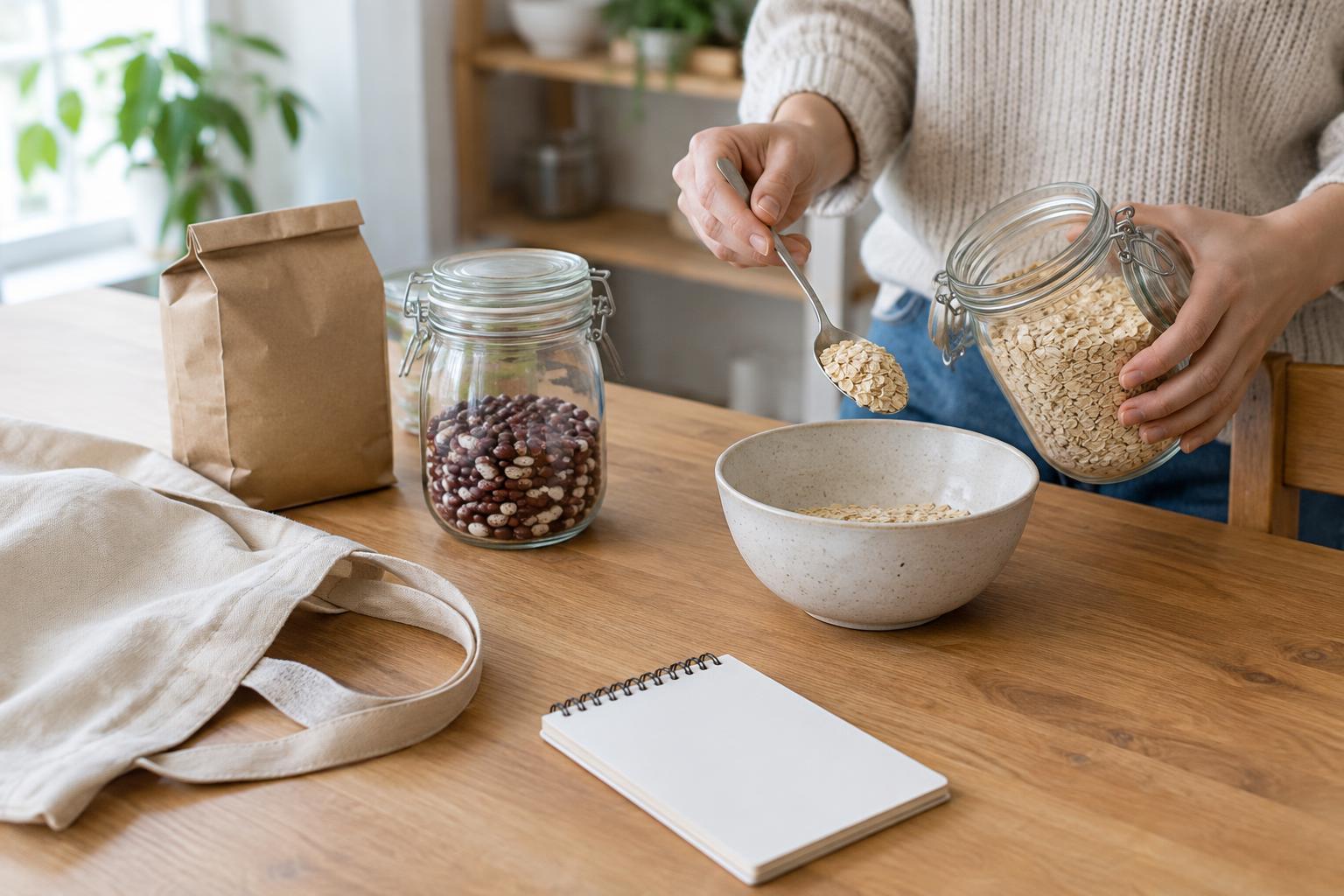
After a few weeks, look at what fills each bin fastest. Repeated packaging, disposable supplies or unused food may point to a practical change, such as choosing a less-packaged option when available, using what is already in the cupboard or adjusting how much you prepare. Recycling is useful where it is available, but avoiding an unnecessary item can save you the trouble of sorting and storing it in the first place.
Keep the system flexible. Household needs change, and the first arrangement may not be the most convenient one. Move a bin, rewrite a label or simplify a sorting step if people keep struggling with it. A small station that everyone understands is more useful than an elaborate one that no one can maintain.