Start with your collection program, not the package
A recycling symbol on a package does not guarantee that your household collection program accepts it. The symbol may identify a type of plastic or describe the package in general; your local program decides what it can collect and sort. Those rules can vary by address, building, and collection provider. The most useful recycling guide is therefore the one for your specific service.
Find out who collects your recycling, then look for that provider’s current list of accepted items. Your local government, waste authority, building manager, or hauler may publish a guide. Check whether it applies to curbside bins, shared apartment bins, or a drop-off site: each may have different rules. If a guide says “bottles and jugs,” do not assume it means every plastic container. When a description is unclear, contact the provider or look for an item-specific search tool before adding the item to your bin.
Learn the rules behind a few common categories
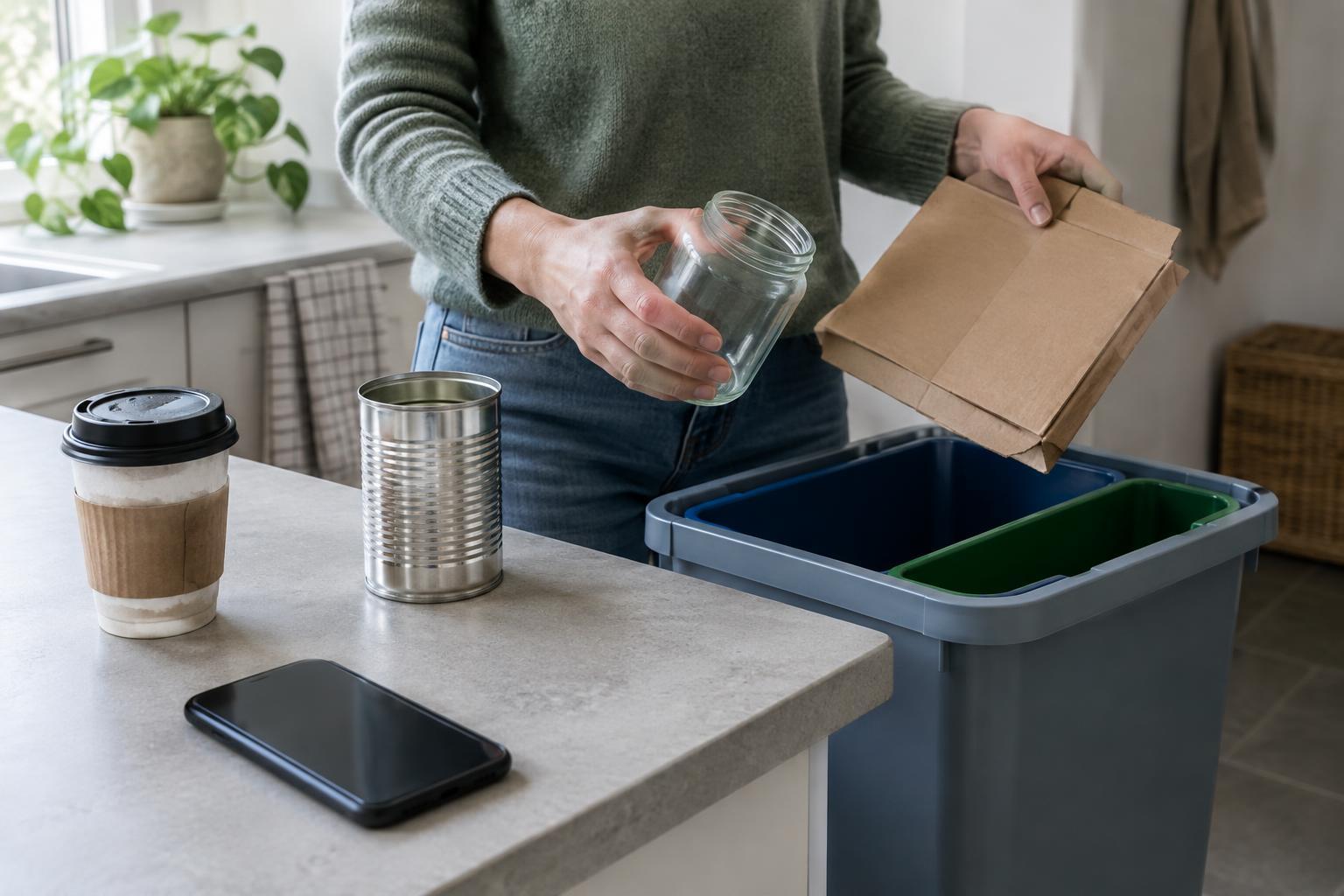
Most households handle the same materials repeatedly: paper and cardboard, metal cans, glass containers, and plastic packaging. Make a short list of what your program accepts in each category, including any limits on shape or size. For example, a program might accept plastic bottles but not plastic utensils, or accept glass jars only at a separate drop-off point. A quick reference near the recycling bin can save everyone in the household from guessing.
Pay attention to preparation instructions, too. Some programs want lids left on containers; others ask for them to be removed. Cardboard may need to be flattened, while boxes with food-soaked areas may need those areas removed or disposed of another way. Rules for cartons, shredded paper, and small pieces of packaging also vary. Follow the local guidance rather than relying on a sorting habit learned somewhere else.
Keep hopeful guesses out of the bin
Wishcycling means placing an item in recycling because you hope it can be recycled, even though you have not confirmed that the program accepts it. The intention is good, but an unaccepted item may create extra work during sorting or interfere with equipment. It can also make an otherwise useful load harder to process. Putting something in the bin is not the same as ensuring it will be recycled.
Common sources of uncertainty include plastic bags and film, disposable cups, foam packaging, greasy food packaging, and products made from several materials joined together. Some of these items have separate collection options; many do not belong in a household recycling bin. “Compostable” packaging is another category to check rather than assume: it may require a particular composting service and may not be accepted in recycling at all. If your local guide does not clearly include an item, keep it out of the recycling bin while you check.
Make clean sorting an easy routine
Empty containers before recycling them, and follow your program’s directions for rinsing or scraping. The goal is usually to remove leftover food and liquid, not to make each item spotless. Let wet paper dry if your program accepts it, and keep loose food away from paper and cardboard. A small amount of care at the kitchen counter can prevent a sticky mess in the shared bin.
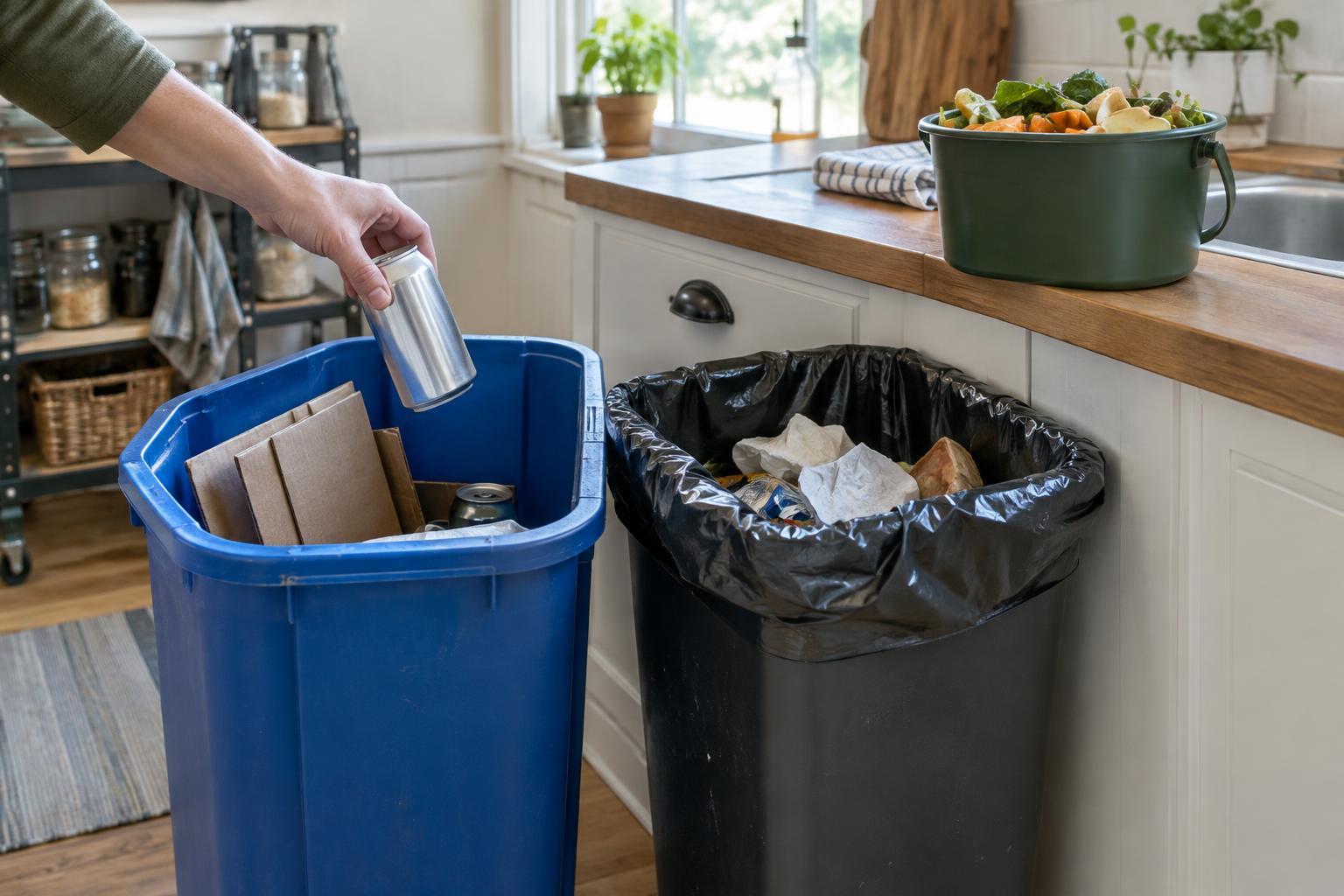
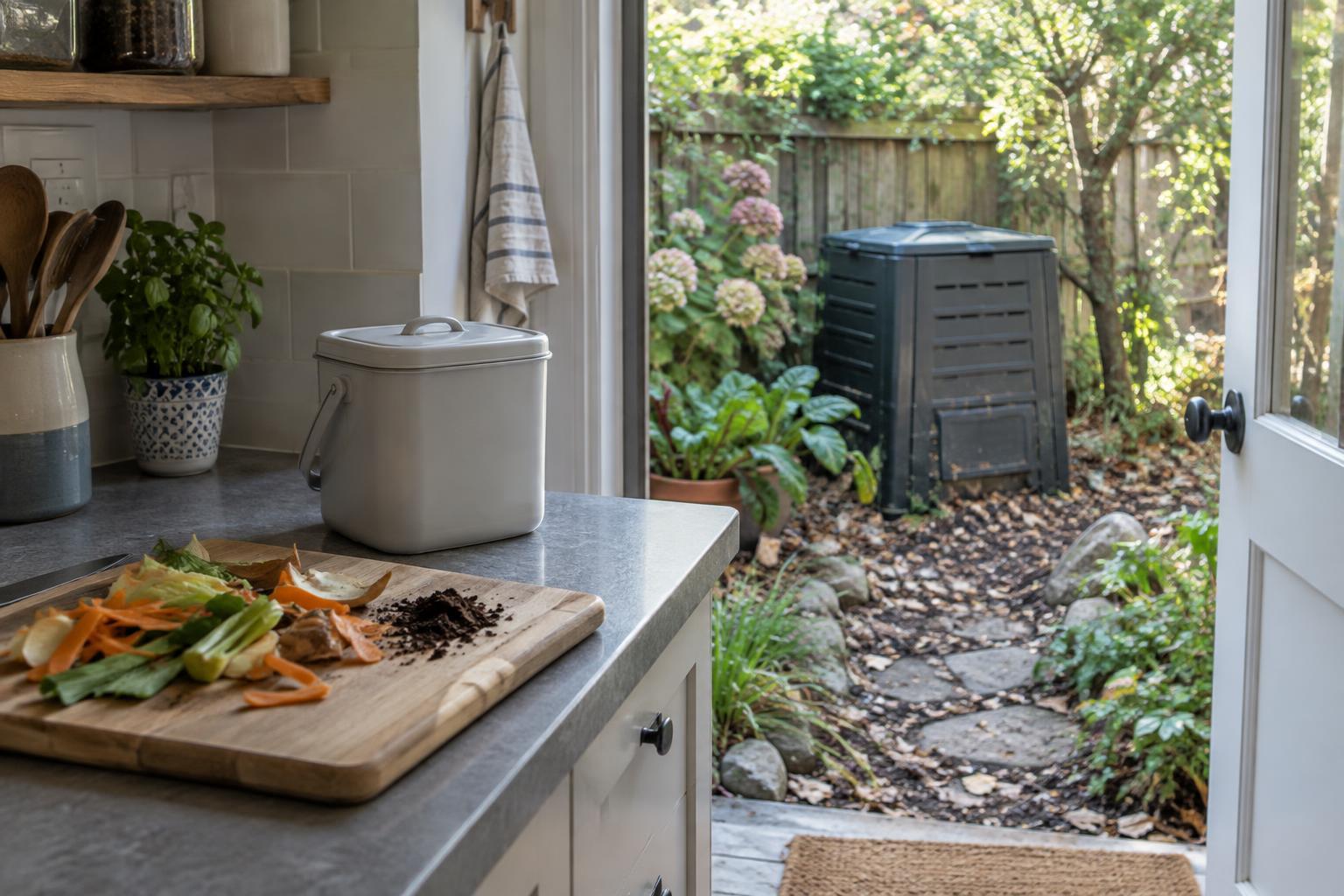
Set up containers where waste decisions happen: perhaps one for accepted recycling, one for ordinary rubbish, and, if available, one for food scraps. Put the short local rules list where people can see it. For an unfamiliar item, pause and check rather than tossing it into the closest bin. If the answer remains unclear, use the disposal option your provider recommends. Save special-collection items separately only if you have a realistic plan to take them to an approved location.
Use recycling as one tool, not the whole plan
Recycling matters, but it works best alongside buying less packaging and using what you already have. Choosing a refill, reusing a sturdy container, or passing on a usable item can avoid a disposal decision altogether. These choices do not need to be perfect to be worthwhile; focus on the changes that fit your household and that you can repeat.
Recheck your local recycling guide when you move, change collection providers, or notice a service update. Between checks, a simple rule holds up well: recycle what your program explicitly accepts, prepare it as directed, and resist adding uncertain items just in case. A smaller bin of correctly sorted material is more useful than a fuller bin of guesses.