Start with the water you do not mean to use
The easiest water to save may be the water that runs while no one needs it. Notice when a tap stays on as you scrub a pan, brush your teeth or reach for a towel. Turning it off during those pauses is a simple change that does not depend on buying anything. Keep a cup by the sink if you prefer to rinse after brushing, and set out dishwashing supplies before turning on the kitchen tap.
Leaks deserve attention too. A dripping faucet, a toilet that continues to run after flushing or moisture beneath a sink can waste water without becoming part of your daily routine. Check fixtures occasionally, and learn where the shutoff valves are in case a leak becomes more than a drip. If a repair is outside your comfort level, getting help is more useful than letting the problem continue.
Make kitchen cleanup more deliberate
Before washing dishes, scrape food scraps into the appropriate bin rather than rinsing them down the drain. Soak stuck-on food in a small amount of water while you clean other items. For handwashing, filling a basin or using a plugged sink can be more controlled than leaving the tap running; rinse with only the water needed to remove soap. Wash items in groups when practical, but do not let dirty dishes sit so long that cleanup becomes harder.
If you use a dishwasher, follow the machine’s guidance on loading and detergent. Many dishes need only a scrape before loading, though heavily soiled items may need extra attention. Run a sensible load rather than starting the machine for just a few pieces, and choose an appropriate cycle instead of assuming the longest one is necessary. A dishwasher that is overloaded or poorly loaded may leave dishes dirty and create a second round of washing.
Prepare food without a constantly running tap
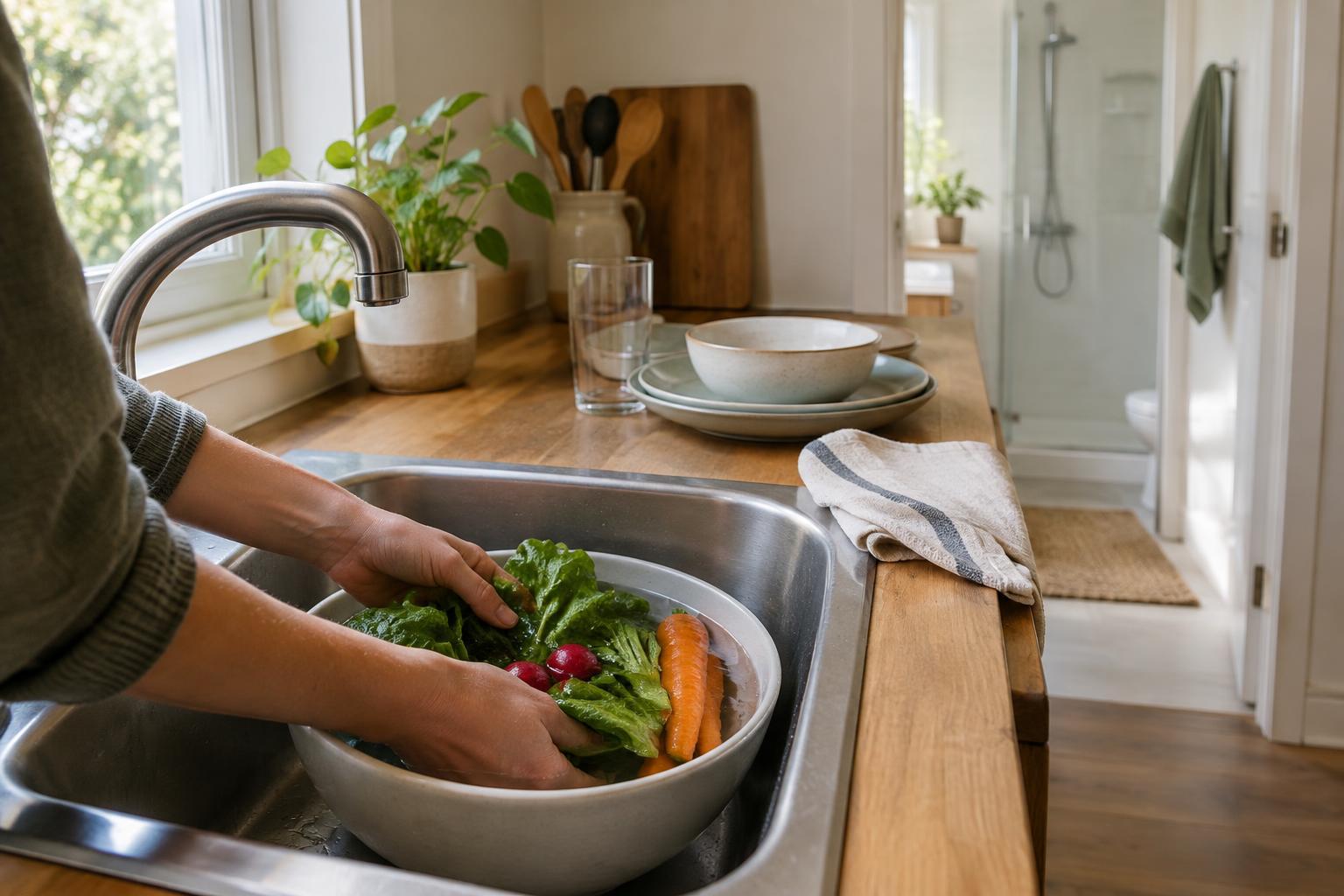
Vegetables and fruit need washing, but the tap does not always need to run throughout the job. A bowl of clean water can help loosen dirt from produce, followed by a rinse under clean running water when needed. Change the bowl water if it becomes dirty, and clean the bowl between uses. When thawing food, use a safe method such as the refrigerator rather than leaving it under a stream of water.
Cooking choices can help as well. Use an appropriately sized pot and only the water a recipe requires. Put a lid on a pot when that suits the dish, and measure water for drinks or cooking instead of routinely filling a kettle or pan to the top. These are modest habits, not rules worth compromising food safety or a meal over. Their value is that they prevent unnecessary water use without adding much work.
Adjust bathroom routines for comfort and hygiene
A shorter shower may be an easy place to begin, particularly if you tend to leave the water running while deciding what to do next. Keep soap, shampoo and a towel within reach before starting. If you pause the water while lathering, be mindful of temperature when turning it back on. There is no need to make a shower unpleasant to make it more intentional.
At the sink, turn off the tap while brushing your teeth or working soap into your hands, then use enough clean water to rinse properly. Do not reduce essential handwashing, bathing or cleaning just to meet a water-saving goal. If your toilet has a dual-flush option, use the setting suited to the job. Avoid using the toilet as a bin: tissues, wipes and other waste belong where local disposal guidance directs them.
Use maintenance and reuse with care
Simple maintenance can keep fixtures working as intended. Clean mineral buildup from a faucet aerator or showerhead according to the manufacturer’s guidance, and check that taps close fully. If a fixture needs replacing, look for one suited to your home and water pressure rather than choosing solely by a low-flow label. Repairing a working fixture may be the less wasteful option when a small part is the problem.
Some used water can have a second purpose: for example, plain water left in a drinking glass can go on a houseplant that tolerates it. Keep reuse simple and sanitary. Water containing soap, cleaning products or raw-food residue is not suitable for every use, and stored water can become unpleasant. The most reliable approach is to prevent needless flow first, then reuse small amounts only where it is clearly safe and convenient.