Make it the host’s plan, not the guests’ assignment
A low-waste gathering works best when guests can simply arrive and enjoy themselves. They should not need to bring their own cup, sort unfamiliar materials, or apologize for a packaged contribution. As host, focus on choices you control: how much you buy, what you serve it in, and what happens to anything left over.
Start with the kind of gathering you can comfortably manage. A small potluck, afternoon snack, or simple dinner may need less food, equipment, and preparation than an elaborate party. If guests ask what to bring, give them an easy option, such as a favorite dish, or say that their company is enough. Avoid turning an invitation into a list of sustainability requirements.
Use what you have before buying supplies
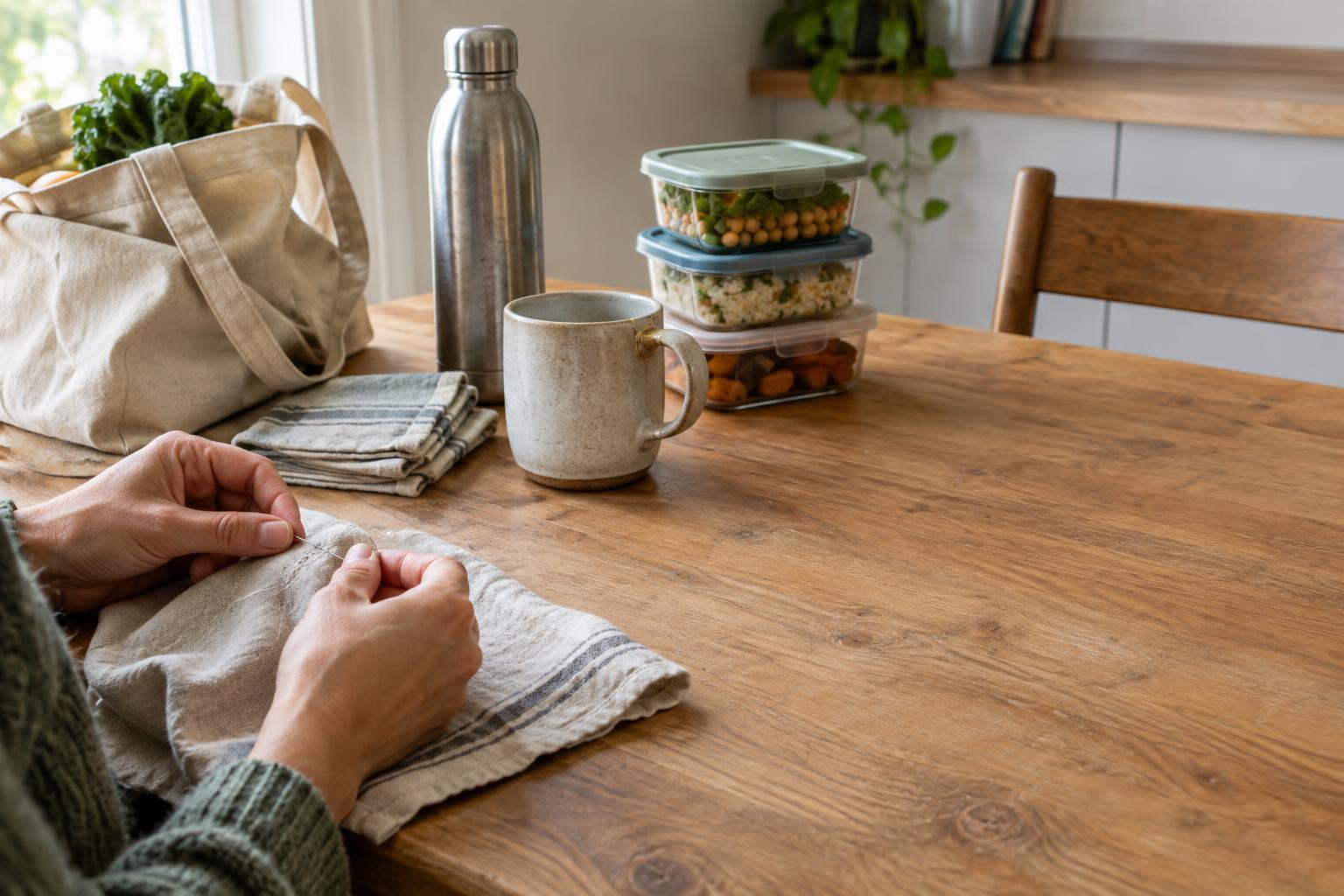
Look through your cupboards before making a shopping list. Everyday plates, mugs, glasses, and cutlery do not have to match. If you are short on something, consider borrowing from a willing friend or serving food that needs fewer pieces of tableware. A tray of sandwiches, for example, may be simpler to serve than several courses.
The same approach applies to decorations. Rearranged lamps, a tablecloth you already own, or flowers from a garden where picking is permitted can make a space welcoming. If you do buy an item, ask whether you have room and a realistic reason to use it again. A durable serving bowl may be useful for years; a set of themed decorations may be harder to justify for one evening.
Plan food for enjoyment, not abundance
An overflowing table can feel generous, but too much perishable food creates work afterward. Plan a modest menu around the number of people expected, the length of the gathering, and whether it falls at a mealtime. A few dishes people can serve themselves are often easier to manage than many small options. Check dietary needs when practical, without asking guests to explain more than they want to.
Choose ingredients you can use in ordinary meals if plans change. Keep serving dishes small enough that you can refill them as needed rather than putting everything out at once. Follow appropriate food-storage practices, especially for foods that need refrigeration, and do not save food that has sat out longer than is safe. Reducing waste should never take priority over food safety.
Make drinks and disposal straightforward
A pitcher of water and a small selection of other drinks can be easier to manage than a large assortment of single-serving containers. Put glasses where people can find them, and leave room nearby for used ones. If identifying drinks is helpful, offer a washable marker for glasses or another simple cue rather than assuming everyone will keep track.
Place a rubbish bin somewhere visible, with recycling or food-scrap collection beside it only if you can explain what belongs there. Local collection rules vary, so clear labels matter more than an elaborate sorting station. Guests should be able to set something down without solving a puzzle. You can check the bins during cleanup and handle any sorting that needs a closer look.
Offer leftovers without creating an obligation
Before guests leave, you can mention that food is available to take home, but accept a no without comment. Keep clean containers on hand if you have them, and do not expect guests to have brought their own. Reserve portions you know you will eat, refrigerate suitable food promptly, and let go of anything that cannot be stored safely.
Afterward, notice what was easy and what produced avoidable waste. Perhaps you needed fewer drinks, more seating, or a simpler menu. That information is more useful than aiming for a perfect, empty bin. The goal is a gathering people felt welcome at—and a hosting routine you would be happy to repeat.