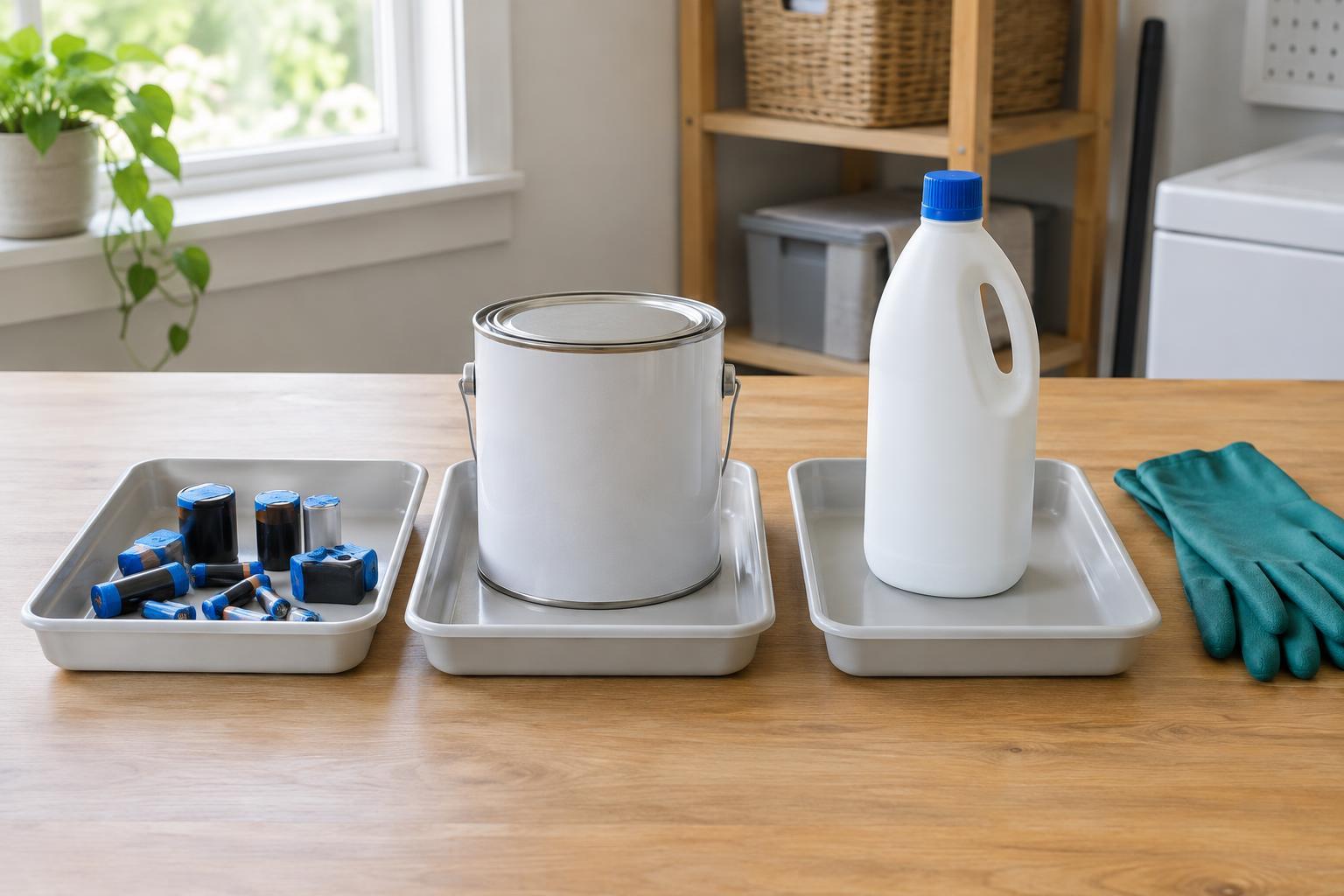
Start with a safe sorting spot
A partly used paint can or a drawer full of old batteries is easy to ignore. Yet some household products can leak, catch fire, or harm people and the environment if handled carelessly. Disposal rules vary by location and material, so the most useful first step is to identify what you have rather than put everything into one bag.
Choose a dry place away from children, pets, heat, and food to hold items until you can dispose of them. Keep products in their original containers when possible, with labels readable and lids secure. If a container is leaking, follow its label’s handling directions and ask your local waste authority how to manage it. Do not mix leftover chemicals, even if both containers seem nearly empty: their contents may react or become harder to identify.
Check your municipality’s waste guidance for the exact item, not just a general recycling symbol. Local household hazardous waste programs may offer collection sites or scheduled events, while some retailers accept specific products. Confirm what a location takes before making a trip.
Handle batteries by type
Batteries are not all treated alike. Rechargeable batteries, lithium batteries, button cells, and car batteries often have designated collection options because they contain recoverable materials or pose handling risks. Rules for ordinary alkaline batteries differ by area; do not assume a recycling bin accepts them. Look for a battery collection program or consult local guidance before disposal.
Store used batteries where their terminals cannot touch metal objects or one another. For batteries with exposed terminals, such as many lithium and rechargeable types, follow the collection program’s instructions for covering the terminals with nonconductive tape or bagging batteries individually. This helps reduce the risk of a short circuit during storage and transport. Do not crush or open batteries.
A swollen, leaking, hot, or damaged battery needs extra care. Avoid handling any leaked material directly, keep the battery away from flammable items if you can do so safely, and contact your local waste authority or collection program for instructions. An ordinary battery drop box may not accept damaged batteries.
Sort paint before you toss the can
Read the paint label to determine what is left. Oil-based paints, stains, solvents, and paint thinners commonly require household hazardous waste collection. Never pour them down a drain, onto the ground, or into a storm drain. Keep the lids tight and take the products to a program that accepts them.
Latex and other water-based paints may be handled differently. Some communities accept them through paint take-back programs; others allow small amounts of fully dried paint in household trash under specific conditions. Check local rules before drying or discarding anything. Empty cans may also have separate recycling requirements, so do not assume a can belongs in curbside recycling just because it is metal.
Usable paint is worth keeping only if it can be stored securely and identified later. Mark the room or project on the can and close it well. If you have more than you will use, ask a local reuse program whether it accepts unopened or usable paint rather than leaving it for someone else to sort.
Give other problem items their own route
Pesticides, pool chemicals, automotive fluids, and some strong household cleaners may require hazardous waste collection. Keep each in its labeled container and check the local program’s accepted-items list. Fluorescent bulbs can contain mercury and may have separate collection points; protect them from breakage rather than placing them loose in a bin. Electronics may also have dedicated recycling options.
A few items need different systems altogether. Many communities offer medication take-back options, while needles and other sharps require approved containers and disposal routes. Do not put loose sharps into household trash or recycling. If you are unsure where an item belongs, ask the relevant local program instead of guessing or combining it with hazardous waste.
Make the next cleanout smaller
Safe disposal matters, but buying and using less can prevent the pile from forming. Before a project, estimate how much paint or other material you need and check what you already own. Choose products you can realistically finish, borrow rarely used supplies when practical, and maintain rechargeable items so they last longer.
Set aside a few minutes every few months to check your storage area. A small, labeled box for spent batteries and a list of items awaiting drop-off can make the next trip easier. The goal is not to memorize every disposal rule: it is to keep materials contained, find the correct local route, and avoid passing a preventable problem on to a trash collector, recycler, or neighbor.