Start with your calendar, not your closet
Before sorting a single hanger, sketch out a fairly ordinary week. Where do you go, what do you do there, and what do you need to wear? Include work, home, errands, exercise, social plans and any regular travel. Note practical conditions too: whether you walk a lot, need to move freely, or often go from one activity to another without changing.
Now compare that week with the clothes taking up space. A closet can contain plenty of options while still making a routine Tuesday difficult. You might own several occasion outfits but only two comfortable combinations for the activities you do most. The point is not to dress every day the same way. It is to give your most frequent activities enough usable options that you are not repeatedly reaching for an overworked favorite.
Find the clothes doing the real work
For a week or two, notice what you actually choose. A note on your phone or a piece of paper near the closet is enough. Record the outfit and, if helpful, why you picked it: comfortable shoes, easy layers, a reliable fit or something clean at the right time. Include clothes you wear at home. They count, even if they rarely appear in your idea of a “proper” wardrobe.
Look for patterns rather than trying to calculate a perfect number of garments. Which items suit several parts of your day? Which ones do you skip because they itch, need special care or require a piece you do not own? An unworn item is not automatically a mistake; formalwear and seasonal layers may have a clear purpose despite being used rarely. But if a large share of your storage serves a life you seldom lead, it may be crowding out clothes that would help now.
Build outfits before making a shopping list
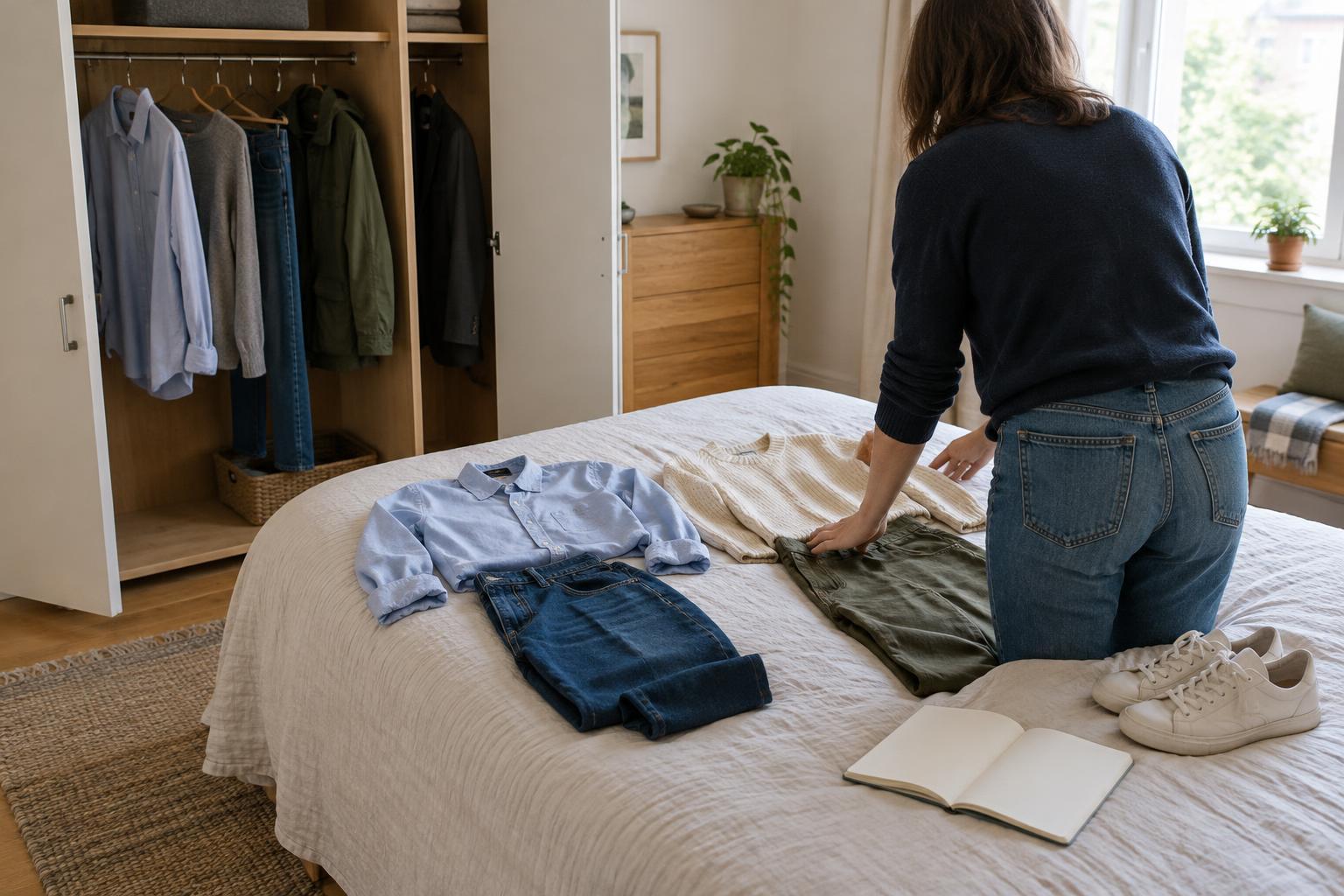
Group the clothes you already have into outfits for your recurring activities. Try each combination on if you are unsure about fit or comfort. Check the whole outfit, including shoes and outerwear. A top that looks versatile on its own may be less useful if it works with none of the bottoms you like wearing.
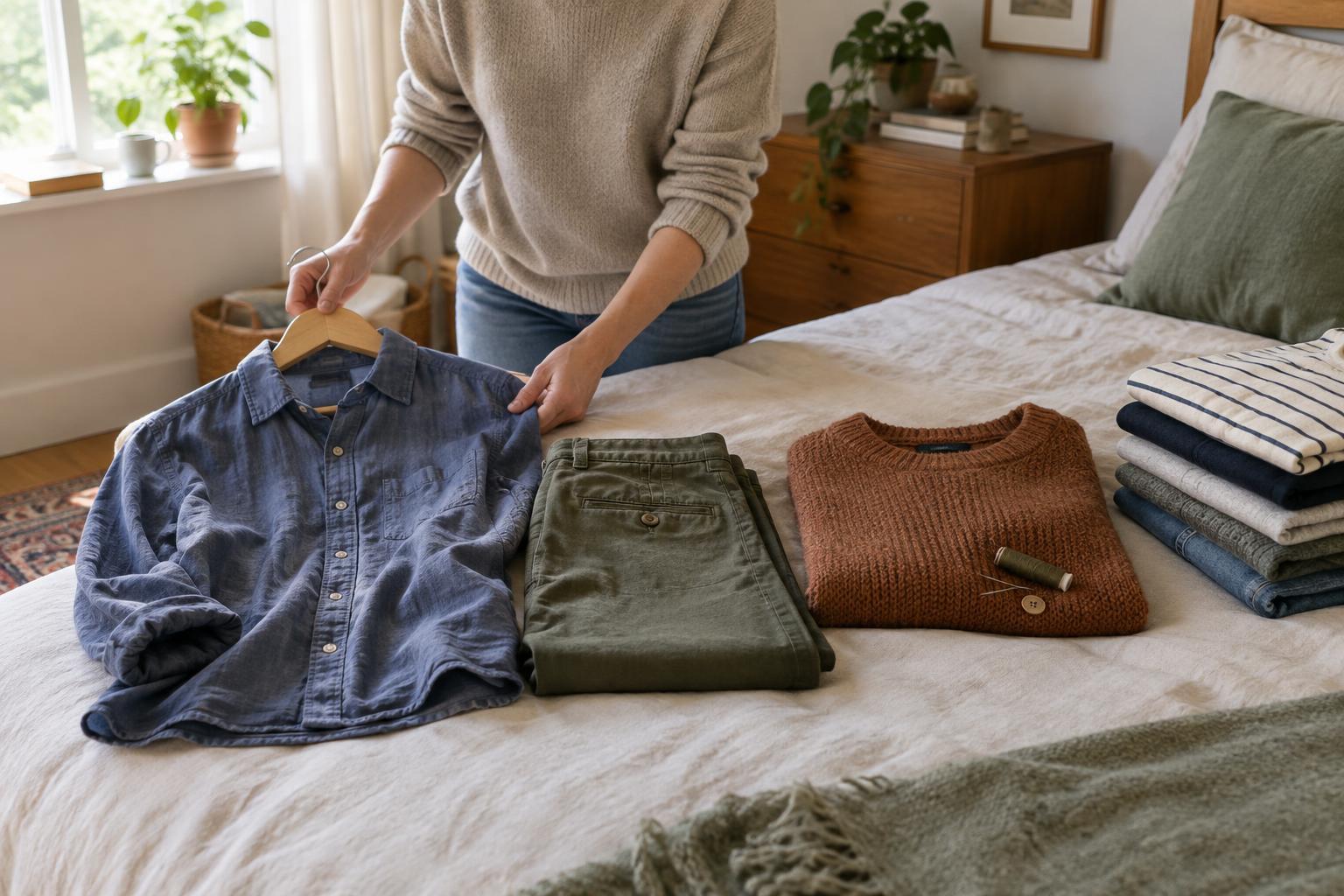
When an outfit does not come together, identify the precise obstacle. Is a button missing? Does one garment need hemming? Would washing a frequently worn layer more often solve the problem? Repairing or changing how you use something may be simpler than buying a replacement. If there is a genuine gap, describe the job the missing item must do rather than naming a trend or a vague category. “A washable layer I can wear over three work outfits” is more useful than “more work clothes.”
Keep a short list and wait until you can see whether the gap persists. That pause can prevent a purchase made for one awkward morning from becoming another rarely worn item. When you do need something, secondhand options may be worth checking, especially if you can assess the fit and condition before committing.
Give occasional needs a sensible amount of space
An actual week will not capture everything. Weddings, interviews, holidays and weather changes may all call for clothes outside your regular rotation. Keep pieces that serve a realistic occasional need and still fit your life. The goal is not to discard anything you did not wear this month.
What helps is separating occasional clothes from daily ones. Put seasonal items away when they are not needed, and keep special-occasion pieces together so you can find them. If an event comes up, check that area before shopping. Consider whether an existing outfit can be adapted with different shoes or a layer. For a one-time need, borrowing may be an option if the arrangement is convenient for everyone involved.
Make the edit easy to live with
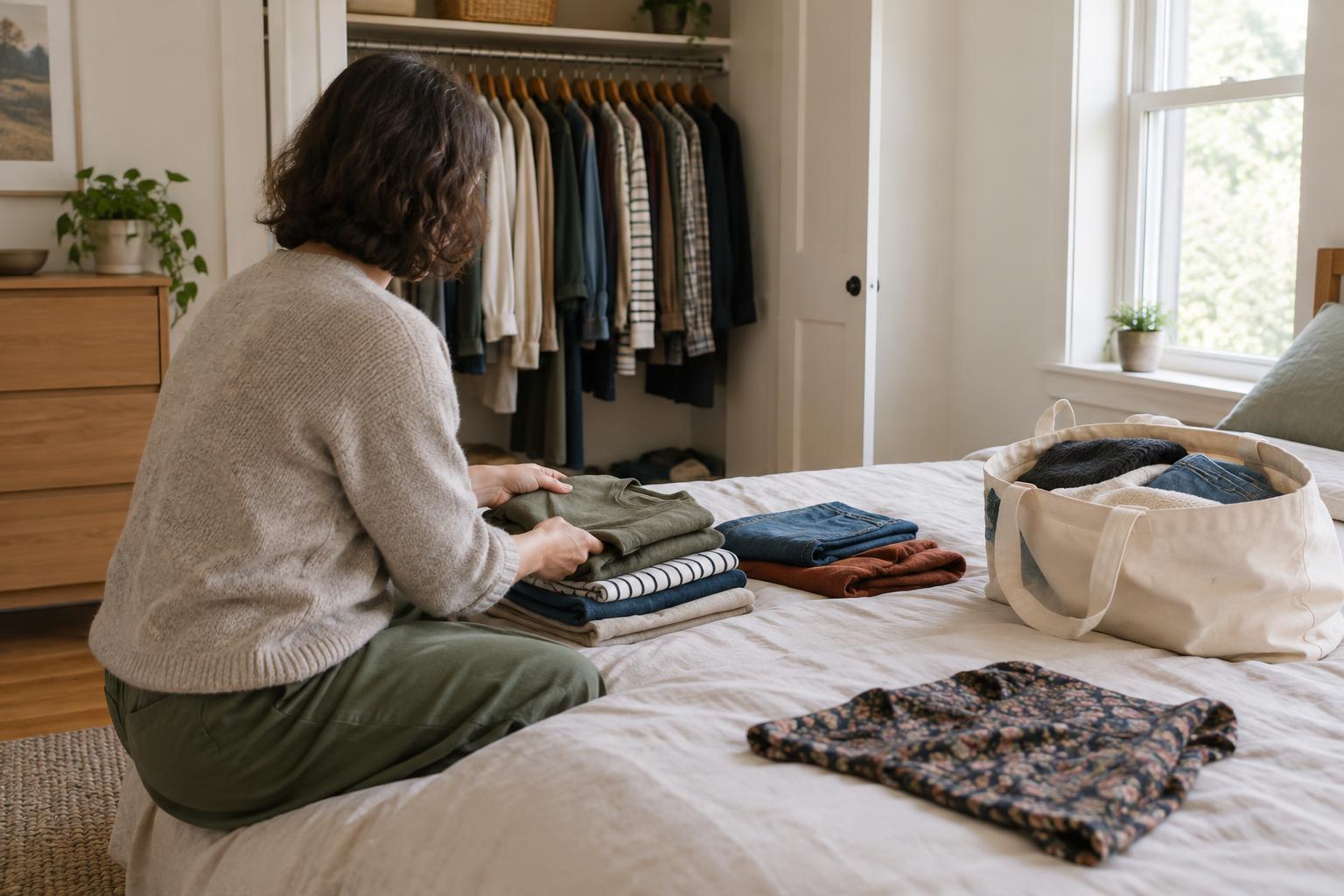
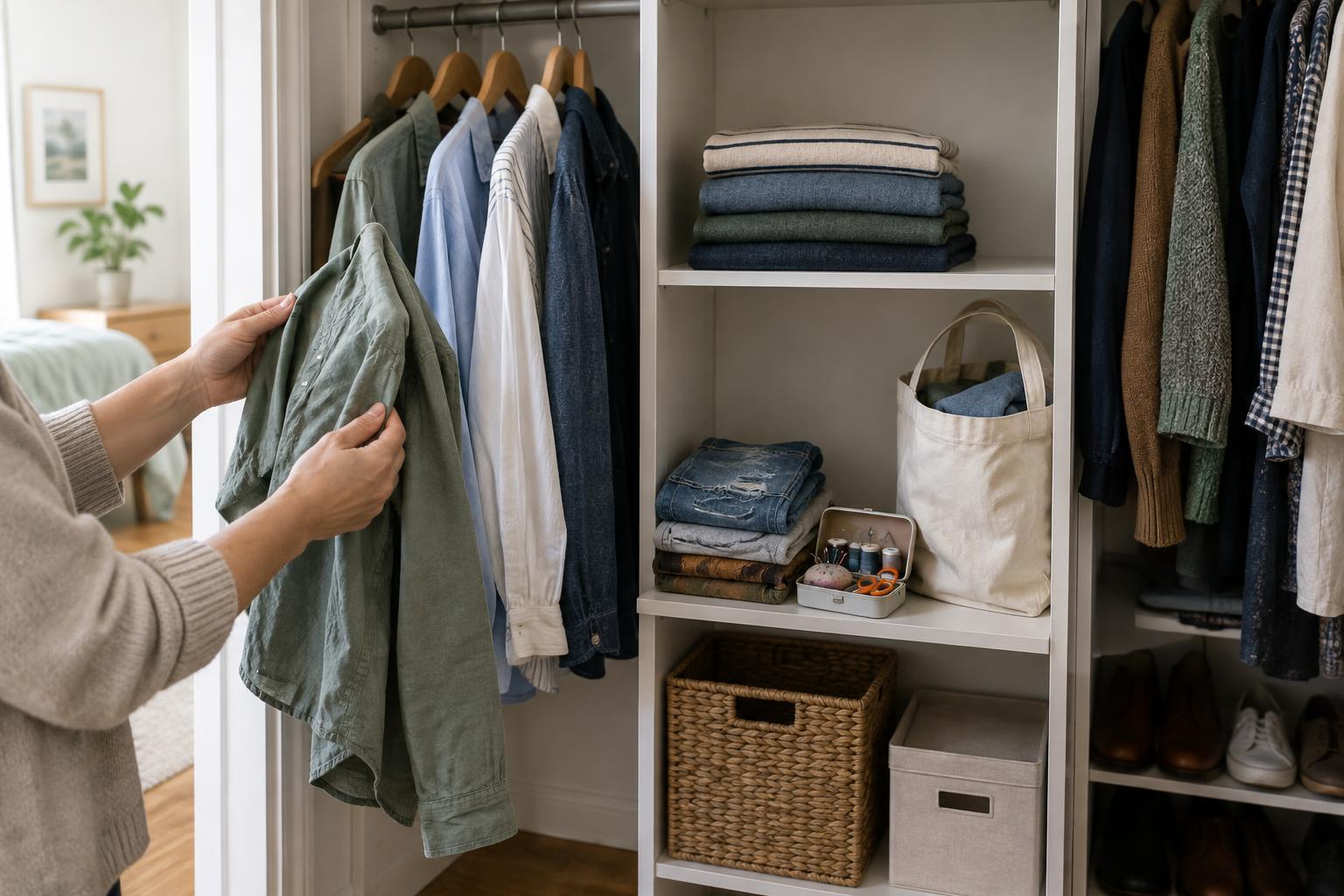
Place the clothes you use most where they are easiest to reach. Give frequently worn outfits enough room to stay visible, and set aside items that need cleaning or repair so they do not keep reappearing as false options. If you are undecided about a garment, you can store it separately for a while rather than forcing an immediate decision.
Revisit the setup when your routine changes. A new commute, different work arrangement or shift in hobbies can change what earns its space. Editing a wardrobe is less about reaching a fixed number of items than keeping your clothes useful for the life you are living. When you know what already works and what is missing, it becomes easier to care for good pieces, shop with a purpose and let go of things you no longer need.