Start with your life, not an ideal wardrobe
A wardrobe edit works best when it helps you get dressed more easily, not when it meets a target number of items. Before pulling everything out, think about an ordinary week: what you wear to work, at home, outdoors and for occasions that come up less often. Clothes for a rare but real need can earn their space. So can comfortable basics that you reach for repeatedly, even if they are not especially exciting.
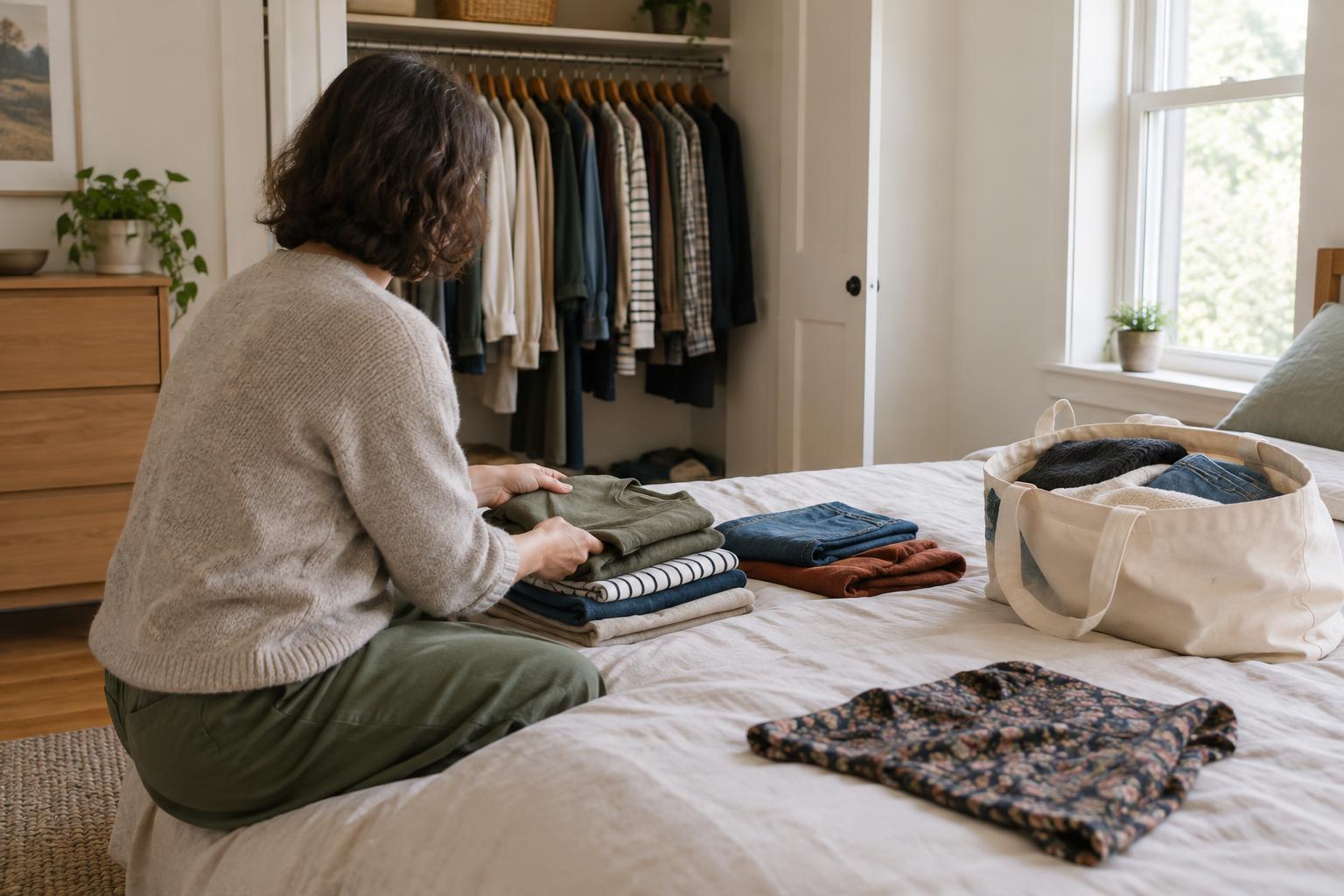
Choose a manageable area, such as one drawer or one type of clothing, and try things on if you are unsure. Make space for four groups: keep, repair or alter, pass on, and undecided. The last group is useful, but give it a limit. A small box with a date to revisit it can prevent uncertain pieces from drifting back into the wardrobe without a decision.
Keep what earns its place
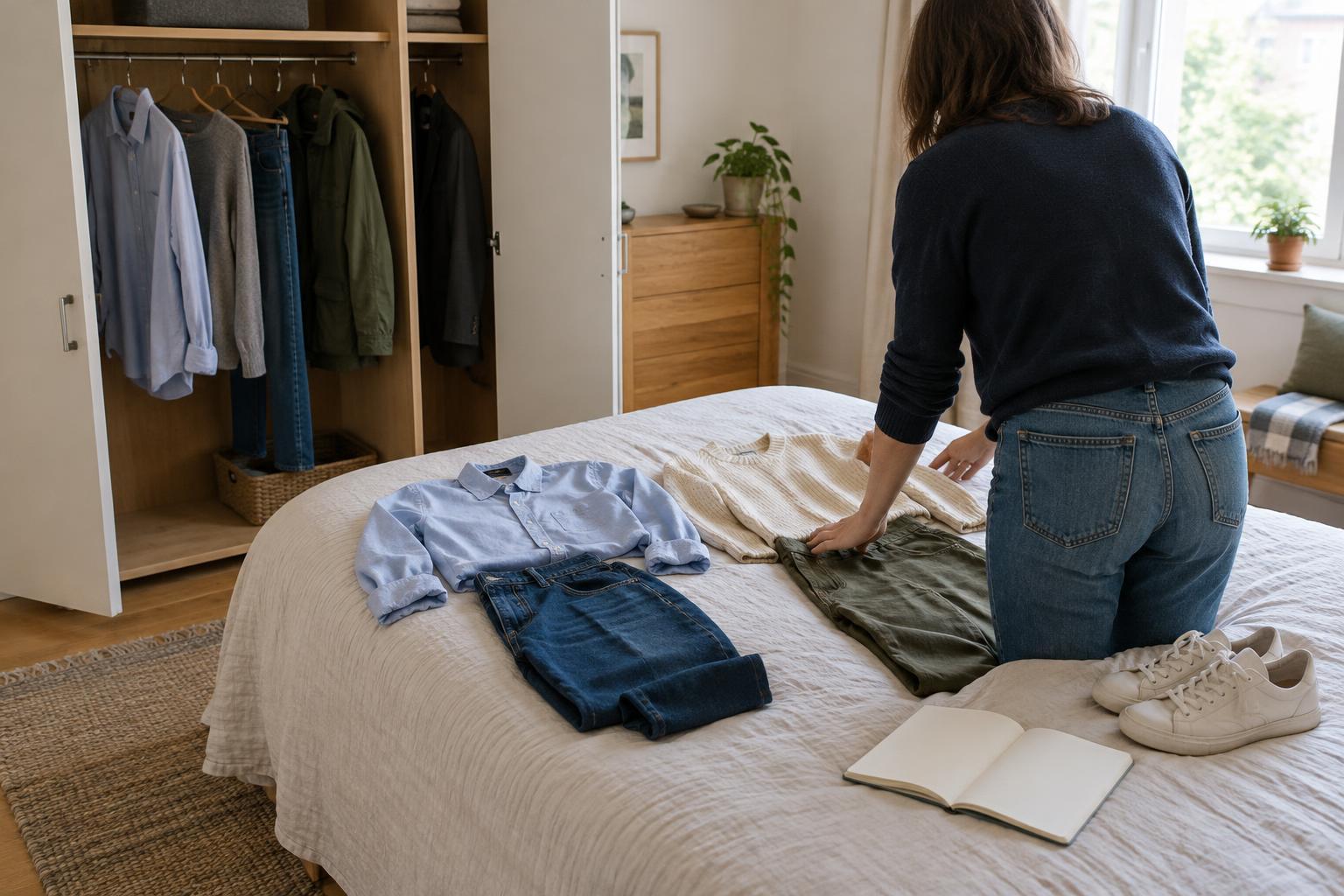
For each item, ask a few concrete questions. Does it fit your body comfortably now? Can you move, sit and care for it without unusual effort? Does it work with other clothes you actually wear? Is it in a condition you are happy to use? An item does not need to pass every test perfectly, but these questions reveal why it stays unworn. A beautiful shirt that needs constant adjusting may be less useful than a plain one you can rely on.
Do not let the price you paid make the decision for you. That money is already spent; keeping an uncomfortable item will not bring it back. At the same time, there is no need to discard something just because you have not worn it recently. Seasonal clothing, formalwear and pieces with a specific purpose may be worth keeping if the need is likely to return and you have room to store them well.
Separate a fixable problem from a poor match
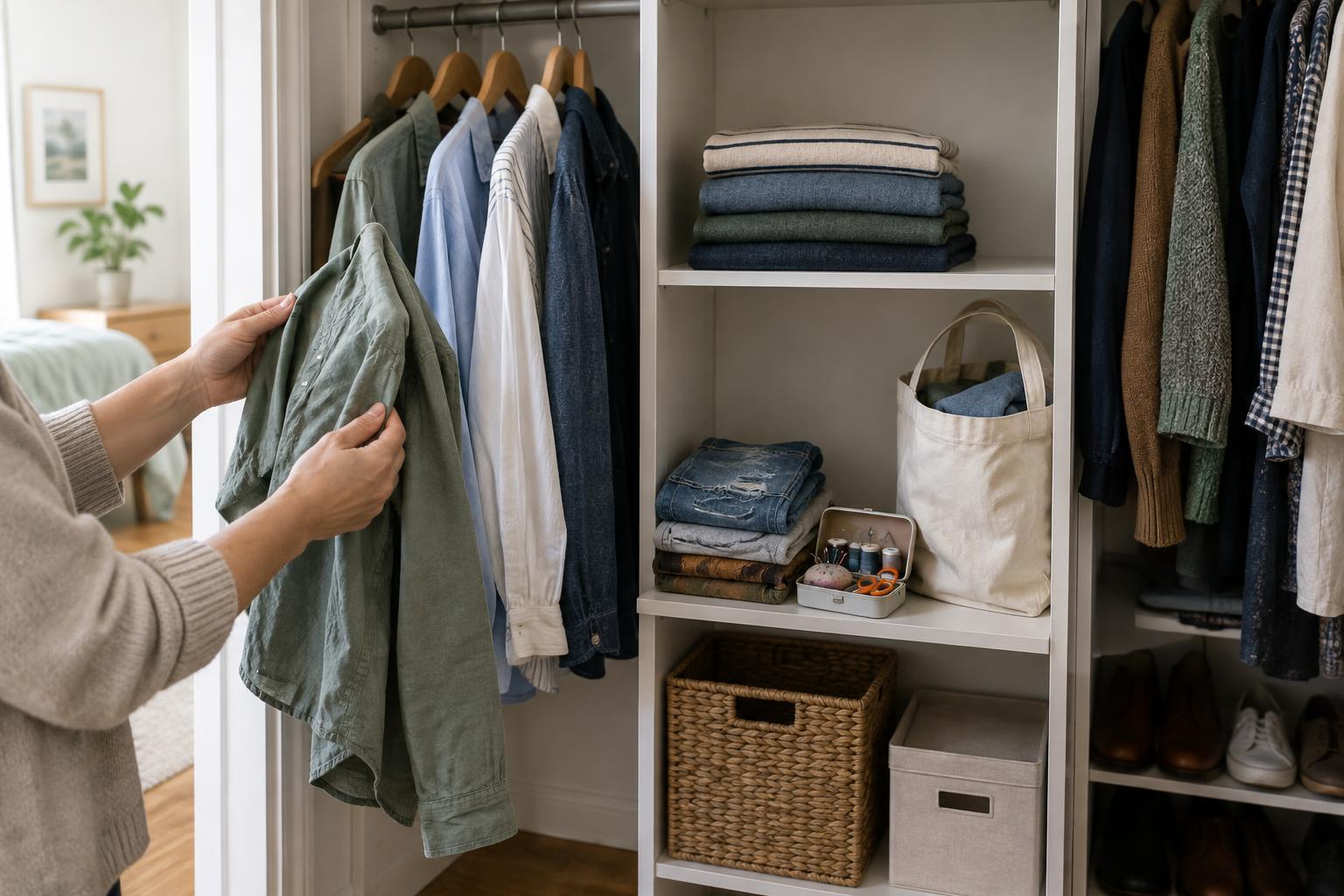
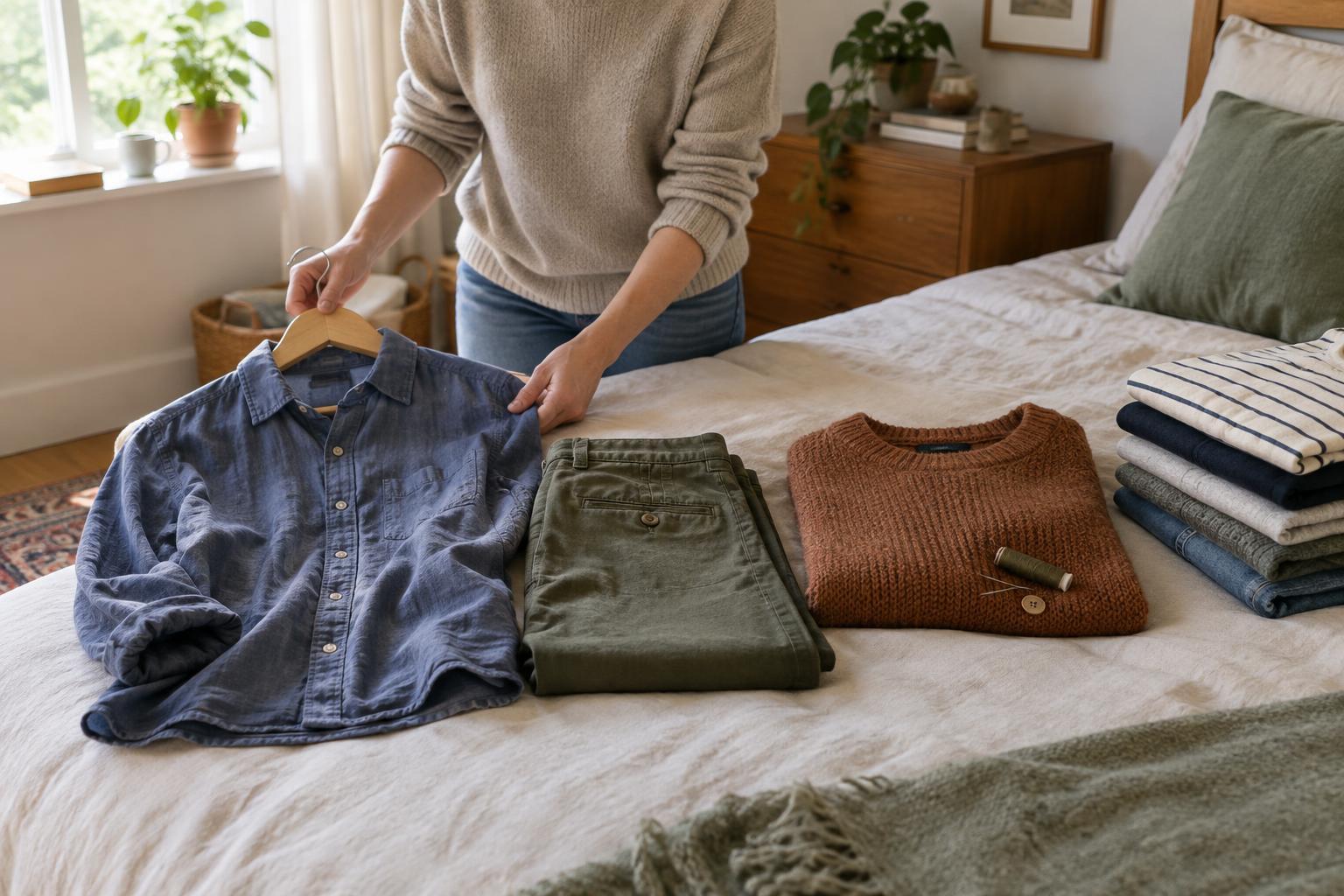
A missing button, loose hem or small tear may be straightforward to repair. Set repair candidates aside with the supplies they need, then choose a realistic time to do the work. If sewing is not for you, consider whether the item is worth taking to a repair service. For alterations, be specific about the change you want. Shortening trousers is a clearer plan than hoping a jacket can somehow become comfortable.
Before committing time or money, ask whether you would wear the item once it was fixed. A repair can restore a favorite garment, but it cannot make an unsuitable fabric feel good or turn a style you dislike into one you enjoy. If you are uncertain about an alteration, get an opinion on what is possible before making the piece part of your future wardrobe plans.
Let go in a way that respects the item
Passing on usable clothes can give them another chance, but it helps to be honest about condition. Clean, wearable pieces may be suitable to offer to someone you know, sell secondhand or donate where they are accepted. Check a recipient’s guidelines rather than leaving them with stained, badly damaged or unsuitable items. If an item is beyond wear or repair, look for a textile collection option that accepts its condition; otherwise, follow local disposal guidance.
It can be harder to release gifts, aspirational sizes or clothes connected to an earlier version of your life. You do not have to justify keeping something meaningful, but you can choose deliberately. If the memory matters more than wearing the garment, consider whether one representative piece is enough. The goal is not to feel guilty about what you own. It is to make room for clothes you can use and care for.
Make the next edit easier
Once you have sorted a category, put the keepers back where you can see and reach them. Grouping similar pieces together makes duplicates and gaps easier to notice. If something remains unworn, pay attention to the reason: perhaps it needs a different layer, takes too much care or does not suit your routines. That observation is more useful than a rule about how often every item should be worn.
Keep a short note of what the edit taught you before buying anything new. You might discover that you prefer washable fabrics, need a particular fit, or already have enough clothes for certain occasions. When a genuine need arises, those details can guide a more durable choice, whether you shop secondhand or new. Editing is not a one-time purge; it is a way to look after what you have and make future decisions with more confidence.