Start with the clothes, not a goal for your body
Bodies change, sometimes gradually and sometimes all at once. A closet can lag behind, leaving you to sort through clothes that pinch, slip, or simply feel wrong. Editing those pieces is not a judgment about your body or a prediction about its future. It is a way to make the space you use every day easier to navigate.
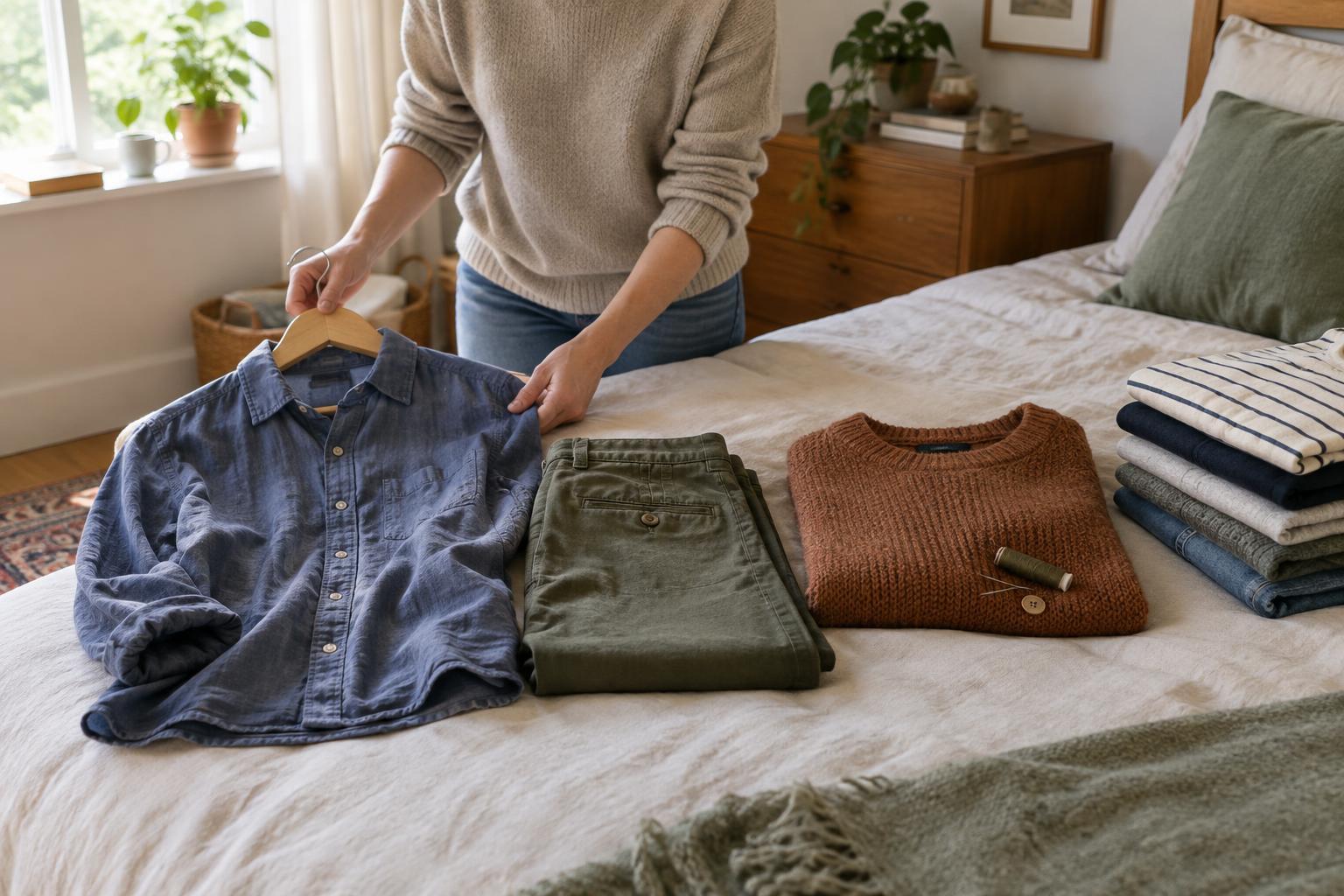
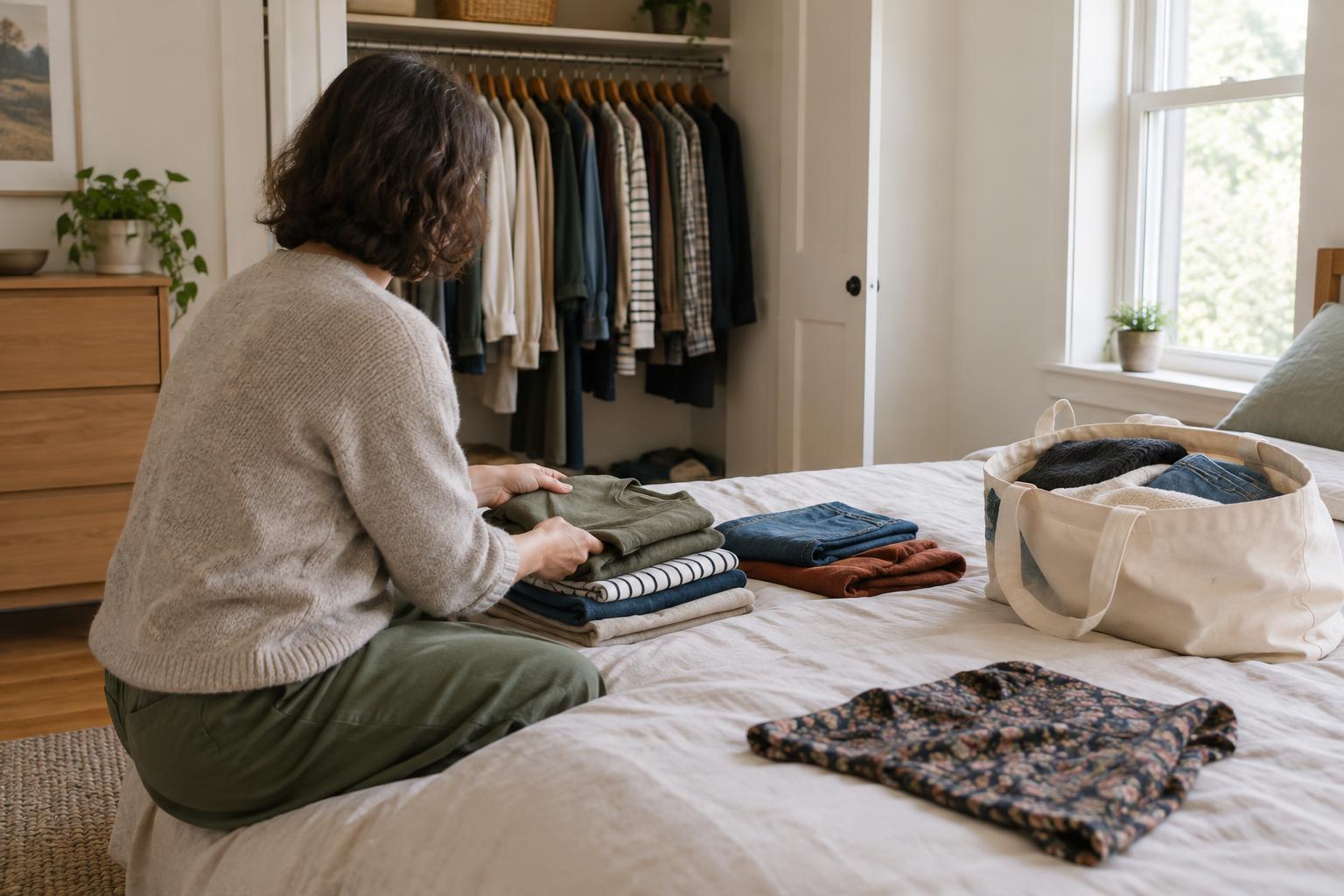
Choose a manageable group, such as jeans, work clothes, or one drawer. Set aside time when you can try things on without rushing, and keep a bag or box nearby for each outcome: keep, alter, pass along, and undecided. If trying on a particular category feels draining, you can start by checking measurements against a garment that currently fits. You do not need to finish the whole wardrobe in one session.
Decide what deserves everyday space
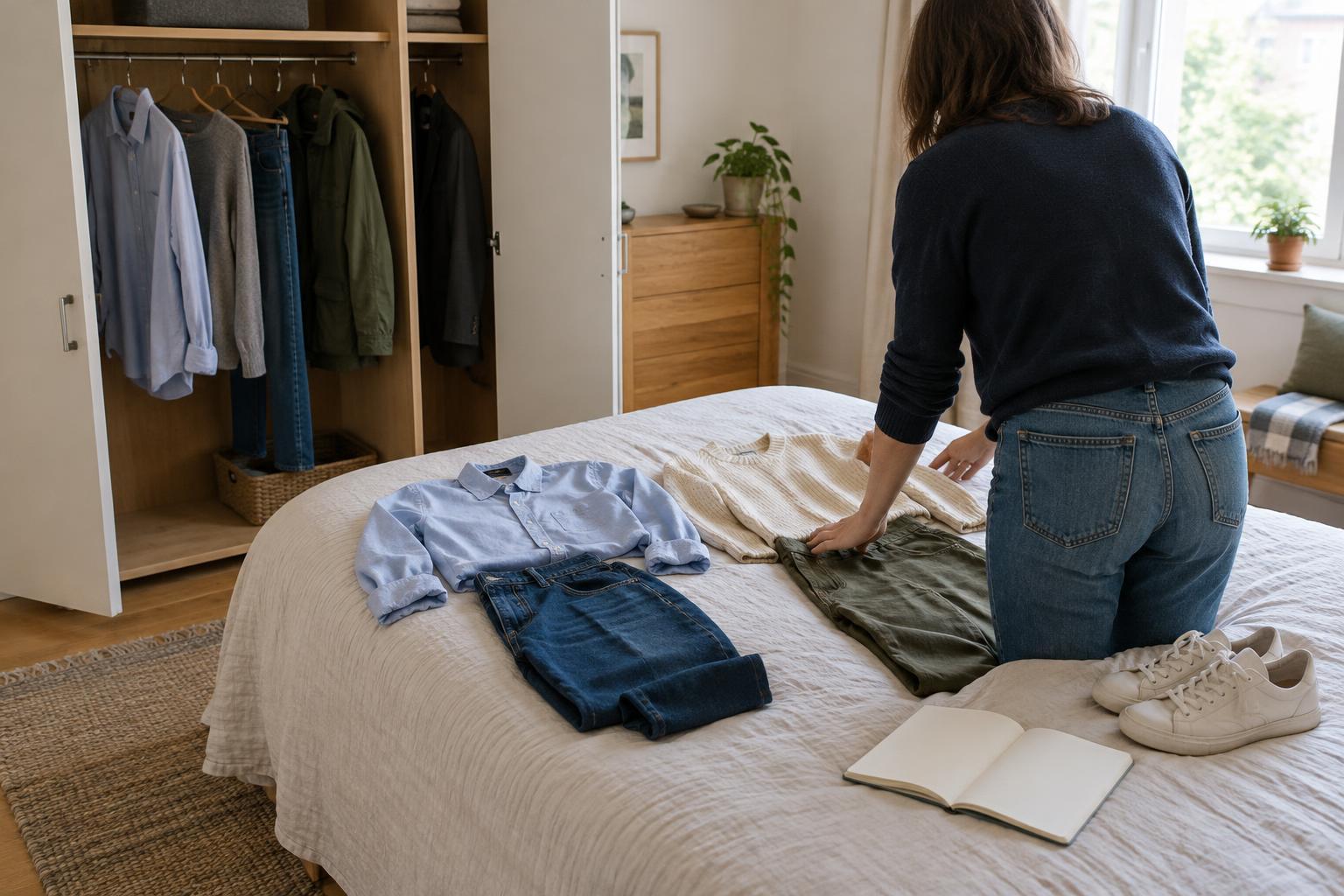
For each piece, ask whether it fits comfortably enough for the way you use it. Can you sit, reach, and move without repeatedly adjusting it? Would you choose it over the other clothes available to you now? Fit labels and remembered sizes are less useful than those answers. A garment can be in excellent condition and still not belong in your working wardrobe.
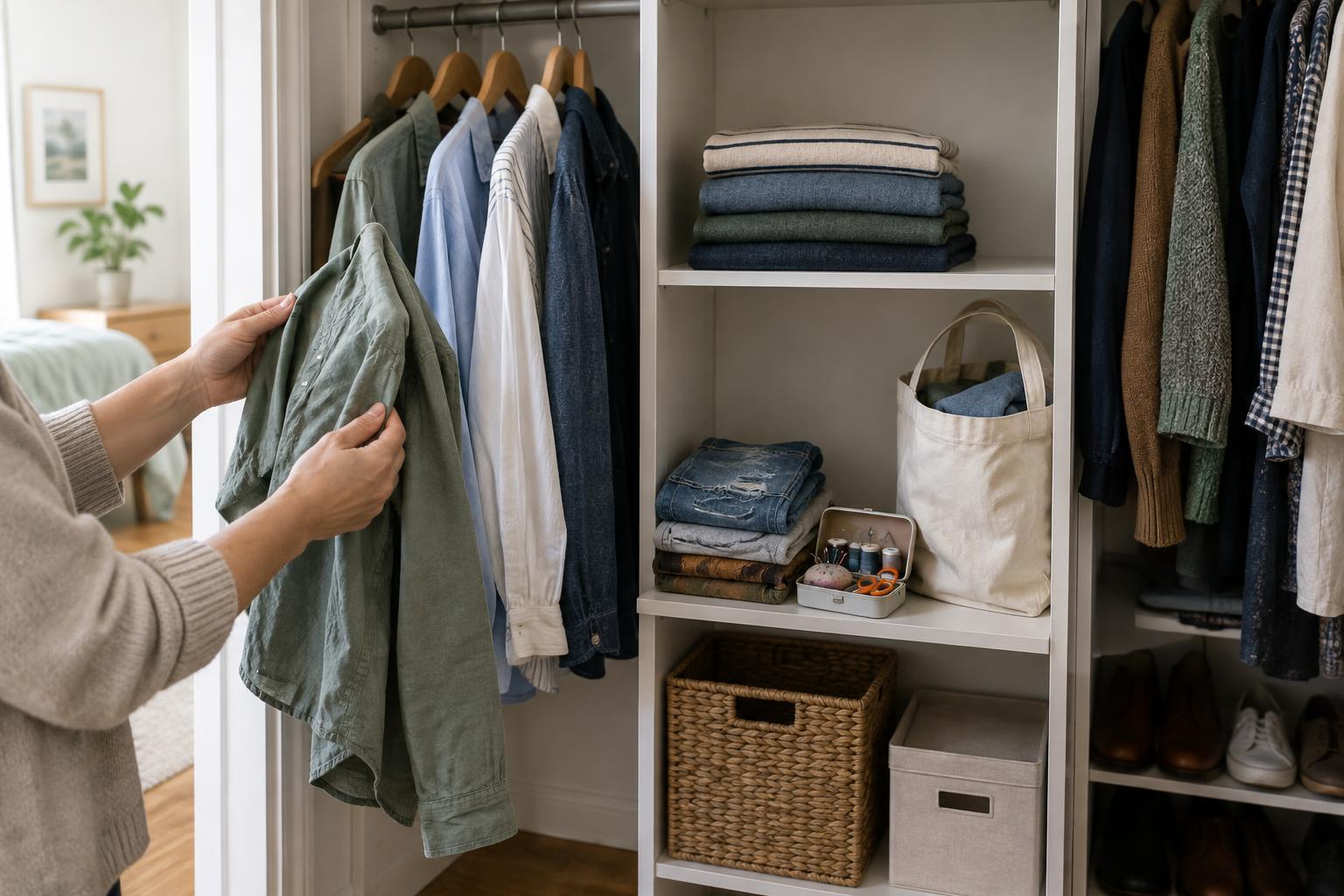
Move clothes you can wear and enjoy now back into the closet first. This shows what you actually have before you consider replacements. Look for practical gaps rather than trying to build an ideal wardrobe in one shopping trip. If you have enough comfortable outfits for your usual week, you may not need to buy anything yet. If one essential is missing, a short, specific list can help you shop without bringing home another almost-right item.
Keep a small, intentional space for uncertainty
Some clothes are difficult to release because they were expensive, represent a past routine, or might fit again. You can acknowledge that without giving every item permanent closet space. Choose a limited container for pieces you genuinely want to revisit, then store it somewhere other than your daily wardrobe. A full container is a useful signal to make a choice before adding more.
Be selective about sentimental clothes, too. If you value the memory but would not wear the garment, you might keep one representative piece rather than several versions of it. Put an undecided item where you can find it and choose a point to review it; otherwise, a temporary pile can quietly become long-term storage. It is also fine to keep a meaningful garment simply because you want to, as long as you know why it is there.
Check whether an alteration would really help
Repair and alteration can extend the life of clothes, but not every fit problem has a simple fix. A loose button, fallen hem, or small seam issue may be straightforward to address. Changes to shoulders, rise, or overall proportions can be less predictable. Before spending time or money, ask whether you like the fabric, style, and feel enough to wear the finished piece.
If you sew, start with one low-stakes item rather than building a large mending queue. If you use a tailor, bring the garment and describe how you want to move in it, then ask what is feasible before committing. Altering clothes solely because they once cost a lot can turn one disappointing purchase into another. Sometimes passing a piece along is the more useful choice.
Pass things on thoughtfully, then shop for today
Sort outgoing clothes by condition. Clean, wearable items may be suitable for a friend, a swap, resale, or a donation organization that accepts that type of clothing. Check what an organization wants before dropping off a bag. Clothing with significant damage may be useful for cleaning rags or a textile collection where one is available, but not every collection accepts every fabric or condition. Avoid treating donation as a guaranteed solution for anything you no longer want.
When you do need replacements, shop for your current body and daily activities. Bring a short list, check how a garment feels while sitting and moving, and consider whether it works with clothes you already own. Secondhand shopping can be a good way to look, provided you can assess fit and condition without settling. A smaller wardrobe that fits your life now is more useful than a crowded one waiting for you to change.