Start smaller than you think
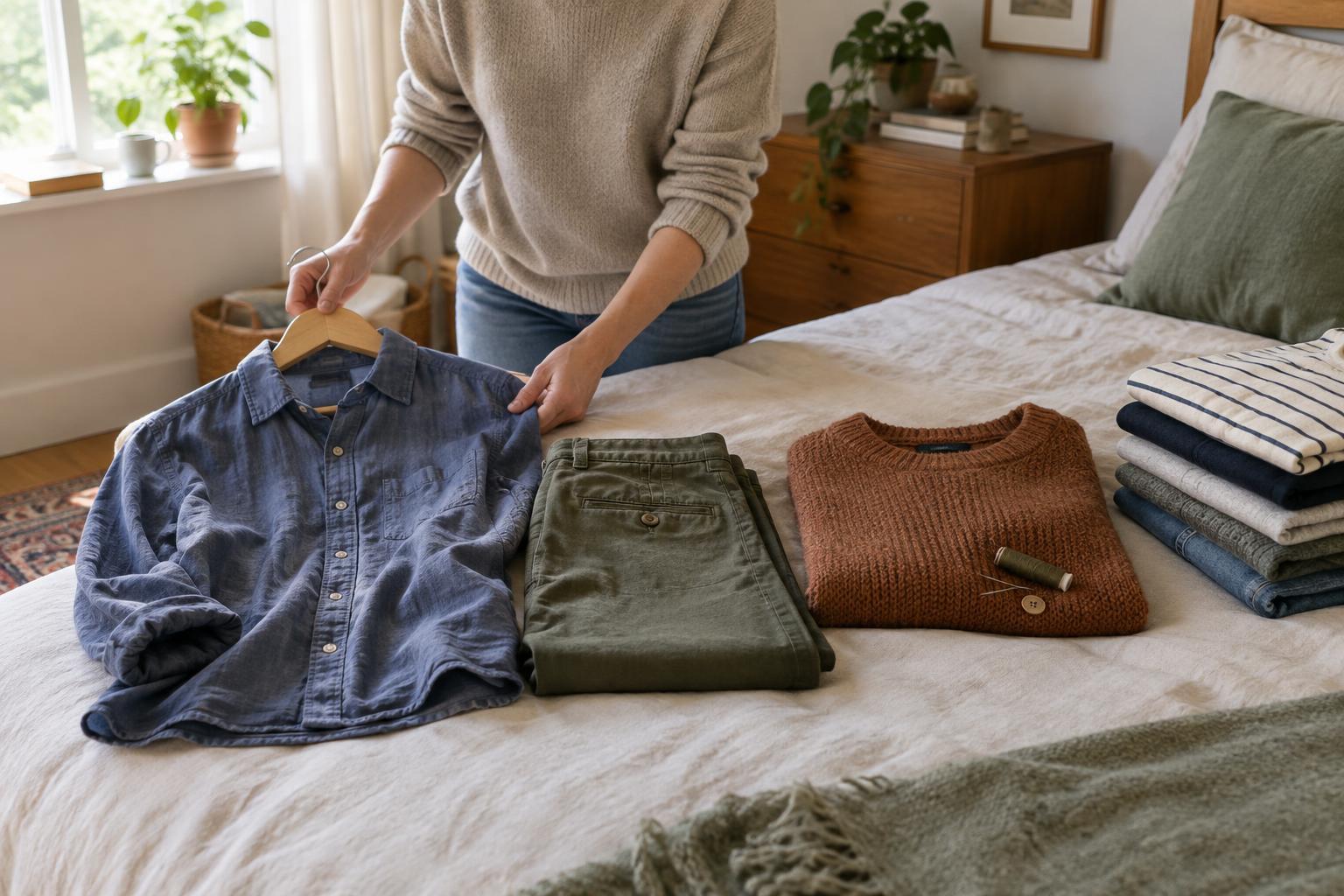
Pulling out an entire wardrobe can make a closet edit feel urgent and exhausting. Instead, choose a section you can finish and put away in one session: a single drawer, one shelf, or the shirts on one part of the rail. Finishing a small area gives you a useful result without leaving a pile to deal with later.
Before you begin, decide where the clothes will go while you work. A bed or clear patch of floor is enough for a small section. Set out places for items to keep, wash or repair, pass on, and decide later. You do not need special organizers or matching hangers to get started. The first goal is to see what you own and make that section easier to use.
Sort by how clothes serve you now
Take everything out of the chosen section and handle each item. Ask whether it fits comfortably, suits your current routine, and is in a condition you are willing to wear. A garment can be well made or once-loved and still not earn space in your everyday closet. Likewise, something plain that you wear every week may be more valuable to you than a piece saved for an imagined occasion.
Compare similar items while they are together. If you have several black tops, for example, notice which ones you reach for and why. Perhaps one fits better, washes easily, or works with more of your clothes. This is not a rule that you must keep only one of each type. It is a way to spot duplicates you rarely use and gaps you might otherwise overlook when shopping.
For clothes that feel difficult to judge, avoid forcing a decision on the spot. Put them in a small, labeled “decide later” area and note what is uncertain: fit, repair, or whether you still enjoy wearing them. Keep that area limited so it does not become a second, less accessible closet.
Move through the closet in useful groups
After the first section, choose the next one based on how you get dressed. You might do everyday tops, then bottoms, layers, occasion wear, and finally accessories. Grouping similar items helps you make consistent choices, but you can still work one drawer or short stretch of rail at a time. There is no need to finish the whole category in a day.
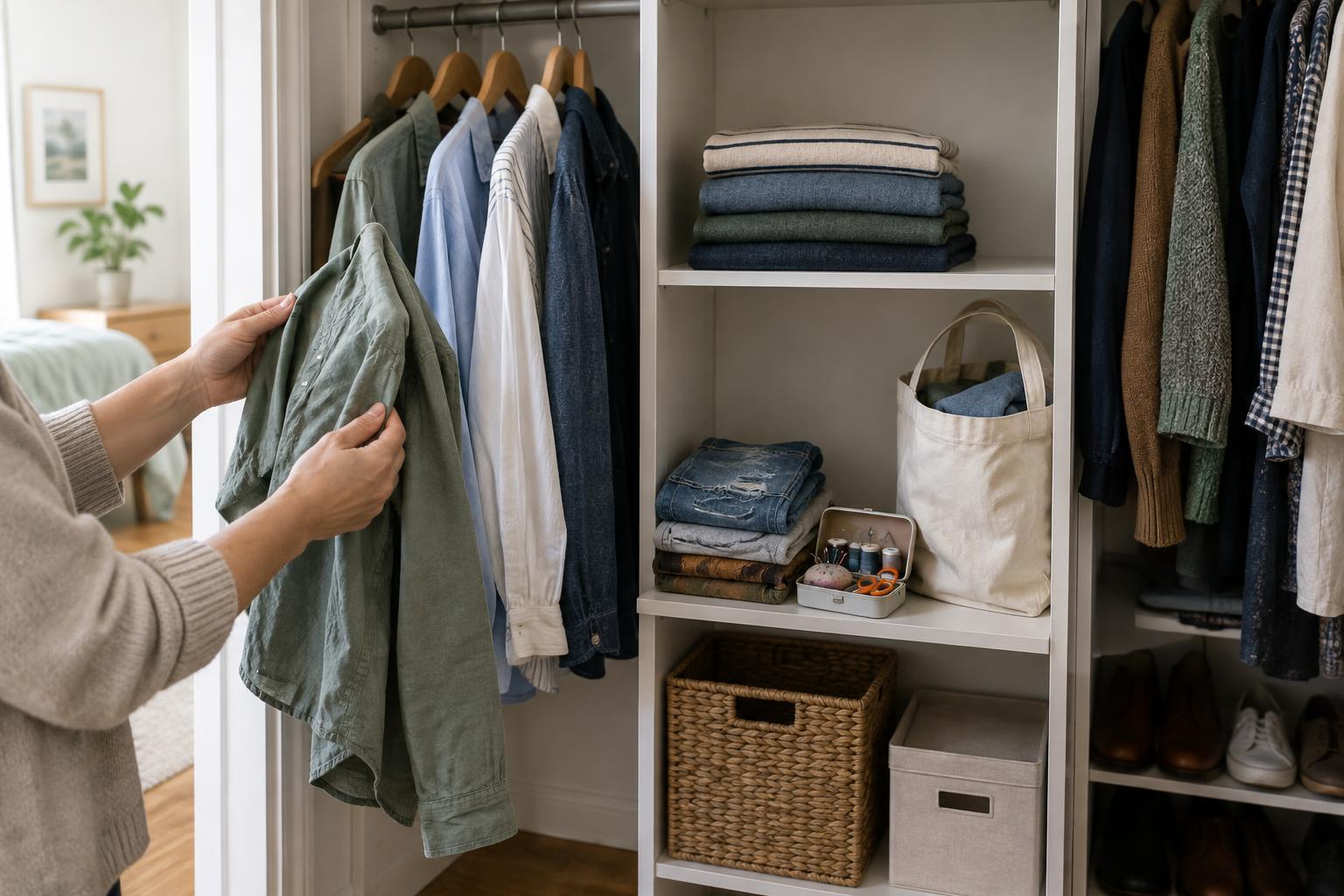
As you go, pay attention to what gets in the way. Are the clothes you use most often buried behind special-occasion pieces? Are folded items stacked so high that you cannot remove one without disturbing the rest? Return the keepers in a way that makes frequent choices easy to see and reach. Leave a little room where you can; a tightly packed rail is hard to browse even after a thorough edit.
Do not turn every newly noticed gap into an immediate purchase. Try wearing the edited section for a while first. You may find new combinations among clothes you already own, or discover that an apparent gap does not affect your daily routine. If you do need something, a clear description of the missing item can make a secondhand search or future purchase more deliberate.
Give repairs and outgoing clothes a plan
A repair pile helps only if it leads to action. Separate simple jobs you can realistically do, such as replacing a button, from work that needs equipment or outside help. Choose a time to deal with the repair, and reconsider items you have repeatedly postponed fixing. Keeping damaged clothes indefinitely does not make them available to wear.
For clothes in wearable condition that you no longer want, consider offering them to someone who wants them, selling them, or using an appropriate donation option. Check that items are clean and meet the recipient’s requirements before passing them on. Worn-out textiles may have different local reuse or recycling options; avoid assuming every collection point can accept every fabric. The aim is to handle outgoing clothes responsibly, not to keep unwanted items because finding an exit takes effort.
Keep the edit manageable over time
Once each section has had a turn, maintenance can be brief. When putting laundry away, notice anything you consistently skip. If a garment is uncomfortable, needs care you do not want to provide, or no longer works with the rest of your clothes, address that specific issue rather than starting another full clear-out.
A useful closet is not necessarily a tiny one. It holds the clothes that support your life, with enough space to find and care for them. Editing in sections lets you make considered choices, keep wearing what works, and reduce the chance that a rushed clean-out leads to replacing something you still needed.