Start with the supplies you already have
The simplest way to create less cleaning waste is to use what is already in the cupboard. Before buying a refill system, look at which products you use regularly, which ones sit untouched, and which tools are still in good condition. An existing spray bottle or stack of towels may serve you for years yet. Replacing usable supplies just to make a routine look more sustainable can create unnecessary waste.
Keep the goal modest: fewer disposable items and fewer half-used products, without making cleaning harder. A small set of supplies suited to your home is often more useful than a separate bottle for every surface. Check product labels before assuming one cleaner can do several jobs, especially on delicate finishes such as natural stone or unfinished wood.
Choose concentrates for tasks you actually do
A concentrate is a product intended to be diluted before use. Because one container can make multiple batches, it may reduce the number of ready-to-use bottles you bring home. That benefit depends on using it consistently: a concentrate that is awkward to measure or unsuitable for your usual cleaning tasks is likely to become another item taking up space.
Follow the manufacturer’s directions for dilution, surfaces, storage, and use. More product is not necessarily more effective, and mixing cleaners can be dangerous. Use a measuring tool if the instructions call for one, and label any diluted solution with its contents. If the label gives a time limit for a mixed solution, make only what you expect to use within that period.
Ordinary cleaning and disinfecting are different tasks. Removing everyday dirt may be all a surface needs, while situations that call for disinfection require a product and method intended for that purpose. Do not assume a general-purpose concentrate or a homemade mixture disinfects.
Make refillable bottles easy to use safely
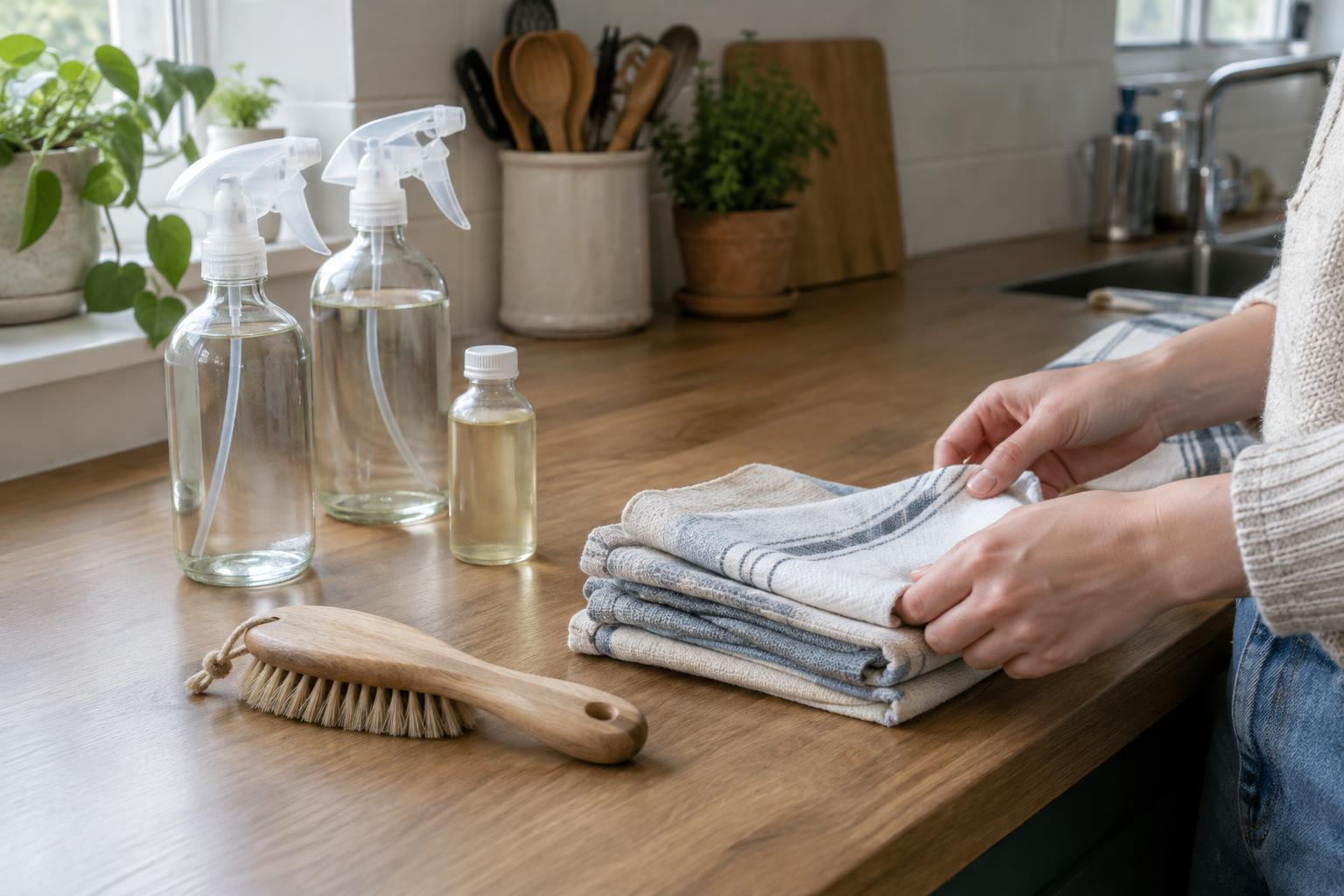
A refillable bottle works best when it has one clear job. Reuse a sturdy, compatible bottle if its sprayer works well and you know what it previously held. If you need a new one, choose a bottle that is comfortable to grip, easy to label, and suitable for the cleaner you plan to put in it. A bottle that leaks or clogs is unlikely to stay in use.
Do not pour a different chemical into a bottle that still contains residue from another product. Follow the product’s guidance on containers and rinsing, and never use food or drink packaging for cleaning solutions. Keep the original packaging or label information so you can check directions later. Store all cleaning products away from children and pets.
If refilling feels like a chore, simplify the setup. Keep the concentrate and measuring tool together, and refill only when a bottle runs low. You do not need a row of matching containers; a clearly labeled bottle in the place where you clean is more useful.
Give washable cloths a practical role
Washable cloths can replace many disposable wipes and paper towels used for routine dusting and wiping. Old cotton T-shirts, worn towels, or cloths you already own may be enough to start. Cut or fold them into sizes that are easy to handle, and keep a small supply where spills commonly happen. Absorbent cloths work well for wet messes; a softer cloth may be better for surfaces that scratch easily.
Set aside separate cloths for different tasks, particularly bathroom cleaning and food-contact areas. A simple color or storage system can help prevent mix-ups. After use, let damp cloths dry if they cannot be washed promptly, then launder them according to the fabric and cleaning product instructions. Avoid leaving a pile of wet cloths in a closed container.
Washable does not have to mean reusable for every mess. Some cleanup situations call for a disposable option, and worn-out cloths should be retired when they no longer clean well. The aim is to replace the disposable items you reach for out of habit, not to force one tool to do every job.
Build a routine you can keep
Try changing one repeat purchase at a time. You might finish your current surface cleaner, refill its bottle with a compatible product, and place a few washable cloths beside it. Notice whether the new routine works: Does the bottle spray reliably? Are clean cloths available when you need them? Is washing them easy to fit into your usual laundry?
If a swap adds friction, adjust it rather than buying more equipment. A lower-waste cleaning setup succeeds when it meets ordinary household needs with less packaging and fewer throwaway supplies. Using up products, maintaining bottles, and washing cloths consistently can matter more than assembling a perfect-looking kit.