Start with the paper that keeps coming back
A flyer in the mailbox or a receipt at the checkout may seem too small to matter. The useful question is whether the same kind of paper will keep arriving. Reducing a repeat stream usually takes less effort than finding a new use for every sheet. For a week or two, notice what you bring into the house: addressed mail, unaddressed advertising, receipts, school notices, packaging inserts, and pages from your own printer. Then choose one source to tackle first.
Keep the goal realistic. Some paper is useful for records, instructions, or access when a screen is inconvenient. Cutting waste does not mean refusing every printed item; it means making paper a deliberate choice rather than the default.
Make unwanted mail easier to stop
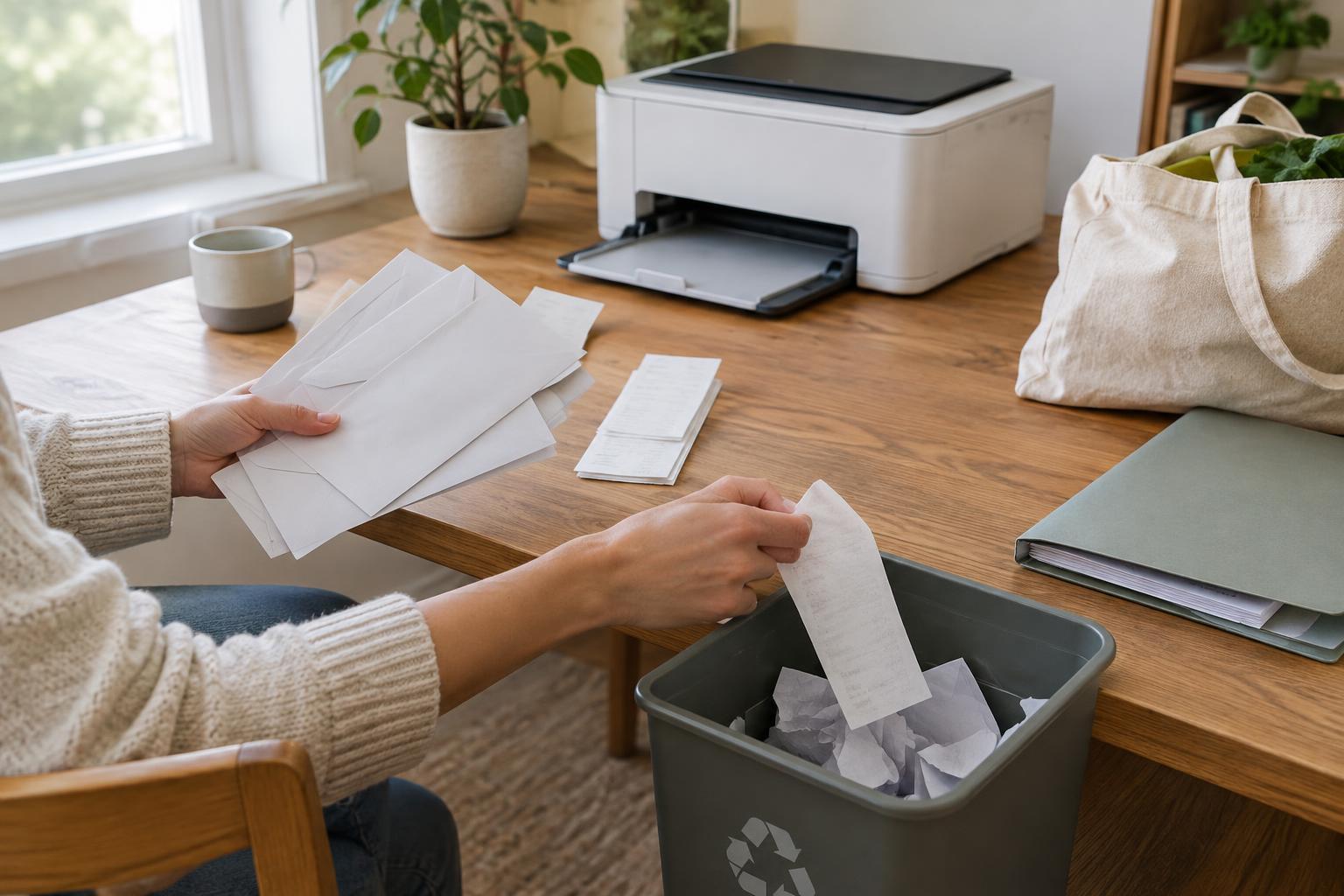
Sort incoming mail near the door into three groups: needs action, worth keeping, and unwanted. Deal with action items promptly so they do not disappear into a pile. For repeated mail you do not want, look for an opt-out method from the sender, update your communication preferences, or ask to leave a mailing list. Addressed catalogs and promotional letters may need separate requests. A polite sign on the mailbox may help with unaddressed advertising in some places, but it will not necessarily stop every delivery.
Before switching bills or statements to digital delivery, consider how you will find them later. Use an email address you check, keep account access up to date, and save documents you may need in a clearly named folder. If paper is more reliable for a particular household member or account, keep it. The best system is one that prevents both waste and missed information.
Choose receipts with a purpose
At checkout, ask yourself whether a receipt will help with a return, warranty, reimbursement, or household record. If not, declining it can be simpler than taking it home to discard. If you do need proof of purchase, a digital receipt may be convenient, but sharing an email address can also bring marketing messages. Check the options rather than assuming that digital is automatically the better choice.
For paper receipts you need to keep, make a small, temporary home for them and clear it out regularly. Photographing a receipt can help with everyday organization, though an original may still be needed for some returns or claims. Many receipts use a coated paper that may not belong in ordinary paper recycling; follow your local collection guidance instead of putting every receipt in the recycling bin.
Print less without making tasks harder
Before printing, decide what you will do with the page. Can you save a file, bookmark the information, or put a short note where you will use it? When paper is genuinely easier, print only the relevant pages. Preview the document first to catch blank pages, oversized images, or an extra page containing just a line of text.
Set everyday print jobs to double-sided and black-and-white when those settings suit the task. A draft setting may use less ink for documents that do not need a polished finish. Keep a small supply of one-sided sheets for notes or test prints, but do not let a reuse pile grow beyond what you will actually use. A tidy, limited tray is more helpful than a stack saved without a plan.
Give the remaining paper a clear route out
Set up one place for papers awaiting action, one for records you need, and one for recycling. Empty the action spot often; otherwise it becomes another storage area. Remove personal information from documents before disposal in a way that suits their sensitivity. For everything else, check local recycling rules, especially for coated papers, envelopes with unusual materials, and mixed-material packaging.
Paper reduction works best as a series of small adjustments. Stop one recurring mailing, change one receipt habit, and make print preview part of your routine. As the incoming volume drops, sorting and storing what remains becomes easier too.