Start with the power source
Before assuming the lamp has failed, switch it off and unplug it. Look at how it was connected: a switched outlet, power strip, timer, or smart plug can be the reason a working lamp stays dark. If the lamp was on a power strip, check whether the strip’s switch is off. Avoid repeatedly resetting a strip that trips or plugging the lamp back in if you notice heat, a burning smell, buzzing, or scorch marks.
To check a wall outlet, try a different, known-working household device in it, provided the outlet looks undamaged. If that device also does not work, the problem may be with the outlet or its supply rather than the lamp. Do not take an outlet apart. If an outlet appears damaged or repeatedly loses power, leave it alone and seek qualified help.
Check the bulb and its fit
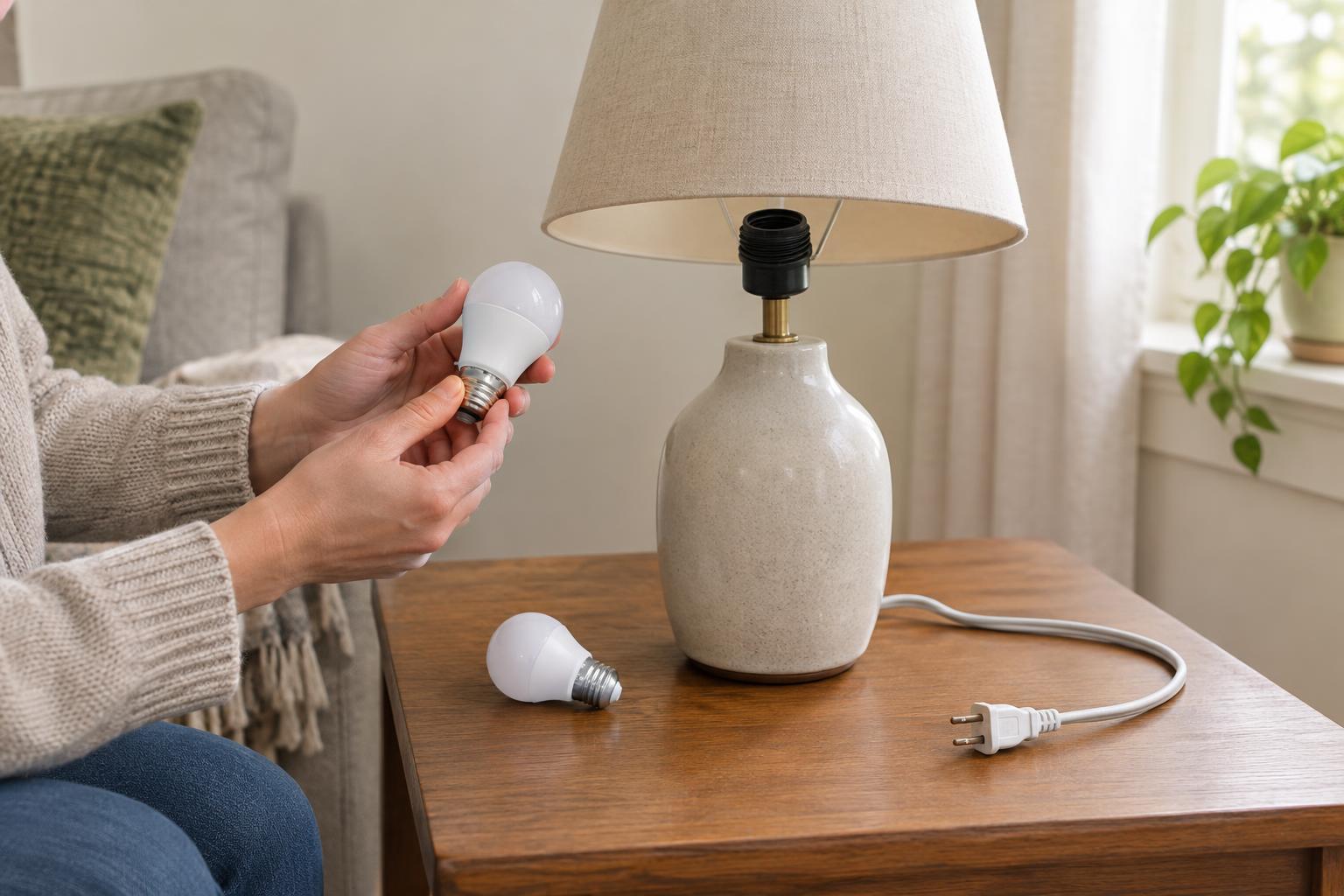
With the lamp unplugged and the bulb cool, check whether it is seated correctly. A screw-base bulb should sit snugly without being forced; if it seems cross-threaded or will not turn easily, stop rather than tightening harder. For a replaceable bulb, try one you know works and that matches the lamp’s specified base, voltage, and maximum wattage. The label is often on or near the socket. An LED bulb may use fewer watts than the listed maximum, but it still needs the correct fit and electrical rating.
If the lamp works with another bulb, the old bulb was likely the problem. If it flickers or fails with both, do not keep swapping bulbs in hopes of getting a connection. A loose or damaged socket needs more than a bulb change. Lamps with built-in LED lighting may have no user-replaceable bulb at all; check the product information before trying to open one.
Inspect what you can see, without opening anything
While the lamp remains unplugged, look along the cord and at the plug. Fraying, cracks, crushed sections, exposed conductors, bent prongs, discoloration, or signs of melting are reasons to stop using it. Electrical tape is not a dependable fix for a damaged cord. If the cord passes under furniture or a rug, move it where it will not be pinched before using the lamp again—but only if the cord is otherwise in good condition.
Check whether the lamp is stable and whether anything is pressing against its switch. A stiff or broken switch, rattling inside the base, or visible damage around the socket is a reason to set it aside. Do not open the base or socket, probe contacts, or test exposed parts while the lamp is plugged in. These steps are not needed to decide whether a simple bulb change is enough.
Decide whether repair makes sense
If the outlet works and a correctly rated, known-working bulb still does not light, the fault may be inside the lamp. That is a useful stopping point for home troubleshooting, not an invitation to experiment with wiring. Label the lamp as not working and keep it unplugged so someone else does not accidentally use it. A qualified repairer can assess whether the switch, socket, or cord can be replaced safely.
Repair may be especially worthwhile for a sturdy lamp with a base and shade you like. Before taking it in, note what you have already checked and describe any flickering, unusual smell, or visible damage. Ask for an estimate so you can weigh the repair against a durable secondhand or new replacement. If repair is not practical, look for a suitable local route for disposing of electrical items rather than putting a damaged lamp back into use.
Make the next lamp easier to keep
Whether you repair this lamp or replace it, favor designs that make ordinary upkeep straightforward. A stable base, an accessible switch, a clearly labeled bulb rating, and a common replaceable bulb can all make a lamp easier to live with. When considering a secondhand lamp, examine the cord, plug, socket area, and switch before bringing it home; leave one behind if it shows damage you cannot have assessed.
The aim is not to save every object at any cost. It is to rule out simple problems before discarding something useful, while treating electrical damage as a firm boundary. A few careful checks can prevent an unnecessary purchase; knowing when to stop helps keep that choice sensible.