Start with a fair comparison
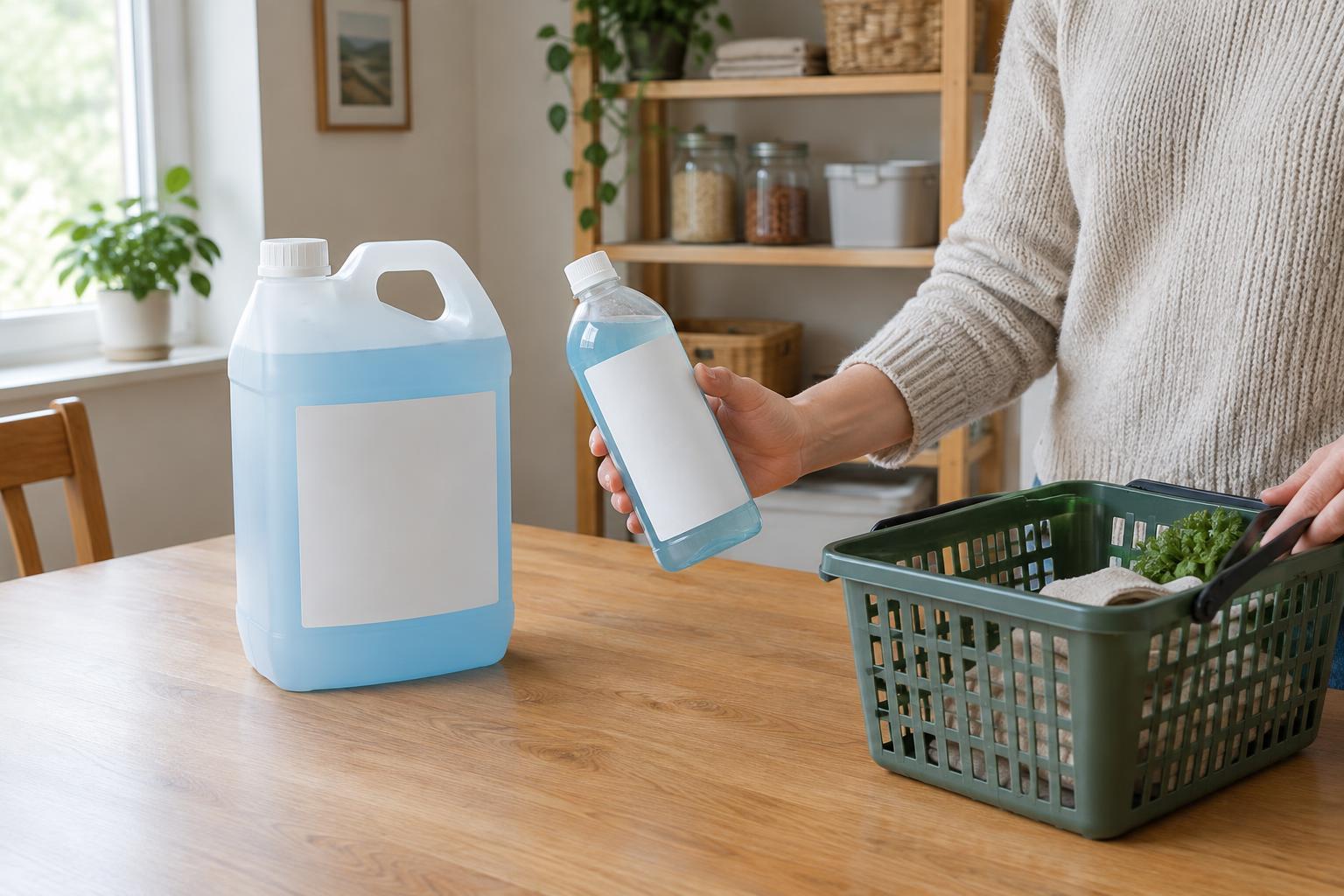
A unit price expresses a product’s cost per standard amount, such as per ounce, roll, sheet, or load. It helps you compare packages that look different on the shelf. A larger bottle may have a lower price per ounce than a smaller one, even though it costs more at checkout. That information is useful, but it answers only one question: how much does a measured amount cost?
Before comparing, check that the units match. A price per roll tells you little if one brand has fewer sheets per roll; a price per sheet may be more helpful. For laundry detergent, a price per stated load can be useful, provided the load sizes and dosing directions are reasonably comparable. Shelf labels are a convenient starting point, but if two labels use different units, divide each package price by its relevant quantity to compare them on the same basis.
Include how much you use
The lowest unit price does not always mean the lowest cost for the task. A concentrated cleaner may cost more per ounce but require less product each time. A thin paper towel may cost less per sheet but take more sheets to handle a spill. Think about the amount you normally use, rather than assuming equal package sizes will last equally long.
You do not need a detailed spreadsheet. For supplies you buy regularly, notice roughly how long a package lasts and whether you tend to use more than the directions suggest. If a product works well with a small dose, compare its approximate cost per use. If you are trying a new product, a smaller package may be a sensible test even when its unit price is higher. Paying a little more to learn whether something fits your routine can prevent an unwanted bulk purchase.
Let your use rate set the package size
Bulk packages often win on unit price, but they also occupy space and tie up money. Before choosing one, ask how quickly your household goes through the item and where the extra quantity will live. Toilet paper used steadily and stored in a dry cupboard may be a good bulk candidate. A specialty cleaning spray used only occasionally may sit for a long time, regardless of its attractive shelf price.
Consider the condition in which a supply needs to be kept. Moisture can damage paper goods, and some products may become less useful if stored poorly or for too long. Check the package for storage guidance when it matters. A smaller size that fits safely in your available space may be a better choice than a cheaper-per-unit size that crowds a closet, gets forgotten, or creates spills.
Treat promotions as an invitation to check, not a command to buy
Multi-buy offers and large refill packs can make a purchase feel urgent. Compare the discounted unit price with the regular options, then ask whether you would buy that quantity without the promotion. A deal does not save money if it leads you to bring home supplies you will not use. Likewise, buying extra because something is on sale can obscure what is already under the sink.
Keep a short list of staples and check your current stock before shopping. For a frequently used item, you might decide on a simple restocking point, such as buying the next container when you open the last one. That leaves room to take advantage of a useful price without building an accidental collection. The goal is not to keep the fewest supplies possible; it is to keep a workable amount that you can see, store, and use.
Use unit price as one part of the decision
A quick buying routine can keep the numbers in perspective. First, identify what you need and what you already own. Next, compare prices using a meaningful shared unit. Then consider how much of each product you use per task, how long the package is likely to last, and whether it fits your storage space. If two options still seem close, choose the quantity you feel confident you will use.
This approach also makes it easier to notice when a durable alternative deserves consideration. A washable cloth, for example, may suit some cleaning jobs better than repeatedly buying disposable wipes, provided you are willing to wash and reuse it. There is no need to replace supplies that are still useful just to change your system. Use what you have, learn from what runs out or goes unused, and let those observations guide the next purchase.