Start by finding the point of resistance
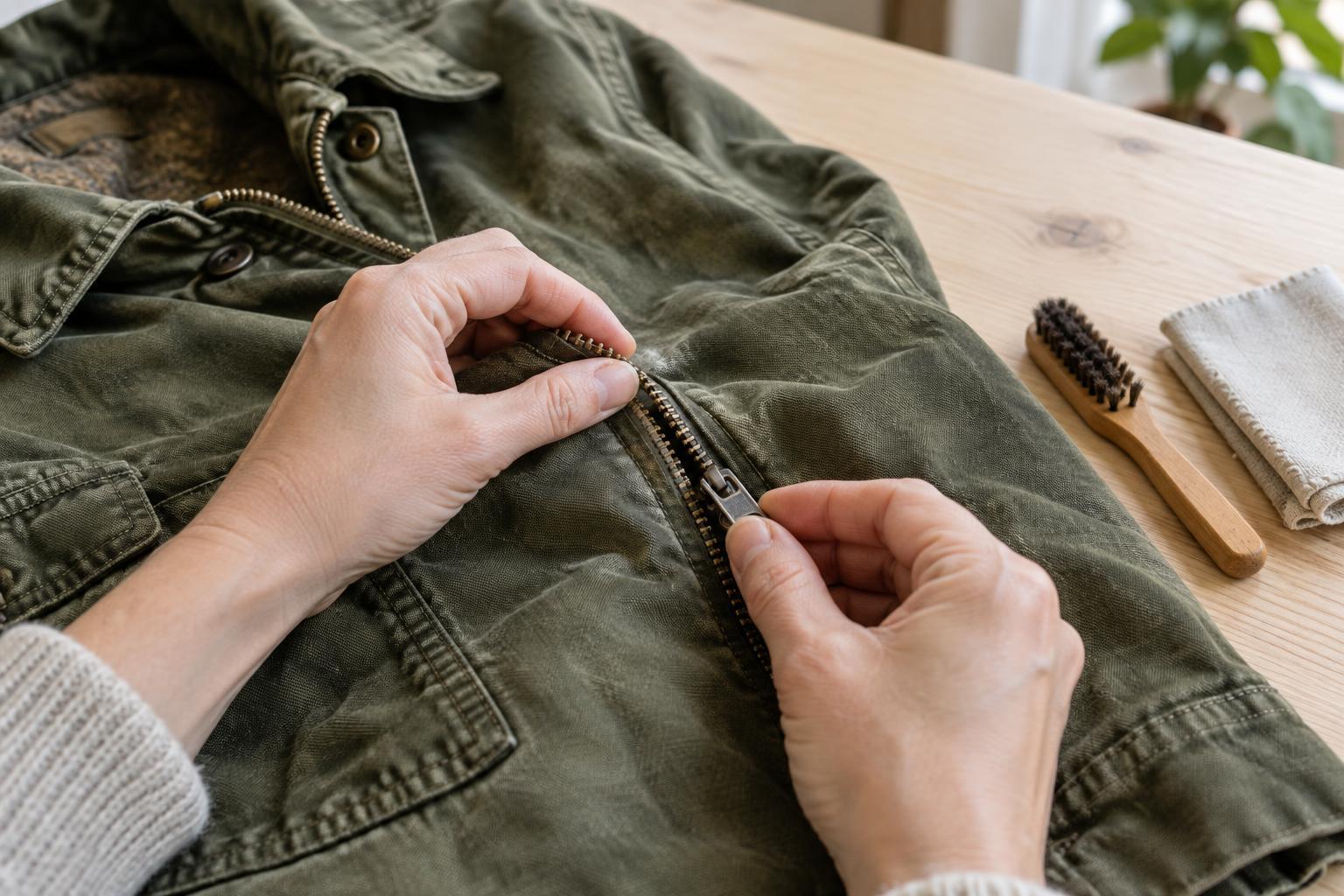
A stuck zipper is frustrating, especially when it is on a jacket, bag or cushion cover you use often. Before pulling harder, set the item on a flat surface and look closely at both sides of the slider. Strong tugs can bend teeth, tear fabric or make a small snag harder to release. Take the item off first if you can; it is easier to see the problem and work gently when the zipper is not under tension.
Note whether the slider stops at one particular spot, feels stiff along the whole length, or moves while the teeth behind it fail to stay closed. These are different problems. A single stopping point often suggests trapped fabric or debris. Stiffness along the length may come from dirt or friction. A zipper that opens again after the slider passes may have a worn or loose slider, damaged teeth, or a problem near the bottom.
Free trapped fabric without tearing it
Look for lining, thread or a folded edge caught in the slider. Hold the fabric close to the snag so you can control it, then move the slider a small distance back toward the direction it came from. Gently ease the fabric outward as you do. Alternating tiny movements is usually more effective than trying to drag the slider past the obstruction.
If you can see a loose thread wound around the mechanism, try lifting it away with tweezers. Avoid cutting until you know whether the thread is part of a seam; snipping the wrong one can create a larger repair. Once the material is free, smooth the fabric and test the zipper slowly. If lining repeatedly catches, a few hand stitches to secure the loose edge may solve the underlying problem.
Clean the teeth and ease a stiff slider
Zippers on bags and outerwear can collect grit, lint and dried residue. With the zipper open as far as it will comfortably go, brush along the teeth using a soft, dry toothbrush. Work carefully around the slider and brush away loosened debris. If the item is washable, follow its care label before using any water or cleaning product; moisture left in a zipper can create its own problems.
If clean teeth still feel stiff, try a very small amount of zipper wax or plain, unscented bar soap on the teeth, keeping it off surrounding fabric. Test first in an inconspicuous place if marks would be a concern. Move the slider gently back and forth to distribute it, then wipe away excess. Skip cooking oil and heavy grease: they can stain fabric and attract more dirt. Lubrication can help friction, but it will not fix a bent tooth or a damaged slider.
Check the teeth, slider and bottom connection
Inspect the zipper with good light. Are the teeth straight and evenly spaced? Is the slider sitting squarely on both sides? On a separating jacket zipper, check that the pin is fully inserted into the bottom box before pulling the slider up. Starting from a crooked connection can make the zipper jam or separate. Back it down, align the two sides and try again without forcing them.
If the slider travels but the teeth split behind it, the slider may no longer grip them properly. A replacement slider can sometimes save the entire zipper, particularly when the teeth and tape are intact. Gently tightening a metal slider is another possible fix, but squeezing too far can jam or break it. If you are unsure of the fit or do not have suitable tools, a repair shop or tailor may be the less wasteful option than experimenting on a valued item.
Know when to stop and repair
Stop troubleshooting if teeth are missing, the zipper tape is torn, a bottom box is broken, or the slider is visibly cracked. No amount of wax will restore those parts. Depending on the construction, a repairer may be able to replace just the slider, add a new stop or install a new zipper while keeping the garment or bag in use.
For now, the best prevention is simple: keep the two sides aligned, clear lint before it builds up and avoid pulling a zipper closed across an overstuffed bag or a strained seam. When a zipper sticks again, pause and inspect it rather than treating resistance as a test of strength. A few careful minutes may be all it takes to keep a useful item working.