Decide whether the fabric is worth repairing
A patch can keep a useful towel, sheet, tablecloth or napkin in service when the damage is limited to one area. Start by washing and drying the item so you can see its true condition. Hold the fabric up to the light and look beyond the hole: a small tear surrounded by sturdy cloth is a better candidate than a hole in an area that has become thin and papery. Check for other weak spots, especially along folds and heavily used edges.
Think about what the item needs to do. A patched tablecloth can tolerate a slightly raised seam, while a bath towel needs to stay comfortable against skin. A fitted sheet may pull at a patch placed near a corner. If most of the fabric is worn out, consider cutting sound sections into cleaning cloths or small patches for other repairs instead. Repair is most useful when it preserves something you will still want to use.
Match the patch to the item
For a strong repair, choose a clean fabric scrap that is at least a couple of centimeters larger than the hole on every side. This gives the stitches sound fabric to grip. A scrap from an old cotton towel works well on a terry towel; a piece of lightweight, closely woven cotton is usually less bulky on a sheet or napkin. Similar fabrics tend to wash and dry together more predictably than a stiff patch on a soft, flexible item.
You will need sharp scissors, pins or clips, a needle and thread, and the patch fabric. A sewing machine can make the job quicker, but hand sewing is enough for a small repair. Choose thread that is sturdy without being much heavier than the linen. Matching colors make the patch less noticeable; a contrasting color can make an intentional-looking repair. Either is fine if the fabric and stitches hold.
Prepare the hole and secure the patch
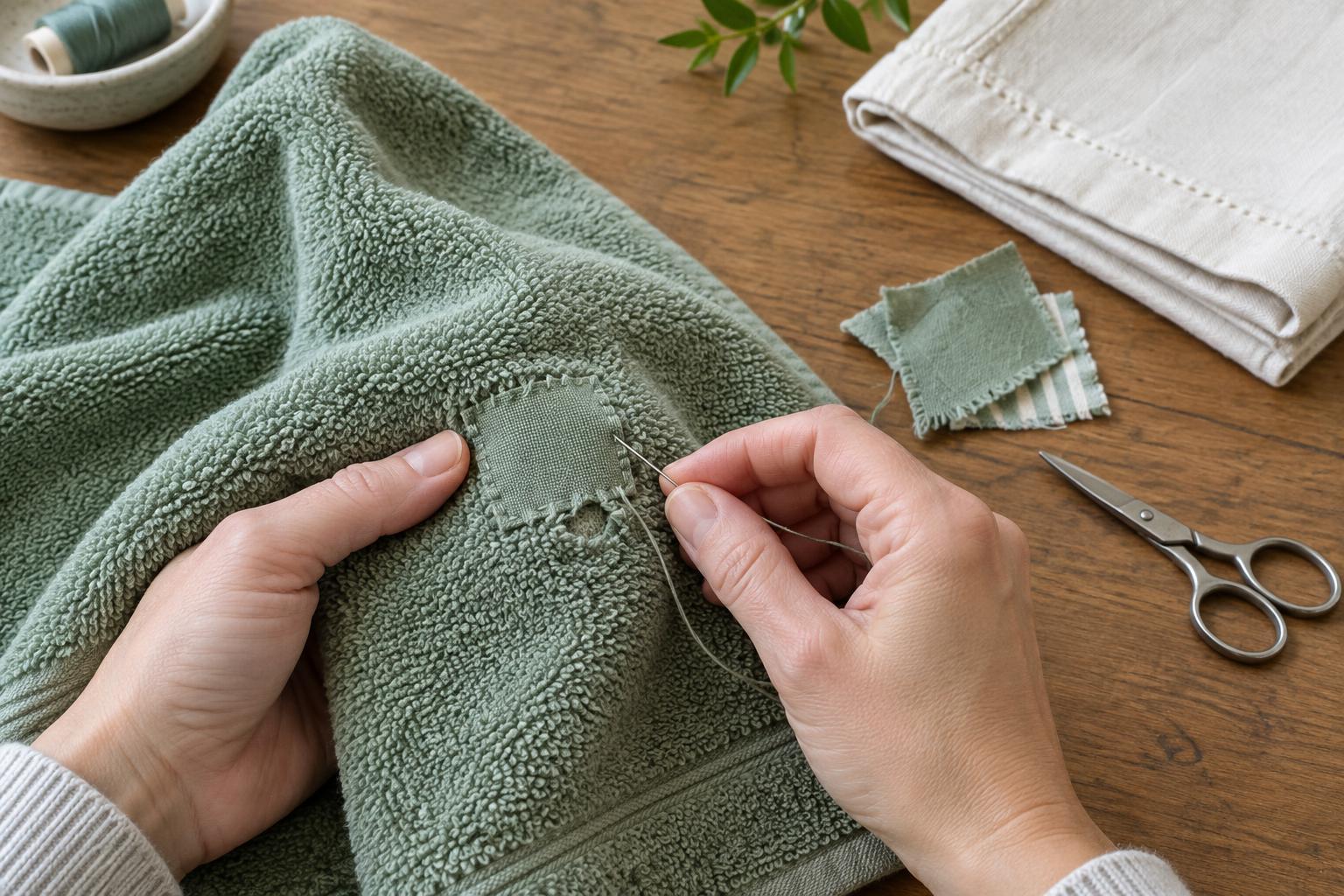
Trim only loose threads that might tangle in your stitching. Do not cut away sound fabric to make the hole neat. If the edge is fraying, gently flatten it and place the patch behind the hole, on the side where it will feel or show least. On a towel, pushing stray terry loops toward the surface before sewing can help keep the repair from trapping a thick lump. Pin the patch flat without stretching either layer.
Fold the patch’s raw edges under if the fabric frays easily, then sew around its perimeter with small running stitches or backstitches. Keep the stitches close enough to secure the edge, but do not pull them so tight that the fabric puckers. Next, stitch around the edge of the hole to attach it to the patch beneath. A narrow zigzag stitch on a machine or closely spaced overcast stitches by hand can help contain fraying. If you sew across the opening, keep the fabric flat and avoid building up a hard ridge.
For a very small hole in closely woven linen, darning may be less bulky than adding a patch. Weave thread back and forth across the opening, catching sound fabric on both sides, then weave across those threads in the other direction. This approach is less suited to a larger weak area: stitches need a firm border to hold, regardless of how carefully they are made.
Adjust for towels, sheets and table linens
Terry towels are thick and looped, so their repairs can feel bulky. Use a soft patch, take care not to snag surrounding loops, and test the finished area with your hand. If the patch is scratchy on a face towel, that towel may work better for hand drying or household cleanup. Avoid relying on an adhesive patch alone for something washed frequently; stitched edges are less likely to lift.
Sheets and pillowcases benefit from a flatter finish. Place a thin patch on the less noticeable side and keep seam allowances narrow but secure. On table linens, you may have more freedom to make the patch visible. A tidy square or other simple shape is easier to stitch evenly than an irregular scrap. Whichever item you are repairing, reinforce the sound fabric around the damage rather than repeatedly sewing through an edge that is already falling apart.
Check the repair after washing
Before putting the item back into regular use, tug gently around the patch and check that no edge lifts. Wash it as you normally would for that fabric, then look again for puckering, loose stitches or new holes nearby. A quick second row of stitching may be worthwhile if an edge is working free. If the surrounding cloth continues to tear, the patch may have outlasted the item itself.
Keeping a few clean scraps from worn-out linens makes the next repair easier and puts usable material to work. You do not need to patch every hole, but a simple repair can be a practical alternative to replacing an otherwise dependable household item.