Start with the job you need it to do
Before shopping, decide what the appliance must do and where you will keep it. A compact blender may be enough for occasional sauces, while a large food processor could create more storage and cleaning work than it saves. Measure a tight shelf or counter space, and note any features you actually need. This makes it easier to pass up an appealing find that would add clutter rather than solve a problem.
Bring a short list of essentials, such as a lid, charger, filter holder, or specific attachment. Some missing parts are easy to replace; others may be difficult to identify or cost more than expected. Look for a readable brand and model label so you can check compatibility and instructions before committing. If you cannot establish what parts belong with the item, treat that uncertainty as part of the purchase decision.
Inspect it before plugging it in
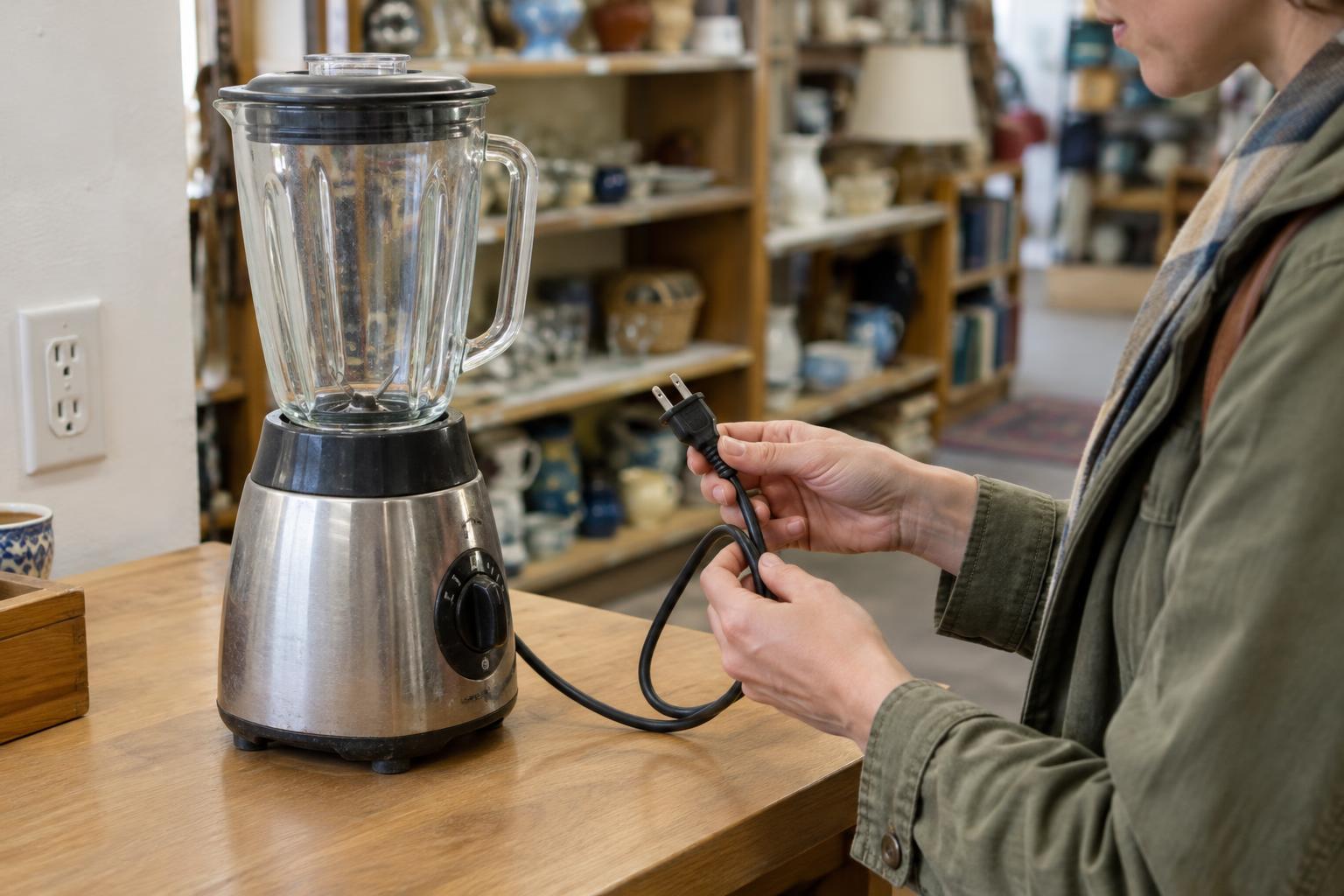
Look over the body, plug, and full length of the cord in good light. Skip an appliance with exposed wires, a damaged plug, melted areas, scorch marks, a strong burnt smell, or a loose electrical connection. Check that the casing sits together properly and that switches and buttons move as expected. Do not open the housing to investigate a fault: a secondhand purchase is not the place to guess whether an electrical problem is harmless.
Inspect the parts that touch food, water, or dust. Cracked blender jars, chipped glass, warped lids, heavy corrosion, and seals that no longer fit can make an appliance impractical even if its motor runs. On a vacuum, look for an intact hose and usable filter compartment. On a fan, confirm the guard is secure. Ordinary surface grime may clean off, but damage to a working part is a different matter.
Ask for a brief, safe demonstration
If the seller allows it, test the appliance on a stable surface using an appropriate outlet. Keep fingers, hair, and loose clothing clear of moving parts. Start with the basic controls: does it turn on promptly, change settings, and turn off reliably? Listen for unusual grinding or rattling, and notice whether the unit shakes excessively. A short demonstration cannot reveal every fault, but it can catch obvious ones.
Test only in ways the setting permits. You might check a fan at each speed or a vacuum for suction with its hose attached. Do not run a blender without its jar secured or put hands near its blades. Appliances that need water, food, or a longer cycle may be impossible to evaluate fully in a shop. Ask before adding anything or testing a heating appliance, and keep hot surfaces away from packaging and other flammable items.
Account for what a quick test cannot tell you
An appliance that switches on for ten seconds may still leak, overheat during normal use, or fail to complete a cycle. Ask whether it has been tested under ordinary conditions and whether the seller accepts returns if it does not work as described. If you are buying from an individual, request a demonstration rather than relying only on the phrase “powers on.” If no test is possible, decide whether you are comfortable accepting the risk.
Before buying, check whether you can find the model’s instructions and whether its parts can be cleaned or replaced. It is also sensible to check for any applicable safety recalls using the exact model information. Do not assume that an older appliance is unsafe or that a newer-looking one is sound; condition, completeness, and the ability to use it properly matter more than appearance alone.
Make the final decision with upkeep in mind
Consider the total effort required to put the appliance into regular use. Will you need a replacement filter, a compatible jar, or time to remove stubborn residue? Can you clean the parts that should be cleaned without damaging the appliance? An item with an easy fix may be worthwhile, but only if you know what the fix involves and are willing to do it.
When you get it home, clean accessible surfaces and removable parts according to the manufacturer’s instructions before use. Stop using it if a problem appears during a fuller test, particularly an electrical smell, sparking, or a damaged cord. The best secondhand find is not simply the cheapest working appliance. It is one that performs a useful job, is safe to use, and earns its place in your home.