Start with how you plan to use it
A vintage serving plate can be a satisfying secondhand purchase: it gives an existing object another life, and a single well-chosen piece may be more useful than a stack bought on impulse. Before you pay, decide whether you want it for everyday meals, occasional serving or display. Those purposes call for different levels of confidence about its condition and materials.
Age alone does not tell you whether a dish is safe or unsafe for food. Makers have used different clays, glazes and decorations over time, and a seller may not know how a piece was made. If its origin is unclear, treat a claim such as “vintage” or “hand-painted” as a description, not reassurance that it is suitable for eating or drinking.
Look closely at surfaces that touch food
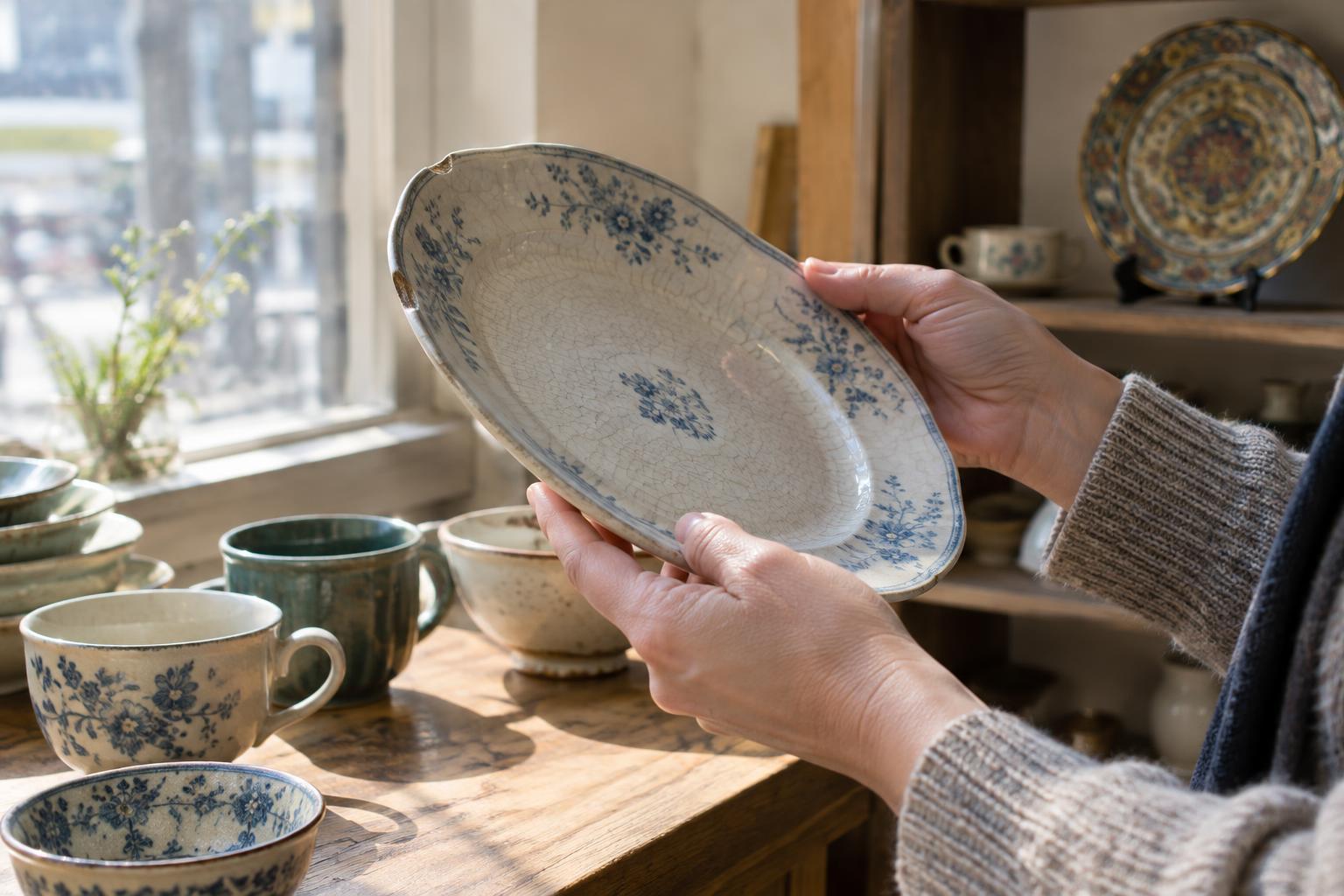
Inspect the front, back, rim and foot of a dish in good light. Chips and cracks can make a piece harder to clean and more likely to break in use. Fine networks of lines in a glaze, often called crazing, are another reason to pause, especially on cups and bowls that will hold liquids. A stain in those lines is a practical sign that cleaning may be difficult.
Pay particular attention to surfaces that food or a drink will touch. Raised decoration, worn paint and damaged glaze on the inside of a bowl or along a mug’s lip deserve more caution than decoration on an exterior surface. Even if a flaw seems small, ask whether you would be comfortable washing and using that spot repeatedly. If not, leave the piece behind or buy it for a non-food purpose.
A sound-looking surface is not proof that its materials are suitable for food contact. Appearance is one part of the decision; what you know about the piece’s manufacture matters too.
Treat unknown glazes and decorations with care
Some older ceramics and decorated wares may contain lead or other metals in glazes or pigments. Whether a substance can transfer to food depends on the piece and how it is used; you cannot settle that question by looking at a glossy finish. Be especially cautious with unidentified pottery, brightly decorated food-contact surfaces and pieces sold primarily as decorative objects.
A stamp, pattern name or seller’s description may help you identify a dish, but it is not always enough to establish its suitability for food use. At-home test kits can have limits and should not be treated as a blanket guarantee for a whole object. If reliable information is unavailable and food use matters to you, consider seeking appropriate testing or choosing a piece with clearer food-use information instead.
For dishes you cannot verify, display is a useful alternative. A platter can hold keys, a small bowl can organize sewing supplies, and a cup can hold pencils. Those uses let you enjoy a secondhand find without asking it to serve as tableware.
Match the dish to realistic care habits
Even a piece you decide to use for food may need gentler handling than your everyday dishes. Metallic trim should not go in a microwave. Older decoration can be vulnerable to harsh washing, and repeated dishwasher cycles may shorten the life of a finish. Unless you have dependable care information, hand-washing and avoiding sudden temperature changes are cautious choices.
Think about what you would actually serve. A decorative plate of uncertain origin is a poor candidate for frequent contact with hot meals or acidic foods; a chipped mug is not a good everyday drinking vessel. If you are choosing dishes for children or for anyone for whom reducing avoidable exposure is especially important, clearer provenance and intact, food-use tableware may offer a simpler decision.
Buy fewer pieces you can use with confidence
In a thrift shop or at a market, give yourself time to examine each piece rather than buying a full set because it looks like a bargain. Check for damage, ask what the seller knows, and be willing to walk away when the intended use and the available information do not match. The same restraint that keeps clutter down can keep questionable dishes out of regular rotation.
Secondhand shopping works best when an object has a clear job. If a vintage dish is attractive but uncertain for food, give it a specific decorative or organizing role before bringing it home. If you need dependable dinnerware, prioritize pieces in good condition with credible information about food use. That is a more useful purchase than a cupboard full of finds you hesitate to put on the table.