Gather the small things in one place
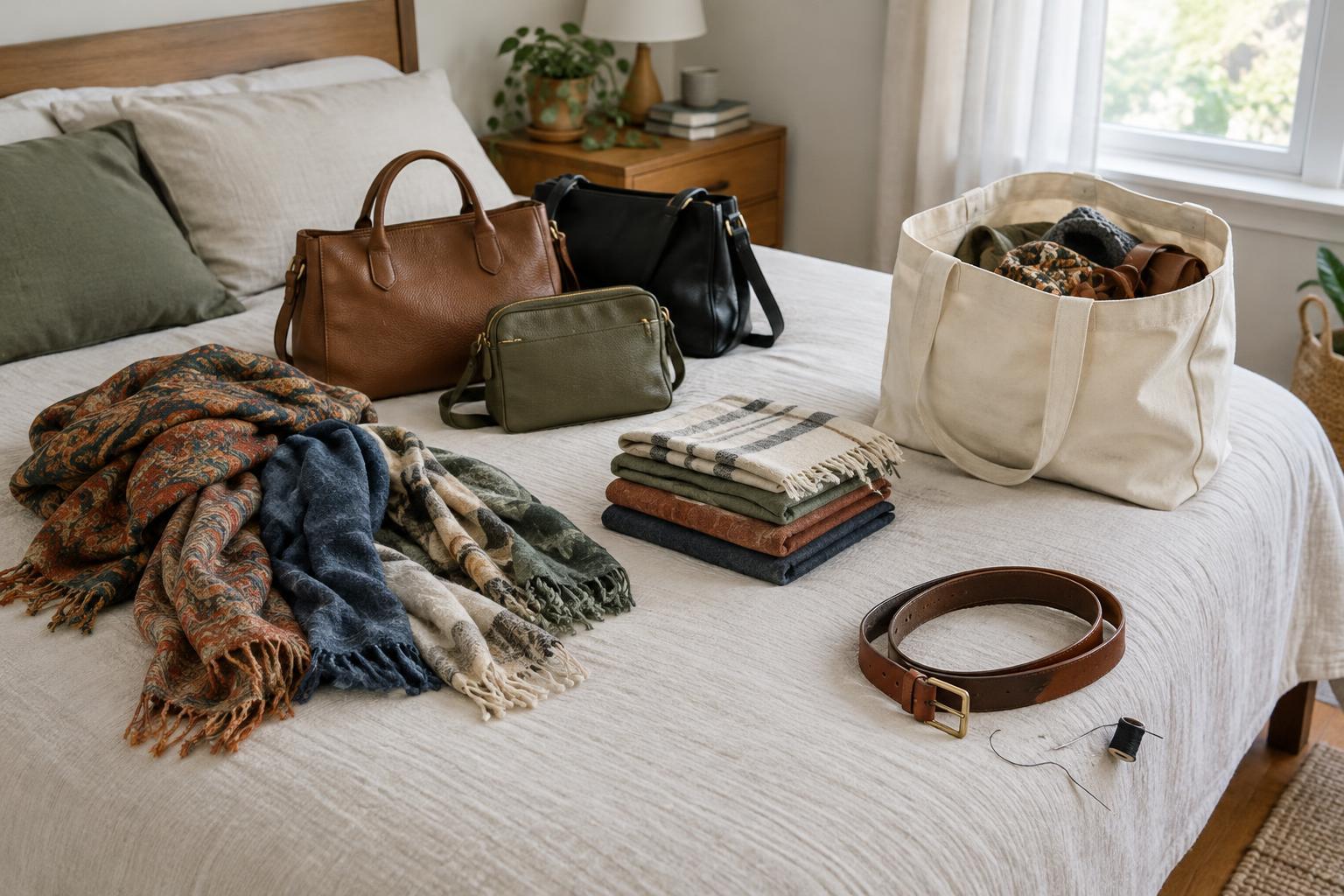
Scarves tucked into coat pockets, belts left on trousers, and bags stored inside other bags can make it hard to see what you own. Bring accessories into one well-lit space and group similar items together. Include the pieces you wear regularly, not just those already in storage. Seeing the whole group makes duplicates, forgotten favorites, and worn-out items easier to spot.
Sort by use rather than trying to make one decision about everything at once. You might make groups for everyday bags, occasion bags, warm scarves, lightweight scarves, belts, hats, and smaller items such as gloves or hair accessories. If a group feels large, work through it in batches. The goal is a useful wardrobe, not a perfect sorting session.
Decide what earns its space
Start with the pieces you reach for without thinking. An accessory earns its place when it fits comfortably, works with clothes you actually wear, and suits the activities in your life. A scarf does not need to match everything, but it should have a realistic use. A bag may be beautiful yet impractical if its strap hurts your shoulder or it cannot hold what you normally carry.
For uncertain items, ask what you would choose instead. If you always wear the same belt over two similar ones, consider whether all three serve a purpose. Check condition as well as preference: stiff or cracked straps, broken closures, persistent odors, and fabrics that irritate your skin can all keep an item out of rotation. Sentimental pieces can be kept for sentimental reasons, but giving them a defined place helps distinguish keepsakes from everyday accessories.
Avoid making decisions based only on what an item cost or what you hope your style might become. If you are unsure about a seasonal piece, set it aside in a clearly labeled trial box and revisit it when that season comes around. This gives you a chance to test whether you missed it without letting every uncertain item drift back into the closet.
Separate simple fixes from unlikely projects
Make a small repair group as you sort. A loose button on a bag, a missing belt loop, or a scarf with a snag may be manageable if you know how to fix it or can find someone who does. Check whether the repair would make the item comfortable and usable again. Cleaning and basic care may also restore a piece you had stopped wearing; follow its care label, and test any unfamiliar cleaning method on an inconspicuous area first.
Be honest about your time and the item’s condition. A repair pile is helpful only if it has a next step. Note what each piece needs and choose a reasonable time to address it. If a bag has several failing parts or a belt no longer fits your needs, keeping it indefinitely as a project may simply move the clutter.
Give the keepers an easy home
Store accessories so you can see and retrieve them without undoing your work. Hang belts where their buckles will not catch on clothing, or roll them loosely in a drawer. Fold or drape scarves according to their fabric and available space; delicate pieces may do better away from rough hooks. Give frequently used bags an accessible spot, and let other bags keep their shape with clean, lightweight filling if needed.
Choose storage based on the space you have, not on a need to buy matching organizers. A spare drawer divider, small box, or existing hook may be enough. Leave some room to put things away easily. If a storage system requires careful stacking every day, it is less likely to last.
Pass along what you will not use
Set aside clean, functional items for someone else to use. You could offer them directly to a friend, sell them, or donate them where accessories are accepted. Check a recipient’s guidelines before dropping anything off. Items with serious damage or hygiene concerns may not be suitable to pass along; look into local reuse or textile collection options where available rather than assuming every material can be recycled.
Once the edit is done, notice what it tells you about future purchases. Perhaps you need a bag with a comfortable strap more than another color of the same style, or perhaps your most useful scarf is the one that is easy to wash. Keeping those observations in mind can help you choose fewer accessories that genuinely work for you.