Start with the shoes you actually wear
A shoe collection can grow around imagined occasions: the event you might attend, the hobby you hope to resume or the outfit that looks right only with one particular pair. Editing becomes easier when you begin with your ordinary week instead. Think about where you walk, how long you stand, the weather you encounter and any dress expectations you regularly face. The goal is not to own a prescribed number of pairs. It is to make room for shoes that support the life you have.
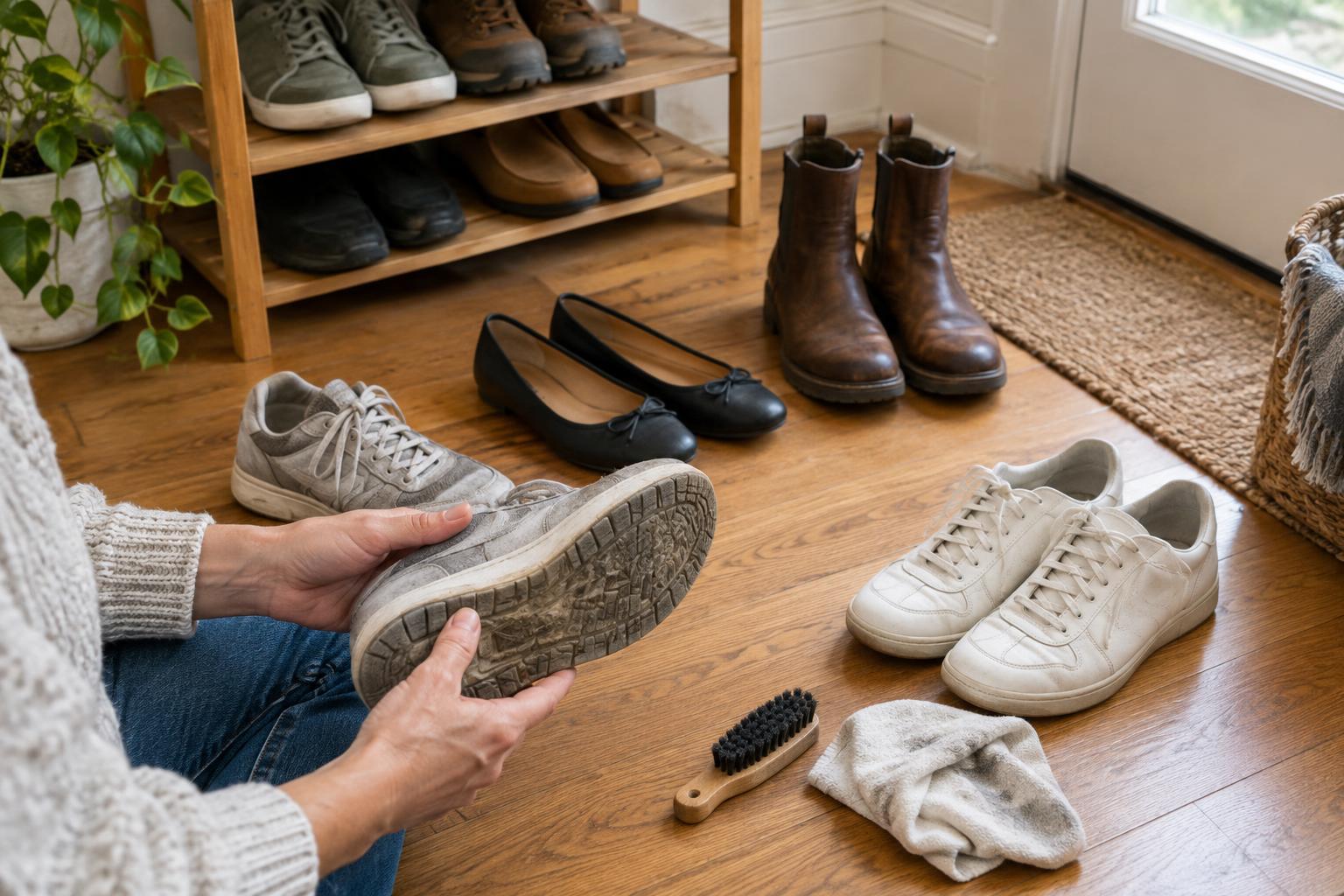
Bring every pair into one place, including shoes by the door, under the bed and in seasonal storage. Group them by purpose, such as daily wear, exercise, work, wet weather and occasional events. Seeing similar pairs together makes overlap visible. If you have several shoes for the same job, ask which ones you reach for first and why. A favorite may be easier to put on, more comfortable after a full day or simpler to care for.
Let fit and comfort set the first boundary
Try on pairs you have not worn recently, using the socks or insoles you would normally wear with them. Walk around on a safe, clean surface rather than judging fit while standing still. Notice rubbing, pinching, slipping, pressure on your toes or a need to change your stride. Shoes that hurt are not useful merely because they were expensive, look good or are almost right. If discomfort is persistent or significant, do not rely on an at-home shoe edit to solve it.
Separate problems that might be fixable from problems built into the fit. A worn heel tip, loose seam or tired insole may be worth assessing for repair or replacement. A shoe that is consistently too short or the wrong shape is a different matter. Avoid keeping it on the assumption that you will eventually get used to pain. If a pair passes the comfort test but suits a narrow purpose, keep it only if that purpose still belongs in your life.
Compare pairs by use, not by ideal outfits
For each category, identify the pair you would choose if you had to leave the house today. Then consider the runners-up. Do they serve a distinct need, such as a different season, surface or level of formality? Or do they compete for the same few outings? Two similar pairs can be reasonable if both get used and having a backup helps you rotate them. The question is whether each pair has a credible role, not whether it fills a slot on a checklist.
Be especially honest about occasion shoes. You may need a pair for infrequent events, but it should still fit, be in wearable condition and work with clothes you own. Shoes that require buying a new outfit before you can use them are less versatile than they first appear. When you are unsure about a pair, set it aside for a defined trial period and notice whether you choose it when the relevant occasion comes up. Do not let a trial box become permanent overflow storage.
Make a plan for repairs, storage and letting go
Create four practical groups: wear now, repair or clean, store for a real season and pass along. Give repair candidates a specific next step, such as cleaning the soles, checking the cost of a heel repair or taking a loose stitch to a repair shop. If the work is unlikely to happen, reconsider whether the pair belongs in your keep pile. Clean and dry shoes before storing them, and choose a space where you can find them when their season returns.
Pass along wearable shoes that fit neither your feet nor your routine. Clean pairs and describe their condition honestly if you sell or give them away. Shoes with substantial damage may not be suitable for another wearer; check what a local collection program accepts rather than assuming every pair can be recycled. Keeping an unusable pair indefinitely does not prevent waste. Making a considered decision about it can help you avoid repeating the same purchase.
Use the edit to shop more carefully next time
Before replacing anything, write down what your kept shoes cannot do. Perhaps your daily pair works indoors but not in rain, or your event shoes are comfortable only for short periods. A specific gap is more useful than a vague wish for something new. Try shoes with the socks you expect to wear, leave enough time to assess the fit and consider how easily you can maintain the materials. Secondhand shopping can be useful, but inspect wear patterns and try on pairs when possible.
Keep a short note of why you passed along shoes: narrow toes, awkward fastening, a color you rarely wore or a sole that did not suit your usual routes. These observations are a better buying guide than a photograph of a tidy shelf. A successful edit leaves you with shoes you can locate, wear comfortably and care for—not a collection that looks minimal but fails you on an ordinary day.