Start with the reason for the order
The easiest online order to manage is one you do not need to place. Before checkout, check whether you already own something that will do the job. Look in the place where you would normally store the item, not just where you expect it to be. If the need is temporary, borrowing or using an existing alternative may be simpler than finding room for another purchase.
A short waiting period can help with non-urgent items. Leave them on a list rather than in a cart, along with the task each item is meant to solve. When you revisit the list, you may find that the task is already done or that a more suitable option has become clear. This is not about delaying necessities; it is a way to separate a useful purchase from the momentum of browsing.
Check the details that commonly lead to returns
When an item is needed, spend a few minutes checking whether the listing answers your practical questions. For clothing and household goods, compare the stated measurements with something you own that fits or works well. For a replacement part, check the model number and dimensions rather than relying on a similar-looking photo. Read what is included, too: a product image may show accessories that are sold separately.
Think about where and how the item will be used. Will it fit the shelf, pass through the doorway or work with the equipment you have? Is its care routine realistic for your household? If essential details are missing, asking a seller a question or choosing a clearer listing may prevent an unwanted order. No amount of checking guarantees a perfect match, but it can rule out obvious mistakes before they become returns.
Order together when it makes sense
If you know you will need several items soon, consider ordering them together rather than making a series of impulse purchases. Keep a running list of ordinary replacements, such as a worn kitchen tool or a needed household supply, and review it before placing an order. This can also make it easier to notice duplicates and decide which items are actually ready to buy.
Do not add products merely to reach a shipping threshold or fill a box. Extra goods still require storage and may go unused. Likewise, a slower delivery option is only helpful if it suits your real schedule; an urgent need is different from a flexible one. The useful habit is to choose delivery deliberately, rather than letting a default setting decide for you. Packaging and shipping arrangements vary, so avoid assuming that one checkout option always produces less waste.
Give the order a place to land
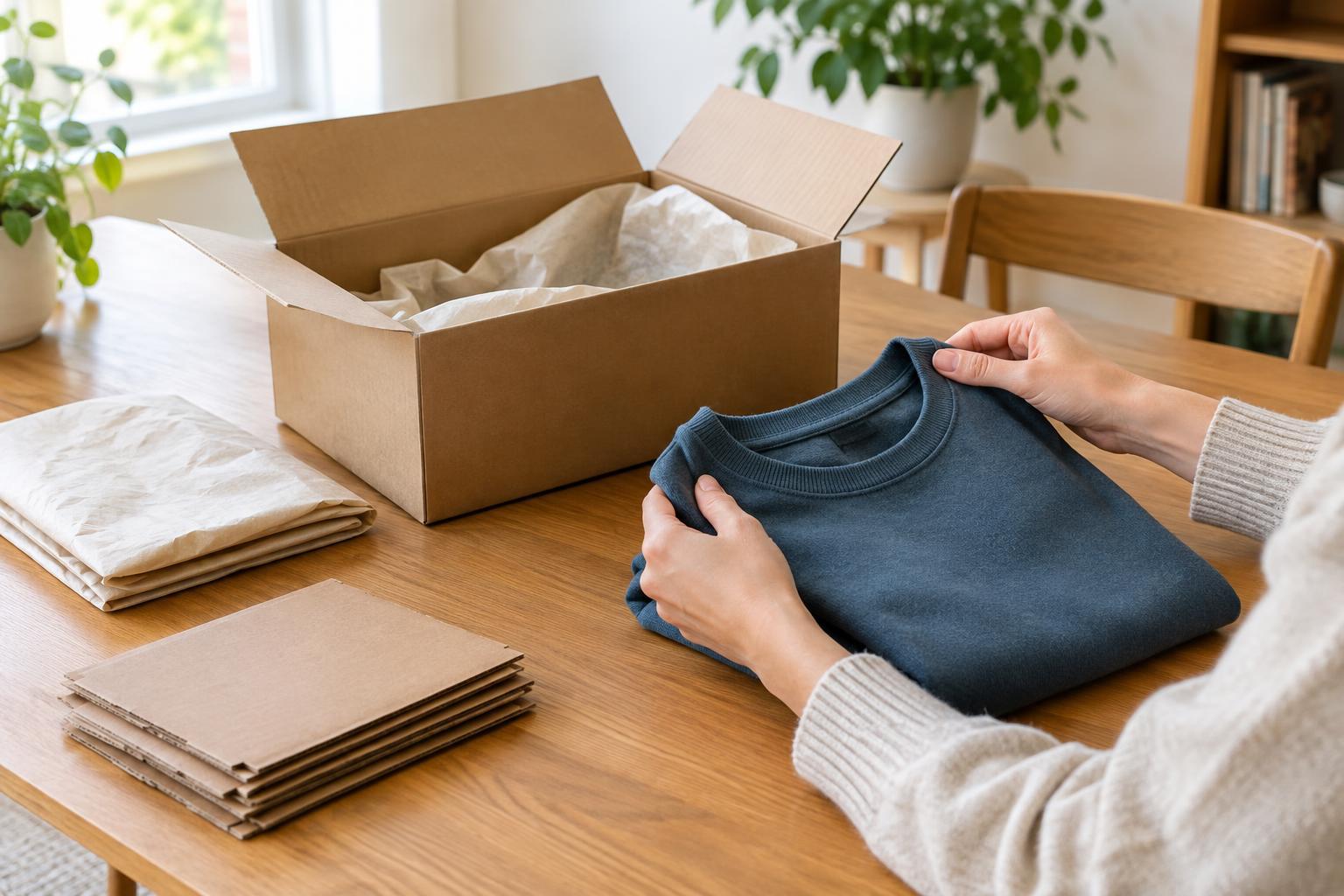
Open a package when you have time to check its contents, instead of letting it join a stack of unopened boxes. Compare the item with the order, test its basic function where appropriate and put it in its intended place. If it replaces something, decide what happens to the old item. It may still be usable elsewhere, suitable for donation or ready for a local recycling or disposal route.
Keep packaging briefly if you genuinely need it to assess an item or make a possible return. Once you are confident you will keep the purchase, flatten boxes you can recycle locally and separate any packing materials according to your area’s rules. Save only the mailers, padding or boxes you expect to use within a reasonable time. A limited space for reusable packaging keeps the effort from becoming another form of clutter.
Handle a poor fit promptly
If an item is wrong, check the seller’s return instructions before repacking it. A return may be the most practical choice, especially for a faulty product or one that cannot be used. If returning it is not possible or sensible, consider whether someone nearby could use it, but do not pass along an item that is broken or unsafe. Deal with the decision while the purchase is still fresh, so it does not become an indefinitely stored project.
Finally, note why the order did not work. Was the size unclear, the description incomplete or the purchase made before you checked what you had? That small observation is more useful than a blanket rule against online shopping. The aim is a repeatable routine: buy for a defined need, check the details, receive the item intentionally and learn from the orders that miss the mark.