Start with the containers you actually use
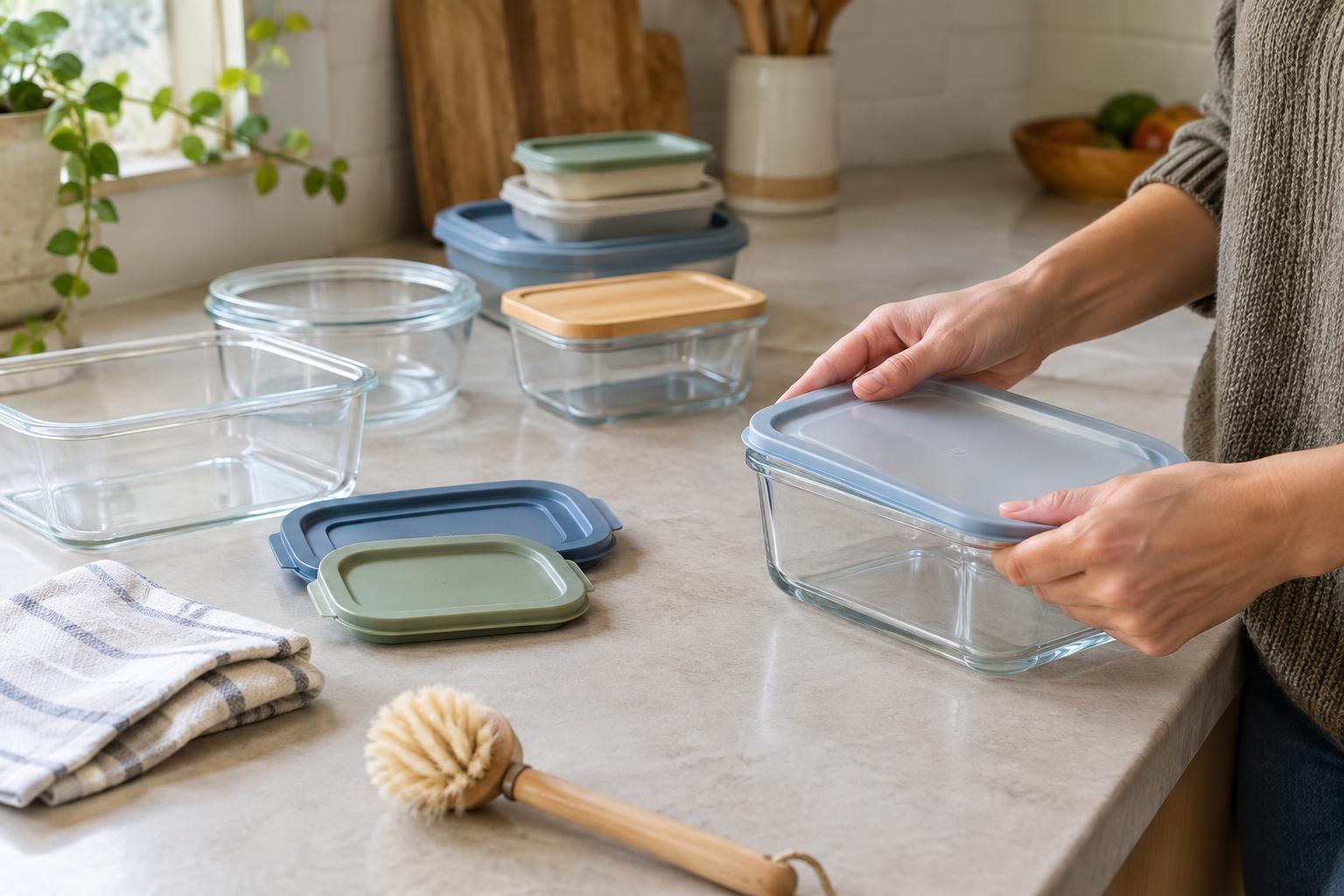
A cupboard full of containers is not necessarily a useful collection. Empty the cupboard and match each container with a lid. Set aside pieces with no partner, then consider the sizes you reach for regularly. A small set that stacks well and closes reliably may serve you better than a crowded shelf of awkward shapes.
Before discarding an unmatched piece, check whether its partner has migrated to the dishwasher, freezer or another cupboard. Give the remaining strays a short trial period in one designated spot. A lidless container might still work for holding dry supplies or organizing a drawer, but only if that is a job you need done. Keeping every stray “just in case” can make the usable pieces harder to find.
Clean without adding unnecessary wear
Follow any care instructions supplied with a container. If you do not know whether it is dishwasher-safe, hand-washing is the cautious choice, particularly for lids with seals or moving parts. Use a soft sponge and wash around rims and grooves where food can collect. Let each piece dry fully before stacking it; trapped moisture can leave containers unpleasant to use even when they were washed properly.
Treat stubborn odors or stains as a cleaning problem first, not an automatic reason to replace the container. Wash it thoroughly and allow it to air out before deciding whether it is still useful. Avoid harsh scrubbing that scratches the surface. If a container remains difficult to clean, holds a persistent odor, or has damage that could trap food, retiring it from food use may be the more practical choice.
Protect the fit between lid and container
A sound container is less useful when its lid will not stay on. Avoid forcing a lid that does not fit; similar-looking pieces may belong to different sets. Check the rim for warping and, where present, make sure a removable seal is clean, seated correctly and in good condition. Do not rely on a questionable seal for carrying liquids or storing food that needs a dependable closure.
Heat and rough handling can shorten a container’s useful life. Check the product’s instructions before using it in a microwave, oven or freezer, and do not assume the lid has the same heat tolerance as the base. Leave room for food to expand when freezing, and avoid prying apart frozen pieces. When storing empty containers, nest only pieces that release easily; tightly wedged stacks can be frustrating to separate and may damage rims.
Choose a storage arrangement you can maintain. You might nest bases by size and keep lids upright beside them, or store each lid loosely with its base if space allows. The aim is not a perfect display: it is being able to find a complete, usable container without unloading the whole cupboard.
Decide when to reuse and when to let go
Give your collection a quick check whenever you notice a lid slipping or a container becoming hard to clean. Look for cracks, sharp edges, warped rims and seals that no longer sit properly. A container that cannot be cleaned thoroughly or closed as needed has reached the end of that food-storage job, even if much of it still looks fine.
Some retired pieces can take on a non-food role, such as holding craft supplies or small hardware, provided they are intact enough for that purpose. Do not let repurposing become another way to store items without a plan. If you have no specific use, check the local disposal guidance for the material rather than assuming every container belongs in recycling. Buying fewer replacements begins with knowing which sizes and features have genuinely worked for your household.