Start with what has changed
Sometimes a wardrobe stops feeling right even though most of the clothes still fit. You may prefer different colors, want less fuss in the morning, or feel drawn to a shape you once avoided. Before removing anything, name the change as specifically as you can. “I want clothes that are easier to move in” is more useful than “I need a whole new style.” It gives you a way to assess each item against your daily life rather than against a passing mood.
Look at the clothes you reach for now, not just the ones you admire on a hanger. What do they have in common: a loose fit, a particular fabric, simple details, or an easy way of layering? Notice what you repeatedly pass over, too. An item may be perfectly good yet feel too formal, too fussy, or unlike you. These observations help you edit with purpose, without assuming that every older preference has to disappear.
Separate a change in taste from a change in use
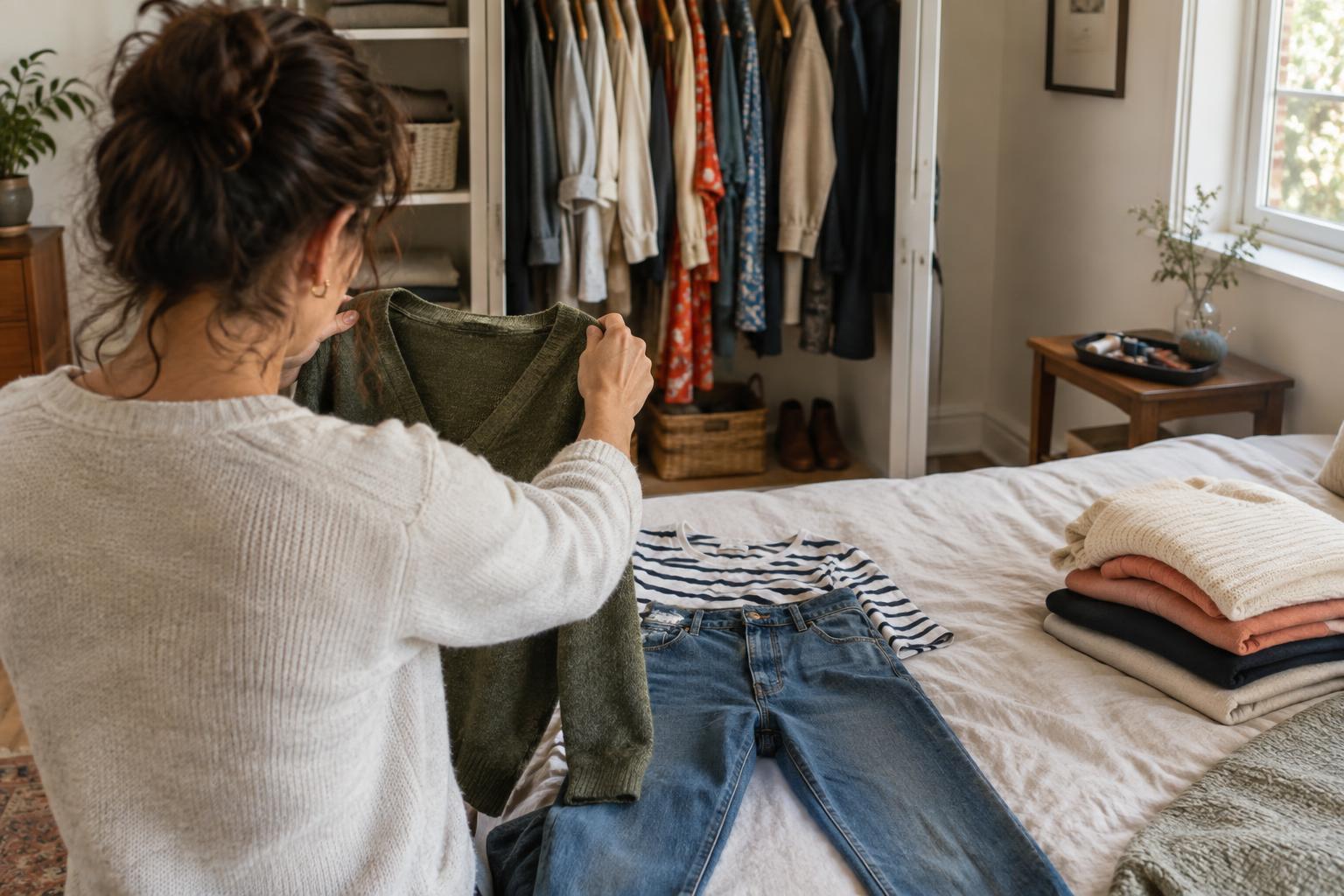
Ask whether a garment feels wrong because you no longer like it or because you have not found a useful way to wear it. Try it with two or three pieces you already use regularly. A jacket that feels dated with its original matching trousers might feel natural with everyday clothes. On the other hand, if you keep changing out of it before leaving home, that is useful information. You do not need to keep proving an item deserves space simply because it cost money or is still in good condition.
It also helps to check your actual week. If your routines have changed, some clothes may be getting less use for practical reasons, regardless of your taste. You might still enjoy a dressy shirt but need it only occasionally. Keeping a small number of such items can make sense; keeping every version may not. Consider both questions separately: “Do I like this?” and “Do I have a realistic use for it?” An item does not need to be worn weekly to earn its place, but it should have a reason to stay.
Experiment before making permanent decisions
A style change can be gradual. Choose a few pieces you are unsure about and wear them in ordinary settings over the next few weeks. Pay attention to comfort, ease of care, and whether you feel inclined to wear them again. If an outfit nearly works, try changing one element before dismissing the whole thing. Rolling a sleeve, pairing a familiar top with different bottoms, or removing an accessory may be enough to make an existing piece feel more like you.
Avoid treating a new preference as a shopping list. First, see how far you can get with what you own. If you keep wishing for the same missing piece across several outfits, write down the specific job it would do. That is more helpful than buying something because it matches a vague idea of your new look. You can then decide whether a secondhand find, an alteration, or simply a different combination would meet the need.
Make room without rushing the transition
When you are ready to edit, sort clothes into clear groups: pieces you wear and enjoy, pieces you want to test, and pieces you are comfortable releasing. Keep the testing group small enough that you will actually revisit it. Give yourself a reasonable point to review it again, such as after you have had several chances to get dressed for your usual activities. If you still avoid a piece and cannot name a role for it, you can let it go without waiting for an imaginary perfect outfit.
For items you release, choose a route that suits their condition. Wearable clothes may be useful to someone else through resale, giving them directly to a person who wants them, or donation where accepted. Damaged pieces may be candidates for repair or a suitable textile collection, depending on what is available locally. The goal is not to replace one crowded closet with another overnight. It is to make space for clothes that serve your life now while allowing your preferences to develop.