Start with what comes home
Before buying jars or changing stores, notice the packaging in a normal week of groceries. Which items leave you with the most wrappers, trays, bags, or containers? Also notice what gets eaten and what is thrown away. This gives you a better starting point than trying to make every purchase packaging-free at once.
Pick one or two repeat purchases to change first. If you buy the same snack every week, a larger pack portioned into a container you already own may replace several small wrappers. If you regularly buy loose produce, bringing a reusable produce bag may be easy. The most useful change is one you can repeat without making shopping much harder.
Plan purchases around what you will use
A short grocery list can prevent both extra packaging and extra food waste. Check the fridge and pantry before you shop, then plan a few meals around ingredients that need using. Choose quantities your household can finish or store well. A large package is not a good low-waste choice if much of its contents will spoil.
Some packaging protects food or makes it possible to buy a smaller amount. Compare the whole decision rather than judging an item by its wrapper alone. For example, a packaged ingredient you reliably finish may suit your routine better than a loose alternative you often forget. Cutting avoidable waste matters more than following a rigid rule.
Bring reusables that earn their place
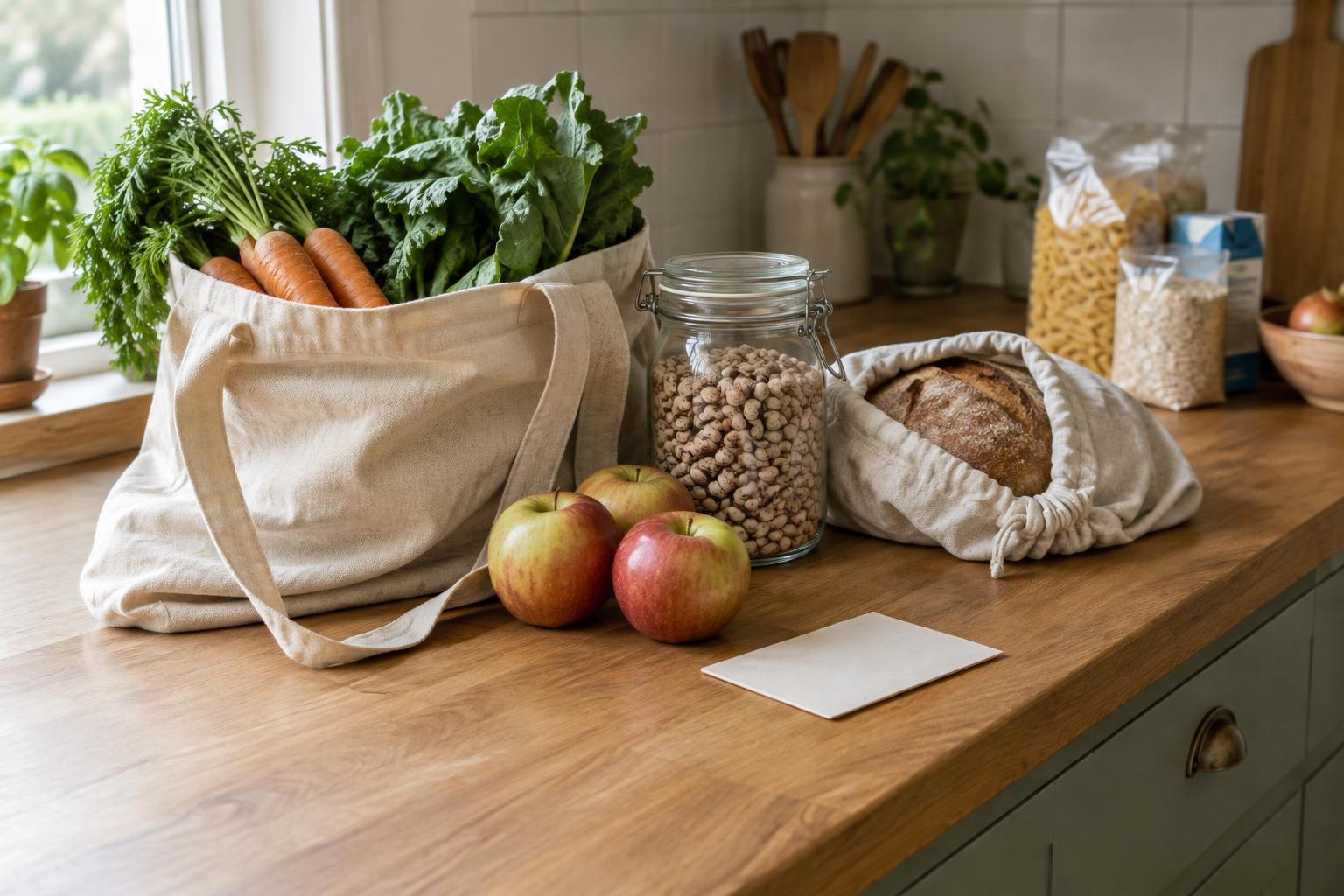
Reusable shopping bags are a simple place to begin. Keep a few near the door, in a bag you usually carry, or wherever you make your grocery list. If your store allows them, lightweight produce bags can replace disposable ones; for sturdy items such as onions or citrus, you may be able to skip a produce bag entirely.
Bring containers for bulk bins or counters only after checking the store’s rules. Clean, dry containers and clear labels make them easier to use. There is no need to assemble a full kit: using what you have, such as an existing tote or washable bag, avoids buying supplies for a habit that may not fit your shopping route.
Use bulk and refill options selectively
Bulk bins can help you buy an amount that matches your plans, especially for ingredients you use often. Note the item name and any cooking instructions before leaving the store, and transfer purchases to suitable containers at home. Buy only what you can use while it is still in good condition; a pantry full of forgotten bulk purchases is not a win.
Refill stations and returnable containers may offer another option where available, but convenience, store policies, and price vary. If a refill requires a separate trip you cannot easily make, choose a simpler swap on your usual route. Comparing packaging among the products already on your list can still lead to a practical improvement.
Make the routine flexible
Keep useful packaging in perspective. A bag that can be reused for storage or a sturdy container you will refill may serve you longer than its first trip home. At the same time, saving every container can create clutter. Keep only what you have space for and a clear use for; recycle or dispose of the rest according to local guidance.
Expect exceptions. A busy week, limited store choices, food-safety needs, or a tight budget may make a packaged item the sensible choice. Instead of treating that as failure, return to the habits that work: a list, a few reusables, and thoughtful quantities. A grocery routine that fits everyday life is more likely to last.