Start with the gap, not the item
Before adding anything to a secondhand shopping list, name the problem it would solve. “A lamp” is easy to interpret generously when you spot one you like. “A bedside light for reading that fits on the narrow nightstand” gives you something to test. Check what you already own, including things stored out of sight. You may be able to move an item from another room, repair it or borrow one for a short-term need.
Write down the few items you are actively looking for, rather than every object you might someday use. Give each one a purpose and a place to live. If you cannot say where it will go or what it will replace, leave it off the list for now. This keeps an interesting find from turning into a storage problem.
Turn each need into a useful description
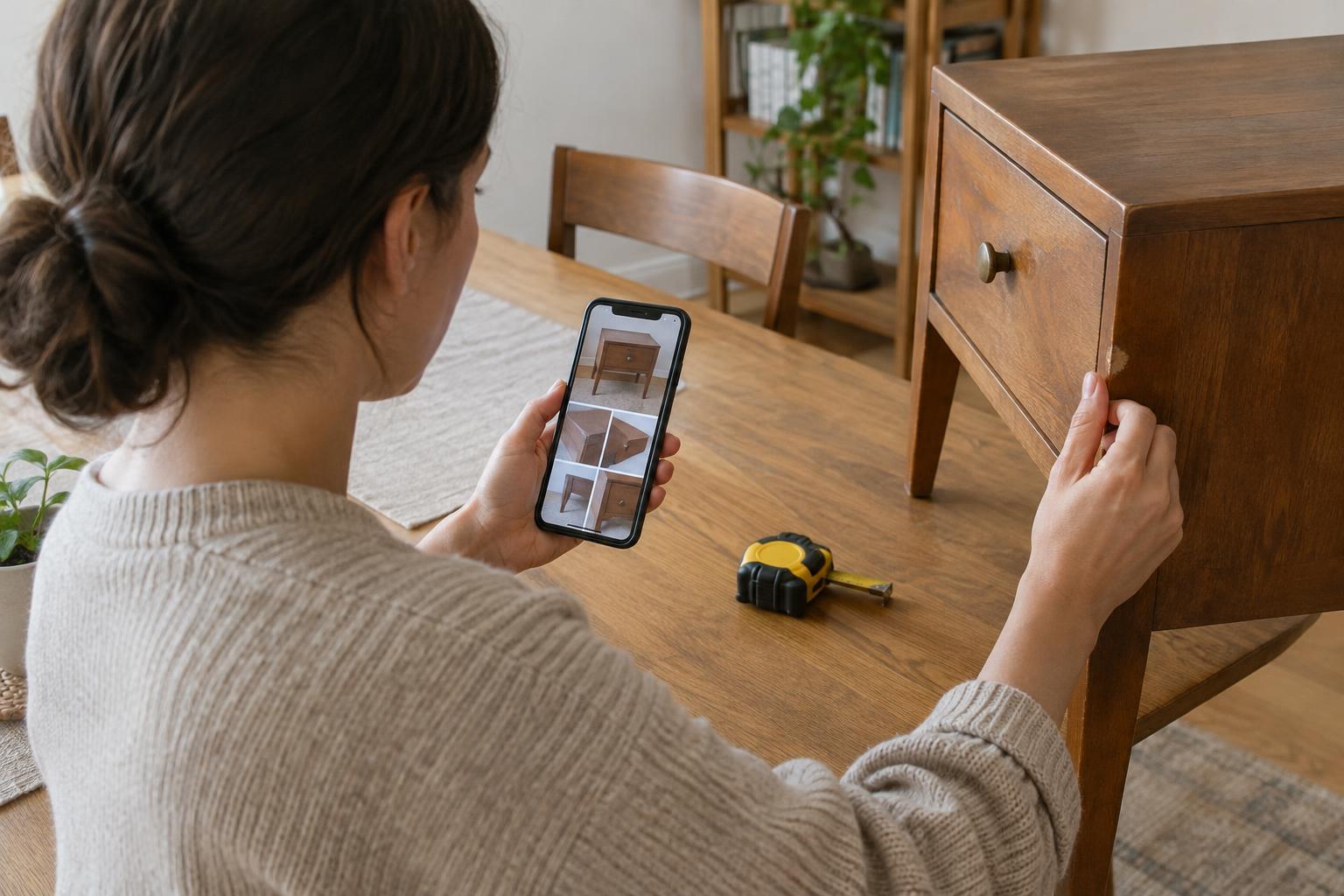
Secondhand stock is unpredictable, so your list should be specific about requirements but flexible about appearance. For a small table, record the maximum dimensions, the room it is for and whether it must be easy to move. For a coat, note your size range, the weather it needs to handle and the layers it must fit over. Keep measurements on your phone, along with a photo of the space or an item that needs to match.
Separate must-haves from preferences. A sturdy frame might be essential for a chair; a particular color might not be. Think about material, comfort, cleaning and care as well as looks. The best find is not necessarily the closest match to your imagined version. It is one that works safely and comfortably in everyday use without creating another task you are unlikely to finish.
Set limits before you browse
Add a maximum price beside each item, including any likely cost of transport, cleaning or simple repairs. This is a personal spending boundary, not a prediction of what something is worth. It helps you compare the whole effort of bringing an item home with the need it will meet. If an item needs a part or a service you cannot readily arrange, treat that as an unresolved question rather than a bargain.
A list can also specify what not to buy. You might rule out dry-clean-only clothes, furniture too large for your doorway or projects that need tools you do not have. These limits spare you from making fresh decisions under the pressure of a crowded rack or a one-off listing. Carry a tape measure when dimensions matter, and be willing to leave empty-handed.
Use a short check at the point of purchase
When something catches your eye, pause and ask: Is it on the list? Does it meet the must-haves? Can I inspect it well enough to understand its condition? Check seams, fasteners and wear on clothing; stability, smells and damage on household goods. For an electrical item, confirm that testing or returns are possible before deciding. If you cannot check a feature you depend on, you can pass.
Then ask whether you would still want the item if it were easy to find again. Scarcity can make a purchase feel urgent even when the object is only a partial fit. If a shop permits it, step away for a few minutes and look at your list again. A low price and a good story are pleasant bonuses, but neither makes an unneeded object useful.
Review the list after each search
Cross off what you found only after it works at home. Record dimensions or fit notes that would make the next search easier. If you repeatedly pass over the same listed item, ask whether the need has changed or whether your requirements are unrealistic for the time you want to spend looking. You can revise the description, choose another way to meet the need or remove it.
Leave room for discovery without giving every appealing object a free pass. One approach is to keep a separate “think about it” note for unexpected finds and revisit it later. If the idea still makes sense, you can add a clear purpose and limits before shopping again. The goal is not to make secondhand shopping rigid. It is to make sure the things you bring home have a role in the life you actually live.