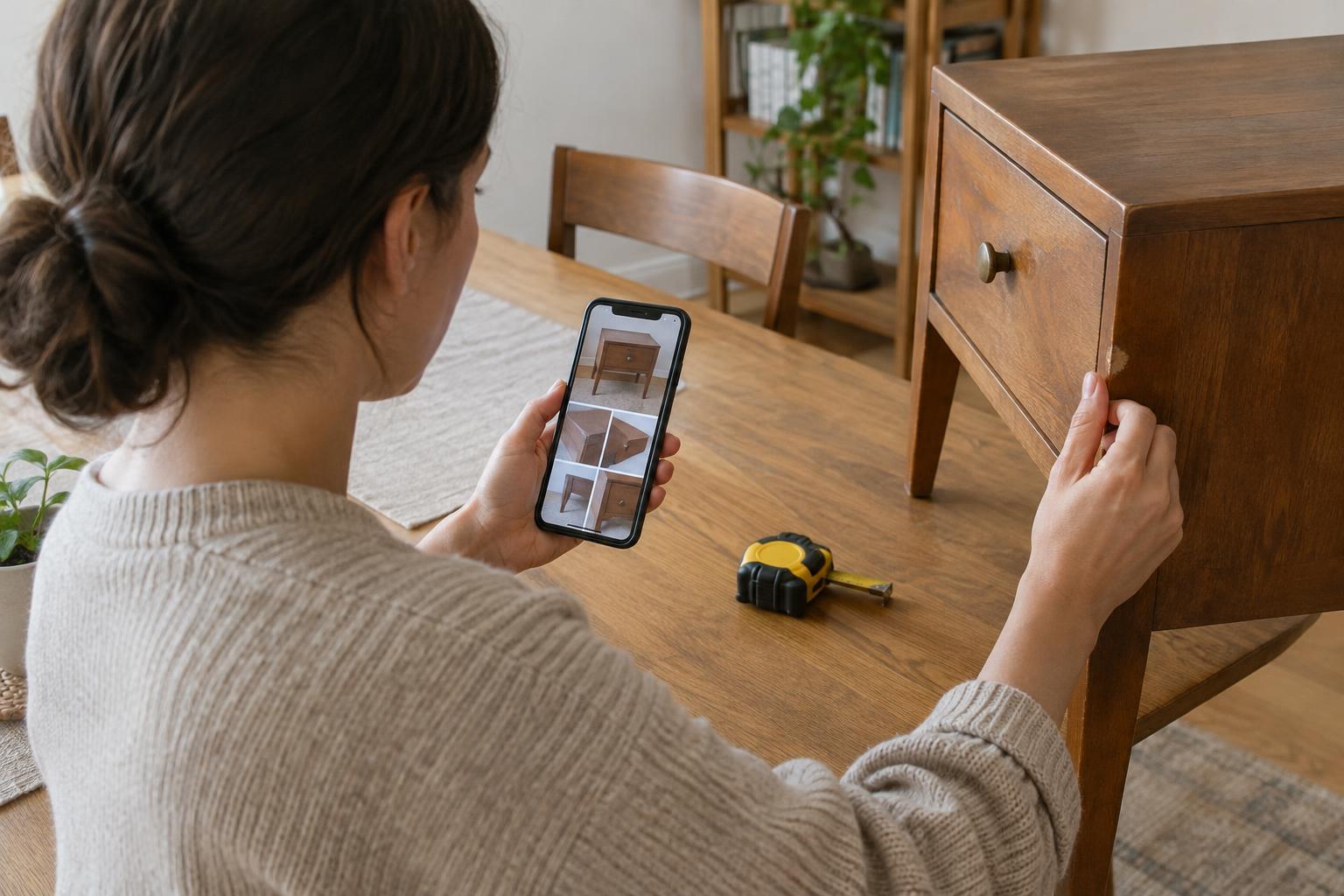
Start with the cost at checkout
An online secondhand find can look inexpensive until you reach checkout. Before deciding, write down the item price, shipping charge, any platform or payment fees shown to the buyer, and any taxes calculated at checkout. The total you would actually pay is a more useful number than the price displayed in search results. If a charge is not visible until the last step, keep the item in consideration rather than treating its listed price as settled.
Shipping deserves particular attention for heavy, bulky or fragile items. A low-priced lamp may need careful packing; a small piece of furniture may cost more to deliver than expected. Check what the listing says about the delivery method and whether you will need to collect the item from a pickup point. If you are considering local pickup, account for the trip and whether the object will fit in the transport you have available.
Check what it will take to make the item usable
The cheapest listing is not necessarily the least costly choice if it needs work. Look closely at photos and descriptions for wear, missing parts, stains, odors or damage that could affect how you use the item. For clothing, compare measurements with a garment you already own rather than relying only on a size label. For household goods, check dimensions, included accessories and any stated testing of moving or electrical parts.
Estimate any likely cleaning, replacement parts, alterations or repairs before you buy. You do not need a precise figure for every possibility; the point is to notice when an appealing price depends on extra effort or supplies. If a flaw is unclear, ask the seller a specific question or request another photo. If you cannot tell whether the item meets your needs, that uncertainty belongs in your decision alongside the price.
Read the return terms before you need them
Return options vary by seller, platform and listing. Check whether returns are accepted, how long you have to request one, what condition the item must be in, and who pays return shipping. Also look for any stated exceptions or fees. A return that requires you to pay to send back a bulky item may offer little practical reassurance, even if the purchase price is refundable.
Keep a distinction between changing your mind and receiving an item that does not match its description; a marketplace may handle those situations differently. Read the applicable terms rather than assuming that a policy from another shop or platform applies. Save the listing description, photos and order details until the item arrives. If the return terms are unclear, ask before purchasing or choose an option whose risks you are comfortable accepting.
Compare the total with realistic alternatives
Once you have a checkout total and a sense of condition, compare it with other ways to meet the same need. Another secondhand listing might cost more upfront but be available for local pickup or include a part this one lacks. A local resale shop may let you inspect fit and condition in person. You might also be able to borrow the item, repair something you own or wait until you find a better match.
Avoid comparing a used item only with the price of a new one. Compare the versions you would actually choose, including delivery and the likely work each needs. An inexpensive item that is the wrong size or difficult to return is not a bargain for your household. Likewise, paying more for a well-described, durable item may make sense if it will be used regularly and fits the space you have.
Use a short pause before placing the order
Before paying, ask yourself: What is my total at checkout? What might I need to spend or do after delivery? Can I return it, and what would that cost? Do I know where it will go and how I will use it? These questions turn browsing into a practical choice rather than a race to secure a seemingly low price.
If the answers are clear and the item meets a real need, a secondhand purchase can be a satisfying way to keep something in use. If important details remain uncertain, it is reasonable to pass. There will often be other options, while an unsuitable purchase still takes up space, time and resources after the excitement of finding it has faded.