Start with the load, not the repair
Backpacks and tote bags are easy to overlook until a strap pulls loose or the bottom wears through. The most useful care habit is to notice what the bag carries each day. A lightweight tote may be convenient for a few groceries but poorly suited to repeated heavy loads. A backpack packed so tightly that its zipper strains may have too little room for the job, even if the fabric is still sound.
Empty a frequently used bag once in a while. Remove crumbs and loose objects, then check whether anything sharp is pressing against the lining. Keep keys, tools, and other hard-edged items in a small pouch if they tend to scrape the same spot. Distribute heavier items toward the center of a backpack rather than letting them pull on one corner. If a bag regularly feels overloaded, switching to a sturdier bag for that task may prevent damage more effectively than repeated repairs.
Clean gently and let the bag dry fully
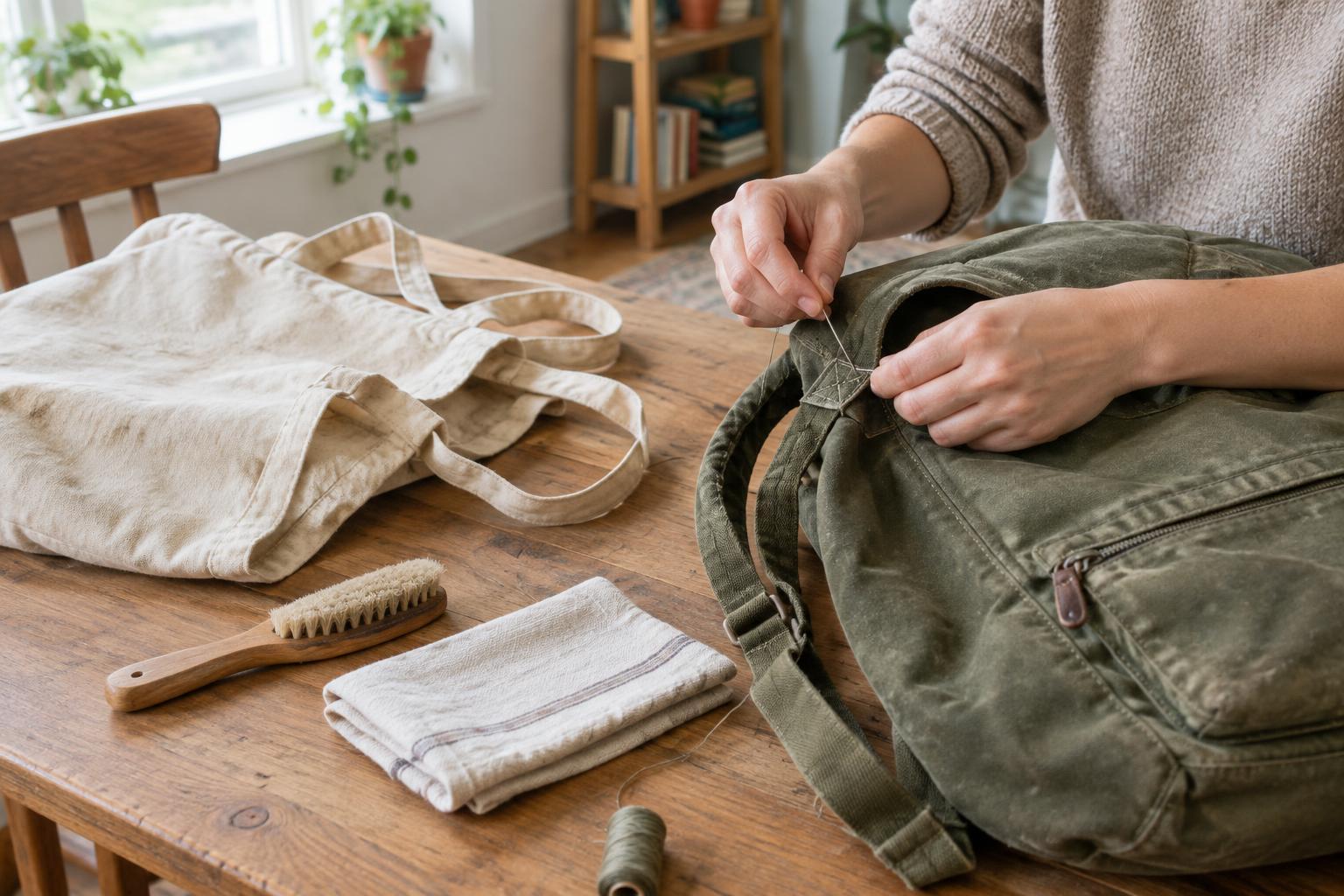
Before cleaning, check any care label and consider the materials. A fabric tote may tolerate a different approach from a coated backpack, a leather bag, or one with a rigid base. Start by shaking out debris and using a soft brush or vacuum attachment on seams and pockets. For an ordinary spot on washable fabric, try a little mild soap and water on an inconspicuous area first. Blot rather than scrub aggressively, especially near printed designs or worn fabric.
Avoid soaking a bag simply because its surface looks dirty. Water can linger in padding, stiffeners, and folded seams, and some finishes may change when wet. If you do wash a bag, follow its care instructions and allow it to air-dry completely with pockets open before putting it away. A bag stored damp can develop an odor that is harder to address than the original dirt. Keeping a bag off a wet floor and promptly emptying a spilled lunch container are small habits that reduce the need for deep cleaning.
Catch wear where stress collects
Every few weeks of regular use, look at the places that do the most work: strap attachments, handles, the base, pocket corners, and zipper ends. Gently open and close the zipper to see whether fabric is getting caught. Check for stitches that have begun to loosen, not just seams that have already opened. A few minutes of inspection can help you choose a small, manageable fix before a tear spreads.
A loose seam on sturdy fabric may be repairable with needle and thread, provided you can reach the area and match the repair to the strain it will bear. Sew through sound fabric beyond the damaged spot rather than relying on frayed edges. A patch can protect a thin area from further rubbing, but it should extend onto intact material. For a heavily loaded strap attachment, a simple surface stitch may not be strong enough; an alterations shop, bag repairer, or other experienced repairer may be better equipped to reinforce it.
Treat hardware as a separate problem. A zipper that catches on a bit of lining might need the lining secured, while a missing pull can sometimes be replaced without changing the zipper itself. Do not force a jammed slider or keep carrying a bag by a handle that is pulling away. If the bag carries fragile items or must stay secure during travel, test any repair with a light load before relying on it.
Give an imperfect bag a suitable next job
Not every bag needs to return to its original role. A backpack with a weakened strap might still hold lightweight supplies on a shelf after the strap is removed or secured out of the way. A stained tote can carry library returns or clean recycling if its seams remain strong. Reassigning a bag works best when the new use asks less of the worn area; it is not a substitute for repairing a handle that must safely bear weight.
If a bag no longer works for you but remains functional, clean it, empty every pocket, and consider passing it on. Be candid about any flaws so the next person can decide whether it suits their needs. If it is too damaged to share, remove reusable hardware or fabric only if you have a realistic use for those pieces. Otherwise, storing a pile of worn bags can simply move clutter from one place to another. Keeping the bags you use in good condition, and giving each one an appropriate job, is a practical form of reuse.