Start with what you already use
A refillable product can sound like a simple improvement: buy the container once, then keep topping it up. But the container is only one part of the purchase. You are also choosing a way to obtain, store and use its contents. Before replacing a working soap bottle, cleaning spray or other everyday item, notice how often you use it and what happens when it runs out. A refill system should make that routine easier to sustain, not add a task you are likely to put off.
Ask whether you need a new container at all. A sturdy bottle you already own may be suitable for a compatible refill, provided it can be cleaned and used safely for that product. If your current setup works and refills are not readily available, there is no need to replace it simply because another container is marketed as reusable. For more ideas about shaping household routines around what matters to you, browse Dawn Living Journal.
Check the next refill before buying the first container
Find out exactly how you would refill the product a second and third time. Is the refill sold where you normally shop, or would it require a separate trip or order? Does it come in a size you can finish and store comfortably? If it is tied to one brand or a particular cartridge, consider what you would do if that refill became hard to find. A container that accepts only one difficult-to-source refill may be less useful than a simpler option.
Compare the full routine rather than the price of the starter container alone. Look at the amount of usable product in a refill, any delivery costs, and whether you would have to buy more than you need to qualify for a discount. A large refill can be convenient in a household that uses it steadily; in a small household, it may occupy space for a long time. The better choice is the one you can realistically buy again without accumulating surplus.
Think about cleaning, handling and storage
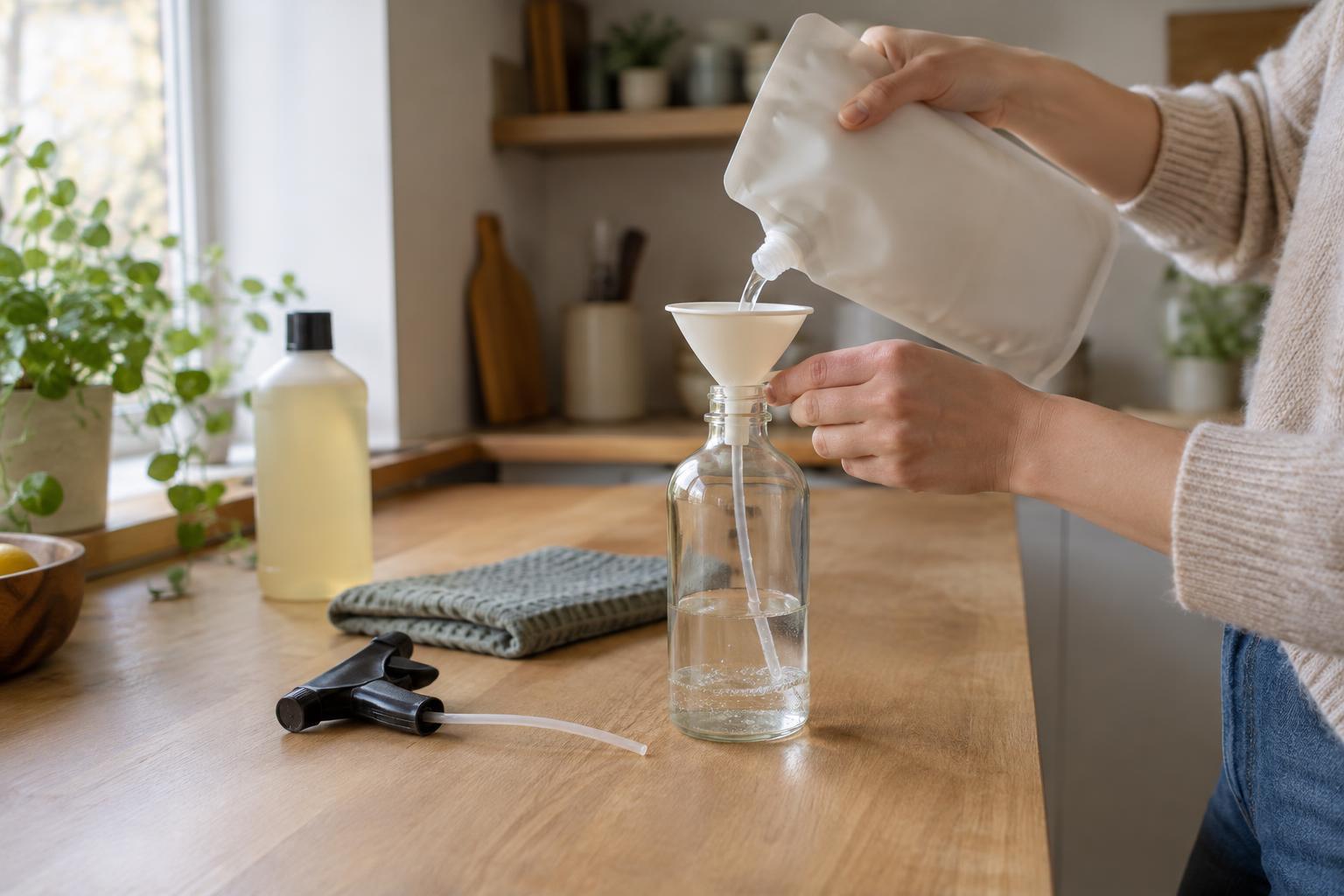
Consider how the container works on an ordinary rushed day. Can you open it without a tool, pour into it without frequent spills, and tell when it is nearly empty? Is it comfortable for the people who will use it? A handsome dispenser that is awkward to refill may eventually sit unused while its replacement takes up more space. Small accessories deserve the same practical test; for more everyday-item browsing, see Everyday Accessories · Dawn Living Journal.
Check the care instructions for both the container and its contents. Some products have specific directions about mixing, dilution or reuse; follow those rather than assuming every bottle can hold anything. If the opening is too narrow to clean or dry properly, consider whether you will actually maintain it. Also decide where the empty container, the open refill and any spare refill will go. A system that needs three storage spots is not necessarily simpler than the item it replaces.
Look at the packaging without expecting perfection
Refill packaging can differ substantially. It might be a lightweight pouch, a carton, a concentrated tablet or a bottle similar to the original. None of those formats automatically makes the whole system low-waste. Consider what packaging arrives each time, whether you can use the contents completely, and what disposal options are available to you. A concentrated product may use less storage space, for example, but only if its preparation and handling suit your household.
It is reasonable to choose a refill system for convenience, reduced clutter or a container you prefer using, even when the packaging comparison is not obvious. Avoid treating the purchase as a promise that you must keep using one format forever. If the refill becomes inconvenient or the container fails, reassess it. For other prompts to use while weighing household purchases, browse Thoughtful Shopping · Dawn Living Journal.
Try one change before building a collection
If a refillable option passes these checks, start with one product you already use regularly. Keep your existing setup until you know the new one fits. Use the first fill, obtain one refill through your normal shopping routine, and notice any friction: a leak, a difficult pour, a refill you forgot to order or a container nobody likes using. That small trial tells you more than buying matching dispensers for every room at once.
The aim is not to have the most refillable-looking shelf. It is to make a repeat purchase more manageable without creating unused containers, excess stock or extra work. If a system fits your space and habits, keep it. If not, the useful lesson is to choose a different routine—not to keep buying supplies for one that never became practical.