Start with the job the item needs to do
A secondhand find is worth considering when it can do a job you actually need done. Before inspecting a pan or stack of plates, ask whether it fits your stove, storage space and usual way of cooking. That pause makes it easier to pass on an attractive item that would only add clutter.
Where possible, examine kitchenware in good light and handle it rather than judging it from a shelf or photograph. Look across surfaces at an angle, then check rims, corners, undersides, handles and joins. A stain or small cosmetic scratch may not affect use; a crack, loose part or damaged food-contact surface can matter much more. If a listing does not show the areas you need to assess, ask for clear photos before making the trip.
Check pans for sound surfaces and secure handles
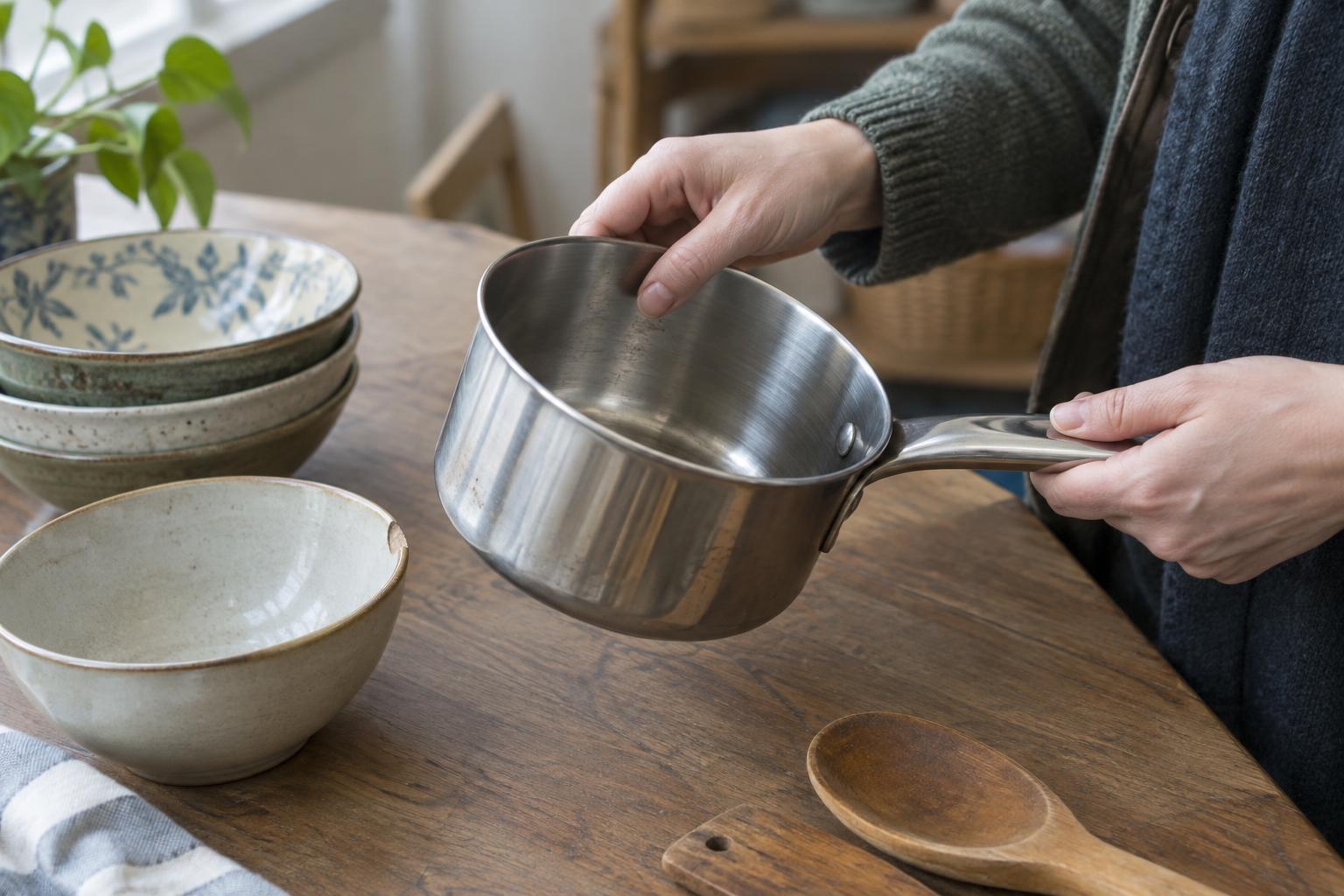
On stainless steel, look for a reasonably smooth cooking surface, a flat base and firmly attached handles. Light discoloration or surface marks may be manageable, but deep pits, sharp edges or loose rivets can make a pan harder to use and clean. Set a pan on a level surface if you can: significant rocking may be frustrating on a flat stovetop.
Be more selective with coated pans. Leave behind nonstick cookware with flaking, peeling or badly scratched coating. If you cannot identify the coating or judge its condition, choosing an uncoated pan may be simpler. Cast iron with light surface rust may be restorable through cleaning and seasoning, while cracks or severe pitting are stronger reasons to pass. For copper cookware, check that any interior lining is intact; visible bare copper where a lining has worn away is not a good choice for general cooking, particularly with acidic foods.
Treat cracks and uncertain glazes as reasons to pause
For glass and ceramic dishes, run your eyes along the rim and base for chips and hairline cracks. A chipped drinking rim can be sharp, and cracks may spread with washing or temperature changes. Also look for staining inside cracks or networks of fine lines in a glaze. These areas can be difficult to clean thoroughly, even if the dish still looks appealing.
Be cautious with pottery when you cannot establish that it was made for food use, especially older, handmade or decorative pieces with unknown glazes. Appearance alone cannot confirm whether a glaze is suitable for contact with food, and a home test may not settle every question. If its intended use is unclear, consider it for display or dry, non-food storage instead. Do not assume that a decorative label or the absence of visible damage makes an item safe for serving.
Examine utensils and containers where grime can hide
Wooden boards and utensils deserve a close look at grain, seams and handle joints. Shallow knife marks are common, but deep grooves, splits, soft spots or persistent musty smells may be difficult to clean or may signal that the wood is deteriorating. A sound wooden item can usually be washed and dried promptly after use; soaking it for long periods can encourage warping or splitting.
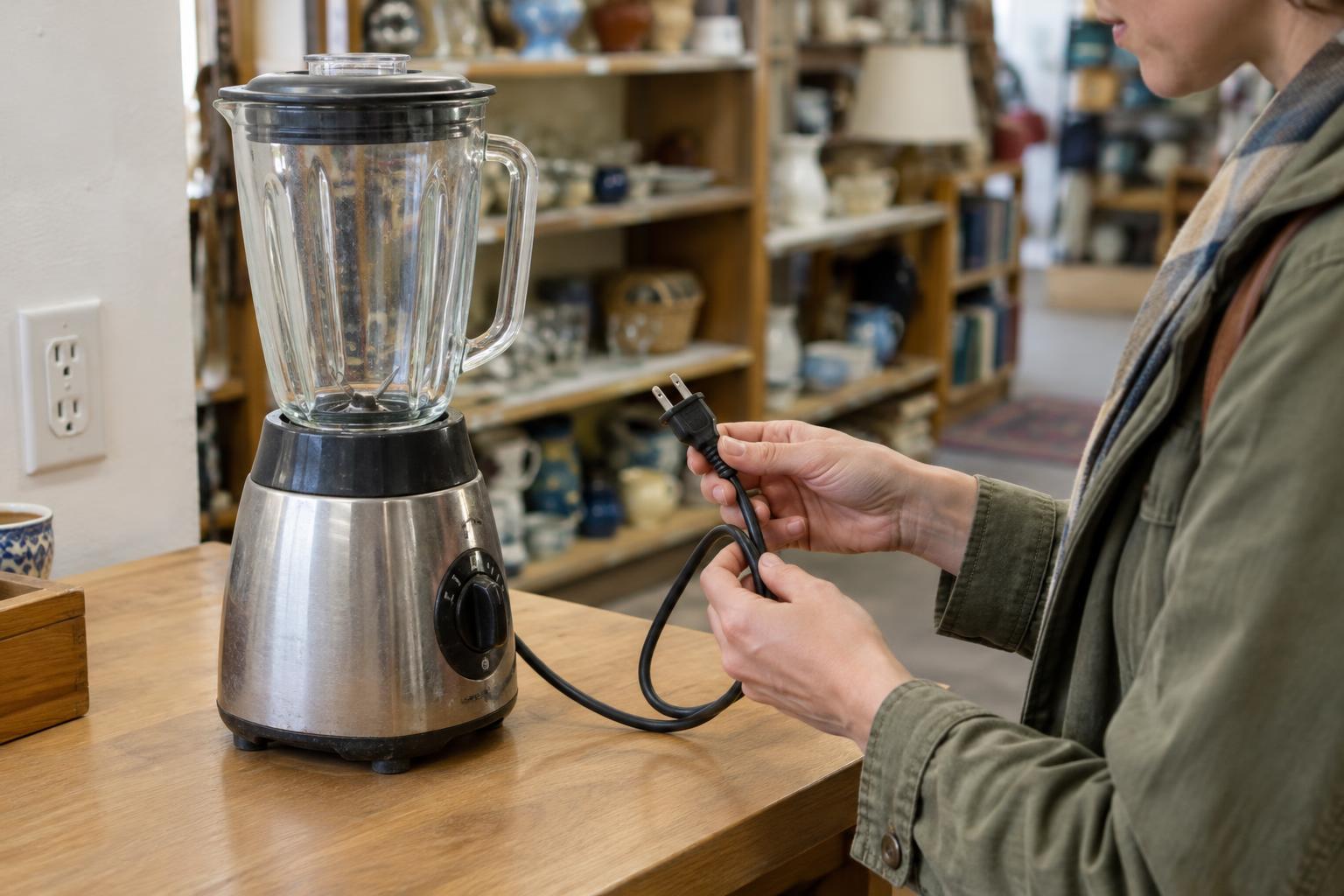
For plastic containers, check lids, seals and interiors. Warping, cracks, heavy scratches, lingering odors and sticky surfaces are good reasons to leave a piece behind. Make sure any replacement lid closes properly, since an unmatched container may become clutter rather than useful storage. On metal utensils, watch for rough corrosion, loosened parts and gaps that trap residue. For small electric appliances, inspect cords and plugs for visible damage and confirm that removable food-contact parts are present. Pass on an appliance with a damaged cord rather than attempting a casual repair.
Make the final decision with cleaning in mind
Before buying, imagine washing the item after an ordinary meal. Can you reach its corners and seams? Is its surface sound enough to clean without working around flakes, cracks or deep damage? A low price rarely makes up for an object you will hesitate to use.
Once home, wash suitable purchases according to their material and let them dry fully before storing them. Cleaning can remove ordinary dirt; it cannot fix a cracked dish, restore a failing coating or establish the safety of an unknown glaze. A thoughtful secondhand purchase is one you can use confidently and care for easily—not simply one you managed to bring home.