Start with the job the appliance needs to do
Before comparing ratings, decide what size and type of appliance your household needs. A large refrigerator with an excellent efficiency rating may still use more electricity than a smaller, adequately sized model. Likewise, a compact washer may look economical on paper but require extra loads if it cannot handle your usual laundry. The useful comparison is between appliances that can do the same job in your home.
Measure the available space, including room for doors to open and any clearance the manufacturer requires. Then think about your normal use: how often you run a dishwasher, how much laundry you wash, or how much food you store. Features that solve a real problem may be worth having; features you are unlikely to use can make comparisons harder without adding much value.
Read the numbers behind the rating
Energy labels and efficiency ratings can help narrow a shortlist, but they do not all express the same thing. Depending on the appliance and where you shop, a label might show estimated electricity use per year, use per cycle, or a grade within a rating scale. Water use may be listed per cycle or as an annual estimate. Check the unit, the test conditions, and whether the figures refer to a standard or an energy-saving program.
Compare like with like. Put annual electricity estimates beside annual estimates, and per-cycle water figures beside per-cycle figures for similar capacities. If two dishwashers have different place-setting capacities, or two washers have different load sizes, the lowest per-cycle number may not represent the lowest use for your household. The printed figures are useful comparison tools, not promises of what will happen at home.
Translate estimates into your routine
A simple calculation can make per-cycle figures more meaningful. Estimate how many loads or cycles you run in a typical week, multiply by the stated energy or water use per cycle, and then extend that estimate across the year. Use the same number of cycles for each model you compare. If a smaller appliance would force you to run more loads, adjust the estimate rather than treating the label figures as directly equivalent.
Your habits matter too. Washing full but not overloaded loads, choosing suitable lower-temperature settings, and using a dishwasher’s efficient program when practical can affect resource use. Some programs take longer while using less energy or water under test conditions; the quickest setting is not automatically the most efficient. If a machine heats water internally, its electricity figure may reflect that work. If it draws hot water from your home’s supply, consider that energy use as well as the water shown on the label.
Look beyond the running numbers
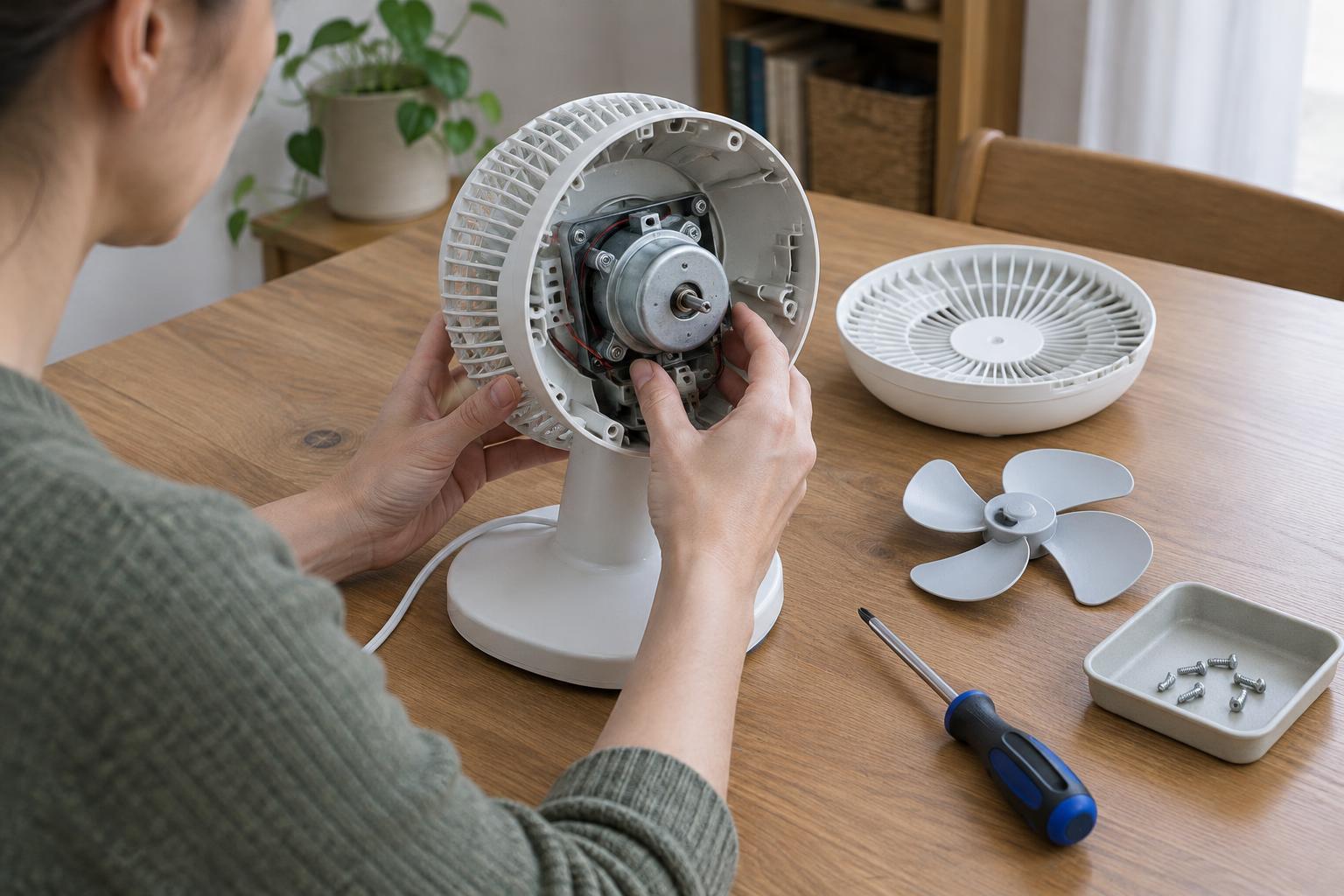
An appliance uses resources before it enters your home, so replacing a working one solely because a new model has a better label deserves a pause. If the current machine meets your needs, consider whether maintenance or a straightforward repair could extend its useful life. When replacement is necessary, efficiency is one part of a longer-term decision.
Check dimensions, warranty terms, access to common replacement parts, and whether routine maintenance looks manageable. A filter you can clean and parts that can be replaced may help keep a machine useful. Reviews and product information can reveal practical details, but treat broad durability claims with caution: no label can guarantee how long a particular appliance will last. A well-matched appliance that you can care for is often a more thoughtful choice than one selected on a single impressive number.
Make a short, comparable shortlist
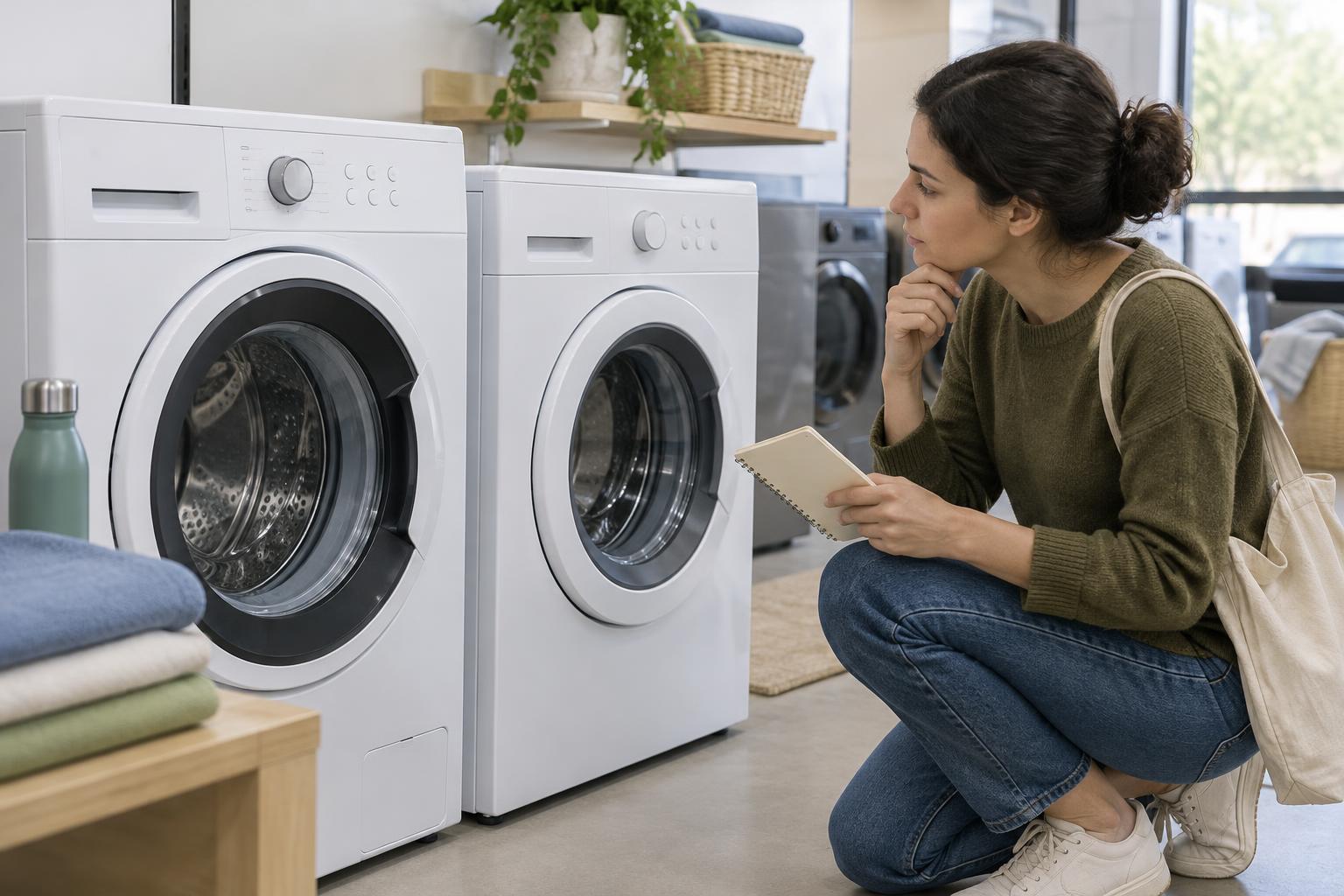
For each suitable model, note its capacity, estimated energy use, estimated water use where relevant, and the conditions behind those estimates. Add the features you would actually use and any questions about maintenance or repair. Keeping this information in one place makes it easier to spot when a model appears efficient mainly because it is smaller or tested under a different setting.
Aim for a choice that fits your space and routine while using resources sensibly. The goal is not to find a perfect appliance or predict every future bill. It is to compare the available information fairly, avoid buying more capacity than you need, and choose a machine you can use and maintain well.