Start with the cover and page edges
Before opening a used book, look at it from every side. Check the cover for stains, warping, peeling material, or areas that feel damp. Then look across the top, bottom, and outer edges of the pages. A healthy-looking stack is usually fairly even, though ordinary wear may leave corners bent or edges yellowed. Wavy pages, swollen sections, or a noticeable change in thickness can suggest that the book got wet.
Hold the book gently closed and check whether its boards and pages sit flat. A hardback with bowed boards or a paperback that will not close neatly may have absorbed moisture. These signs do not tell you exactly what happened, but they are reasons to inspect the inside more closely. If you are at a shop or sale, handle a questionable copy away from other books you plan to buy.
Look for signs of mold without disturbing the pages
Mold is a stronger reason to pass on a book than a scuffed cover or a penciled note. Look for fuzzy or powdery patches, clustered spots that appear to sit on the paper rather than in it, and growth near the spine or inside the covers. A persistent musty smell can also be a warning sign. Color alone is not a reliable test: older paper can have flat brown speckles, often called foxing, that are not necessarily active mold.
You do not need to shake, brush, or fan a suspect book to investigate it. Those actions can spread dust or loose material. If you see possible growth, or the book smells strongly musty and shows moisture damage, the simplest choice for an everyday reading copy is to leave it behind. A valuable or irreplaceable book calls for a different decision, but assessing and treating it is best left to someone experienced in book conservation.
Trace water damage through the book
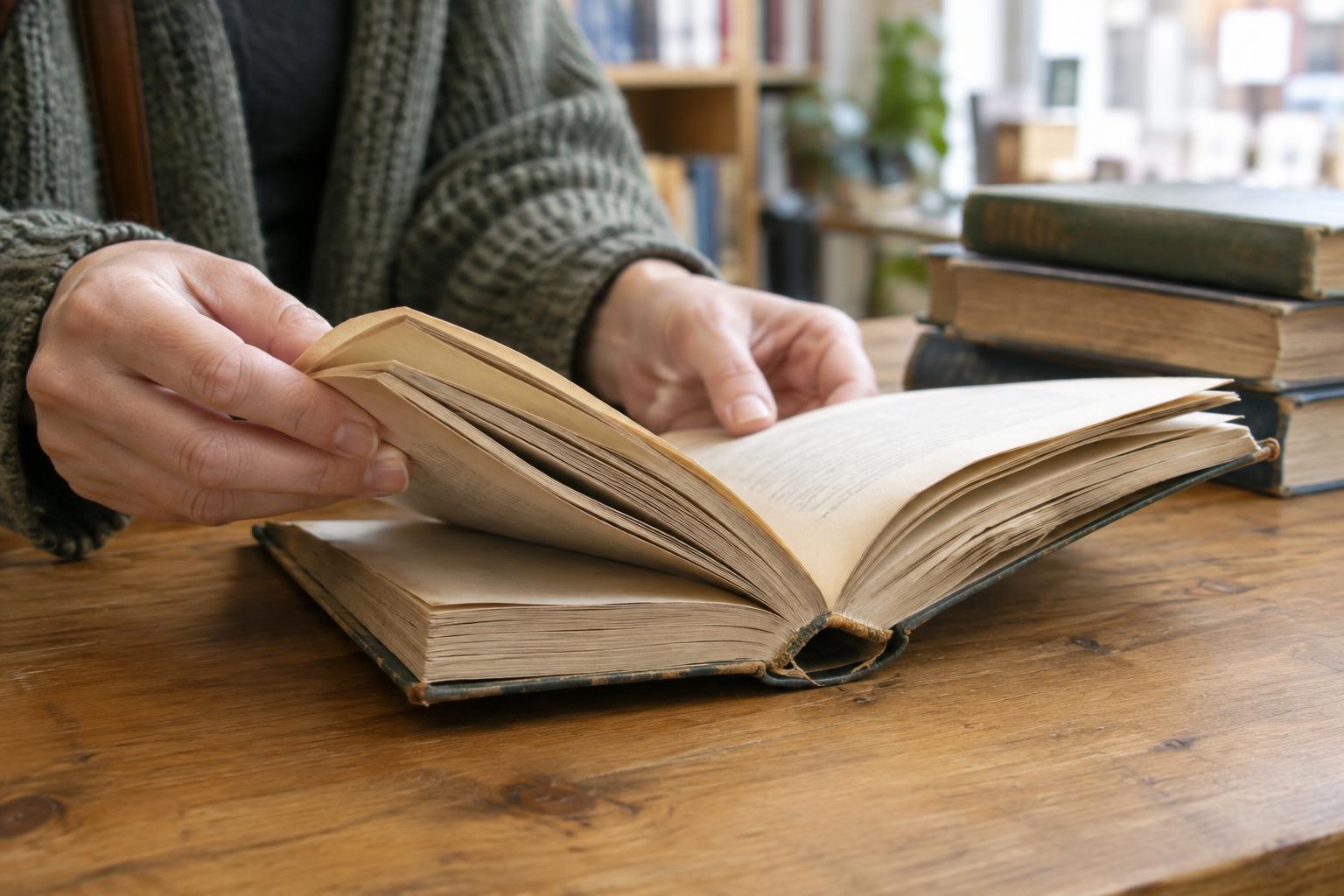
Open the book carefully in several places rather than judging it by the first clean page. Water may leave tide lines, blotchy staining, rippled paper, or pages stuck together. Check both ends of the book, the center, and any section whose edges look different from the rest. Pay attention to the gutter where pages meet the spine: staining there can be easy to miss when you only flip through the outer corners.
Decide what condition is acceptable for your intended use. A dry, lightly stained reading copy may still work well if every page turns freely and the text is clear. Pages that remain stuck, feel damp, or have ink transferred across them are more serious problems. Damage around illustrations, maps, or glossy inserts can matter especially if those features are why you want the book.
Check that the contents are complete
Missing pages are not always obvious from the outside. Start by checking the title page, table of contents, and beginning and end of the main text. Then turn through the book in small groups of pages, watching for abrupt jumps in page numbers, torn stubs near the spine, loose sheets, or a break in a paragraph. If a chapter begins or ends strangely, look back a few pages. Some books intentionally skip numbers or include unnumbered plates, so compare any apparent gap with the contents list before deciding a page is missing.
Check extras that matter to you, such as an index, appendix, foldout, dust jacket, or accompanying insert. These may be absent even when the main text is intact. Gently test the binding by opening the book at a few points; do not force a stiff spine flat. A cracked binding or pages pulling loose may make an otherwise complete book frustrating to use.
Make online listings easier to judge
When buying online, read the condition description alongside the photos. Look for clear views of the cover, page edges, spine, and any disclosed damage. Stock images cannot show the condition of the particular copy. If details matter, ask the seller whether the book has a musty odor, water staining, loose or stuck pages, or missing text and inserts. You can also request photos of a suspicious area or the contents page.
No inspection can guarantee that a used book is flawless, but a few deliberate checks can prevent an unwanted purchase. Know which flaws you can live with, review the seller’s return terms before ordering, and avoid bringing a questionable book into your shelves until you have examined it. The goal is not a perfect-looking library; it is to choose secondhand books you can use and enjoy.