Freeze food you have a plan to use
Freezing is most useful when it solves a specific problem: bread that will go stale before you finish it, ingredients left after a recipe, or a cooked meal you will not eat soon. It slows spoilage, but it does not improve food that is already past its best. Decide what to freeze while the food is still in good condition, rather than waiting until it becomes an emergency.
Think in future portions. Freeze two slices of bread if that is what you usually need for breakfast, or divide a large pot of soup into meal-sized containers. Smaller portions are easier to thaw, and you are less likely to defrost more than you can use. Before packing anything, ask how you will serve it later. A container marked “for pasta sauce” is more useful than an unplanned bag of leftover vegetables.
Know what freezes well—and what may change
Bread, cooked beans, soups, stews, tomato-based sauces, and many cooked grains generally freeze well. Ripe bananas can be frozen for baking or smoothies, while berries can be used straight from the freezer in porridge or cooked dishes. Extra tomato paste, chopped aromatics, and small amounts of broth are also worth saving if you regularly cook with them.
Texture matters as much as whether something can be frozen. Raw lettuce, cucumber, and other crisp, water-rich produce usually turn limp when thawed; they are better used fresh. Some vegetables benefit from blanching before freezing because it helps preserve their quality. Creamy sauces may separate, and soft cheeses or yogurt may become grainy. They may still work in cooking even if they are less appealing on their own.
Raw eggs should not be frozen in their shells. If you need to save eggs, crack them into a freezer-safe container first; beaten eggs are easier to portion for later cooking. When trying an unfamiliar food, freeze a small amount and see whether its thawed texture suits the way you want to use it.
Pack food for the freezer you actually have
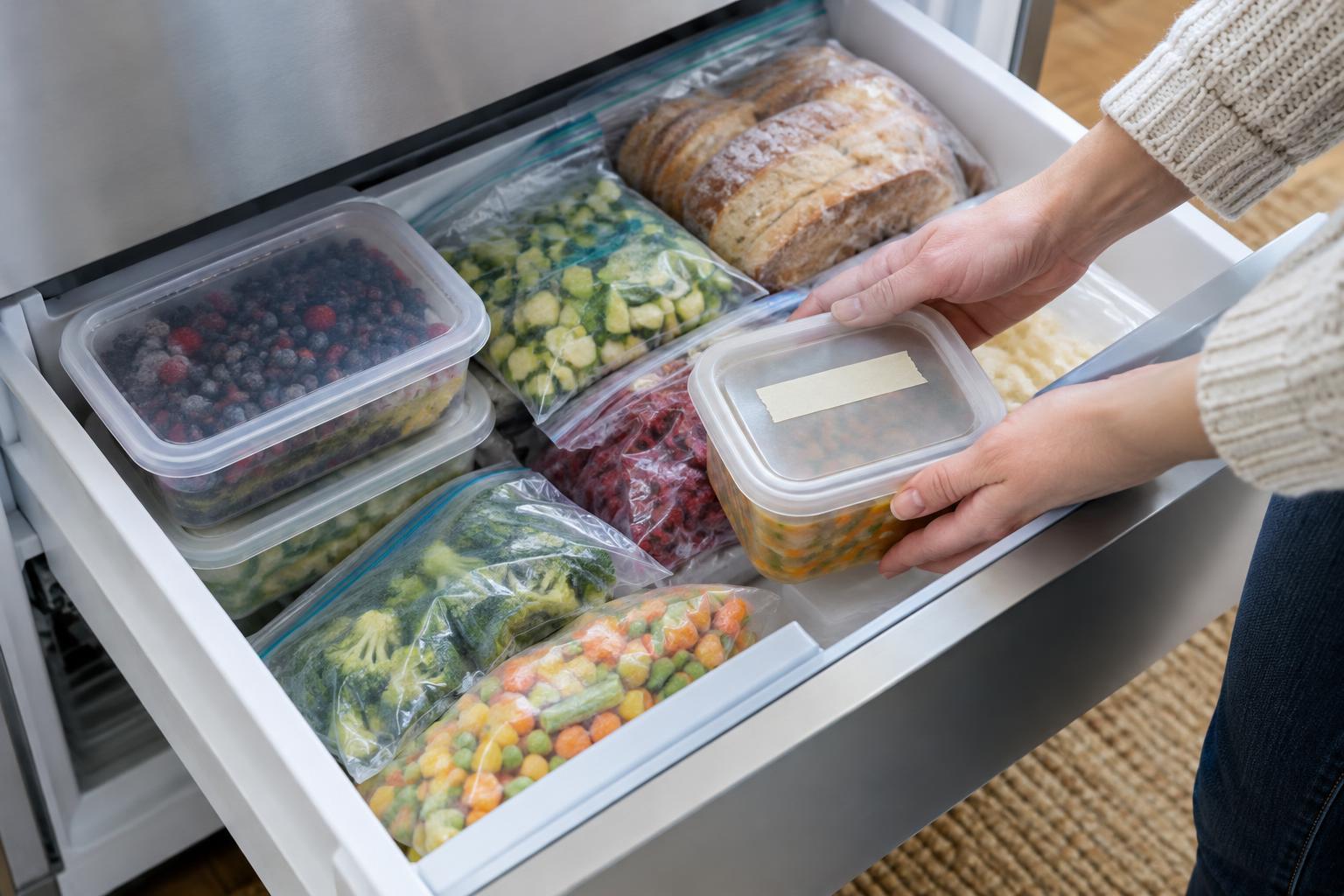
Use clean, freezer-suitable containers or bags that close securely. Press excess air from flexible bags, and choose a container close to the size of the portion. Less exposed surface helps protect flavor and texture from drying out. Leave room at the top of a container holding soup or another liquid, since it expands as it freezes. If using glass, check that it is freezer-safe.
For cooked leftovers, move food into shallow portions so it can cool promptly, then refrigerate or freeze it without leaving it on the counter for an extended period. Flat bags of sauce or beans can save space once frozen; firm containers can make stacked meals easier to find. Neither approach is better if it hides food from view, so arrange packages in a way you can maintain.
A full freezer is not a goal in itself. Leave enough room to see what is there and to keep air moving around newly added food. One small area for items to eat next can be more helpful than a complicated organizing system.
Write labels that answer future questions
Every package needs a name and the date it went into the freezer. Add the number of portions and any detail that will affect how you use it: “lentil soup, two lunches,” “chopped peppers, for cooking,” or “pasta sauce, contains dairy.” If a dish looks similar to several others, note its distinguishing ingredient. Write on freezer tape or a label before the container becomes cold and damp.
The date helps you use older food first; it is not a promise that the food suddenly becomes unusable on a particular day. Freezer storage guidance varies by food and packaging, and quality can decline over time even when food stays frozen. If a package develops freezer burn, the affected areas may taste dry or stale. Clear labels and a quick glance through the freezer before shopping make it easier to use food while it is still enjoyable.
Make using frozen food part of the routine
A freezer prevents waste only when food comes back out. Keep a short list on the freezer door or in a place you already check before planning meals. Cross off items as you use them, and put older packages where they are easy to reach. You do not need to record every ice cube or slice of bread; track the foods you are most likely to forget.
Plan a meal around one frozen item before buying more of the same ingredient. Thaw perishable food in the refrigerator, or use a safe cold-water or microwave method and cook it promptly afterward; avoid thawing it on the counter. Many soups, sauces, and vegetables can go straight into cooking from frozen. The aim is not to freeze everything, but to give good food a realistic next use.