Start with ordinary use, not the biggest day
Capacity is easy to think about when an appliance is overflowing and harder to judge when it is half empty. Before shopping, notice how your household uses its current appliances over a few typical weeks. How often do you run laundry or dishes? Which items never fit comfortably? How much refrigerator food goes uneaten because it is tucked out of sight? These observations are more useful than choosing a size based only on household headcount.
Separate routine needs from occasional peaks. Hosting guests, washing a large blanket or preparing food for a celebration may call for extra room, but an appliance bought for rare events still occupies space every day. Consider whether a different routine could handle those peaks: an extra dishwasher cycle, a trip to a laundromat for bulky items or a cooler for a gathering. The goal is not the smallest appliance available. It is one that makes everyday tasks manageable without leaving you with capacity you seldom use.
Compare usable space, not just the number on the label
Advertised capacity is a starting point, but layout determines what fits. Refrigerator shelves, door bins and drawers can make the same stated volume feel quite different. If you store large containers, check shelf height and whether shelves can be rearranged. Freezer shape matters too: a compartment with awkward corners may be less useful to you than a simpler layout with a smaller stated capacity.
The same principle applies to other appliances. A dishwasher needs a rack arrangement that accepts your everyday plates, pans and reusable containers. For a washing machine, consider the size of a normal load as well as any bedding you regularly wash. Check the manufacturer’s guidance for bulky items rather than assuming that a large drum can clean every oversized piece effectively. If you can see an appliance in person, picture loading it with what you already own instead of relying on a capacity figure alone.
Balance capacity with your routines and resources
A larger machine can be convenient when you regularly have large loads. It may be less helpful if you run it partly filled because you need clean dishes or clothes sooner. Some appliances offer settings for smaller loads, but their usefulness varies by model. When comparing options, look at the programs you would actually use and the product’s energy and water information. A size that matches your habits can make it easier to use the appliance as intended.
Storage capacity can also change purchasing habits. A roomy refrigerator or freezer may support planned meals and fewer shopping trips, but extra space is not a saving if food repeatedly disappears at the back and spoils. Think about the amount you can realistically cook, label and use. If clutter is a concern, ask whether you need more capacity or a clearer way to organize what you already have.
Measure the space around the appliance
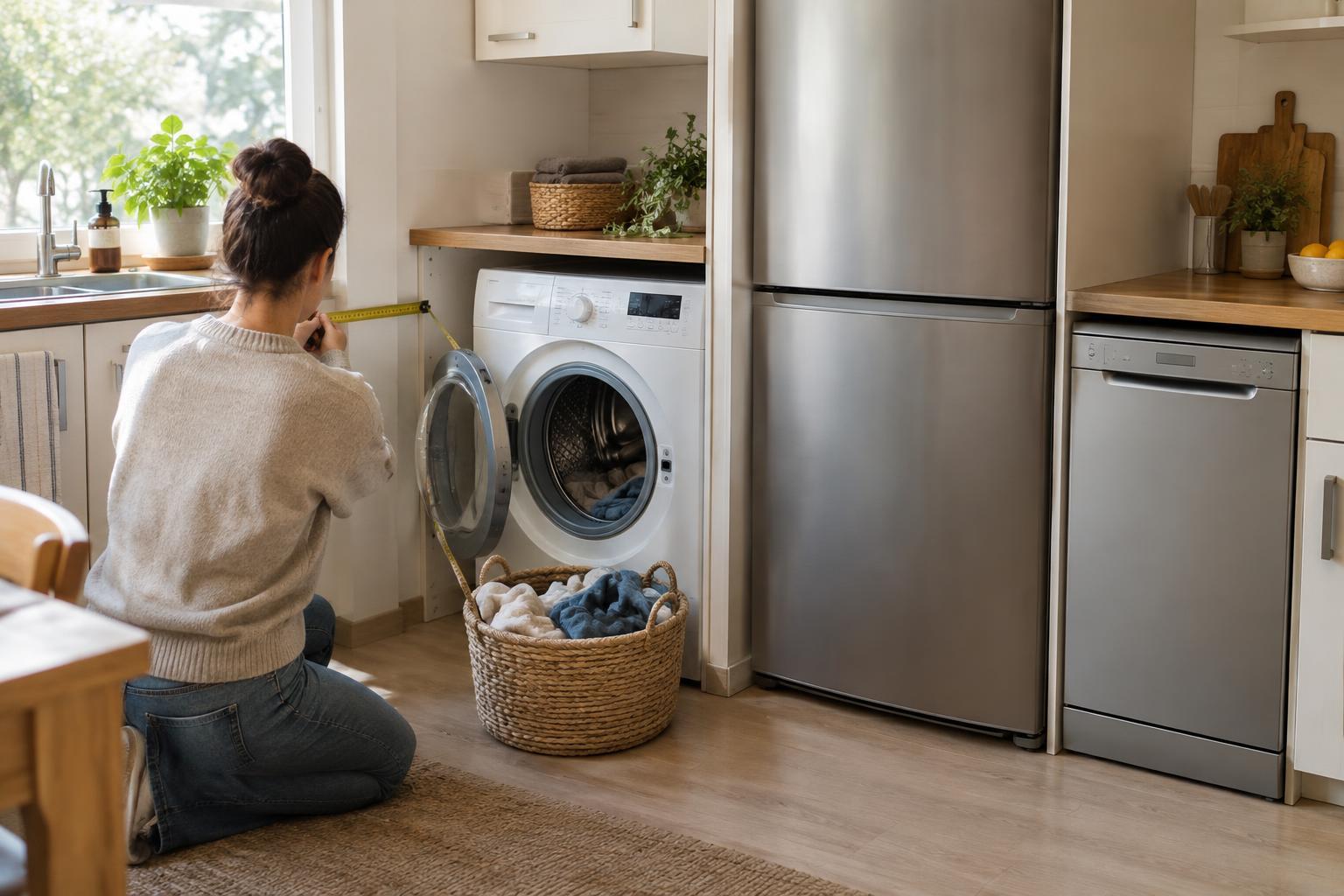
An appliance must fit more than its assigned footprint. Measure the path through doors and hallways, the installation area and the room needed to open its door, pull out drawers or access a filter. Check the manufacturer’s installation requirements for ventilation and clearance. In a tight kitchen or laundry area, a model with ample internal capacity may still be frustrating if its door blocks a walkway or its controls are hard to reach.
Consider what the appliance displaces, too. A wider refrigerator might reduce useful counter space; a deeper washer might make a storage cupboard difficult to open. Capacity is only valuable when the appliance remains comfortable to load, unload, clean and maintain. Record your measurements before comparing models so an appealing specification does not distract from a poor physical fit.
Make the final choice with a short checklist
Write down three things: your usual load, the largest load you handle regularly and the space available. Then compare a few suitable models for internal layout, installation requirements and everyday controls. Ask whether each one solves a specific problem you have observed. If the answer is only that it might be useful someday, treat the extra capacity as optional rather than essential.
If your current appliance still works, you may have time to test changes before replacing it: adjust shelves, run a different laundry schedule or edit what you keep in the freezer. Those small experiments can reveal whether capacity is the real constraint. When replacement is necessary, a considered choice can reduce avoidable clutter and help the new appliance serve your household well for years.