Start with the item you actually need
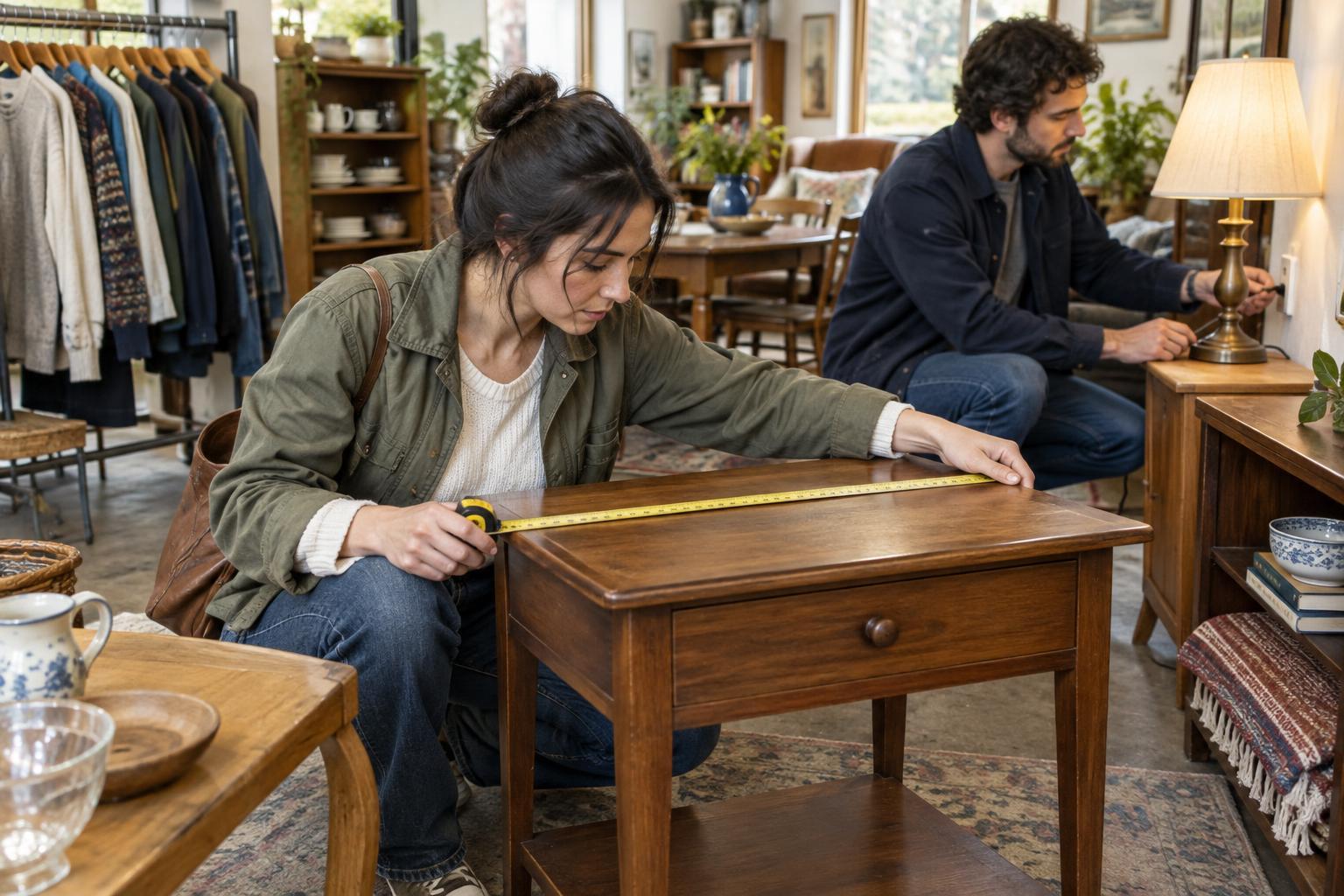
A good secondhand linen purchase begins with a specific gap at home: a spare set of sheets, a washable guest blanket, or a few replacement towels. Knowing the intended use makes it easier to pass on a low-priced item that is the wrong size or too difficult to care for. Before shopping, note your mattress depth as well as its length and width, and check the size of any duvet or pillow insert you want to cover. Labels can be missing or inconsistent, so measurements are more useful than a size name alone.
Choose the kinds of items you feel comfortable assessing and cleaning. Sheets, duvet covers, pillowcases, table linens and many towels can be opened out for a close look. Filled items, such as pillows and comforters, are harder to inspect through to the center and may be harder to wash and dry thoroughly. If you cannot check an item’s condition or meet its care requirements, leaving it behind is a reasonable choice.
Inspect more than the visible surface
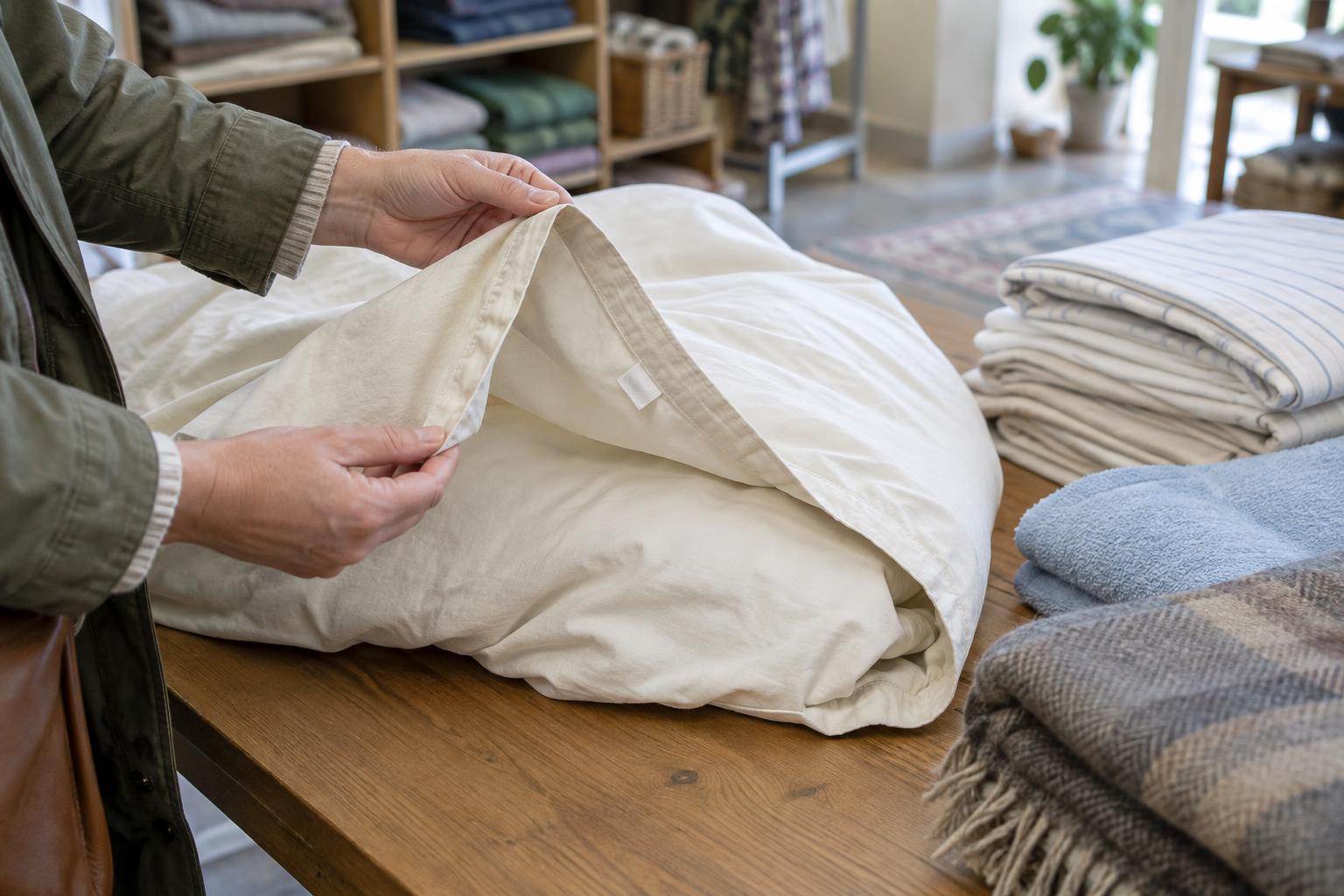
If the seller allows it, unfold the item completely in good light. Look along hems, corners, elastic, buttons, snaps and zipper tracks. On fitted sheets, stretched-out elastic can matter more than a small cosmetic mark. Hold thin fabric up to the light to spot worn patches, and feel towels for areas that have become stiff or threadbare. Check blankets for loose stitching, snags or holes that may grow with use.
Look for discoloration and odors, especially in folded areas. A faint storage smell may wash out, but you cannot know that in advance; a strong or persistent odor can make a bargain less appealing. Inspect seams, folds and any packaging for signs of pests. If you notice insects, suspicious spotting or anything you cannot confidently assess, do not buy the item. Keep your standards consistent even when the price is low: an unusable linen still takes up space and resources.
Read the care label before deciding
A care label helps you judge whether cleaning is practical in your household. Check fiber content and washing and drying instructions, then consider the equipment and time you have. A large blanket may technically be washable but too bulky for your machine to move freely or dry fully. Delicate fabrics and decorative trims may need gentler handling than everyday cotton sheets. If there is no label, treat the care needs as uncertain rather than assuming the item can tolerate your usual wash.
Think about the total effort, not just the purchase price. Would you need to mend a seam, replace a button or make a trip to a larger machine? Is the item worth that work compared with using what you already own? For linens that will see frequent use, easy cleaning and sound construction may be more valuable than a particularly appealing pattern.
Bring it home with a cleaning plan
Keep newly acquired linens separate from clean household bedding until you have inspected and cleaned them. Handle them in a way that avoids spreading dust or debris, and wash according to the care instructions before use. Use an appropriate detergent and give each item enough room to wash and rinse. Dry it fully before folding or storing it; putting away damp fabric can lead to unwanted odors.
Cleaning has limits. An ordinary wash may address dirt and some odors, but it cannot repair weakened fabric or guarantee that every concern has been resolved. If you suspect a pest problem, do not rely on a routine laundry cycle as a complete solution. Seek appropriate local guidance before bringing the item into regular use. When an item’s history or condition leaves you uneasy, passing on it is simpler than trying to make it work.
Make the find useful for the long term
After cleaning, try the linen in its intended place. Check that a fitted sheet stays on the mattress, a duvet cover closes securely, or a towel feels absorbent enough for its job. Make small repairs promptly if they will extend use; an open seam is often easier to address before it spreads. Store fully dry linens where you can see what you have, rather than building a pile of duplicates.
Secondhand shopping works best as a way to meet a real need, not as a reason to collect extras. A carefully chosen, serviceable set can remain in use while avoiding an unnecessary new purchase. The most useful find is not necessarily the cheapest or most attractive one: it is the linen that fits, cleans up within your means and earns a place in your regular rotation.