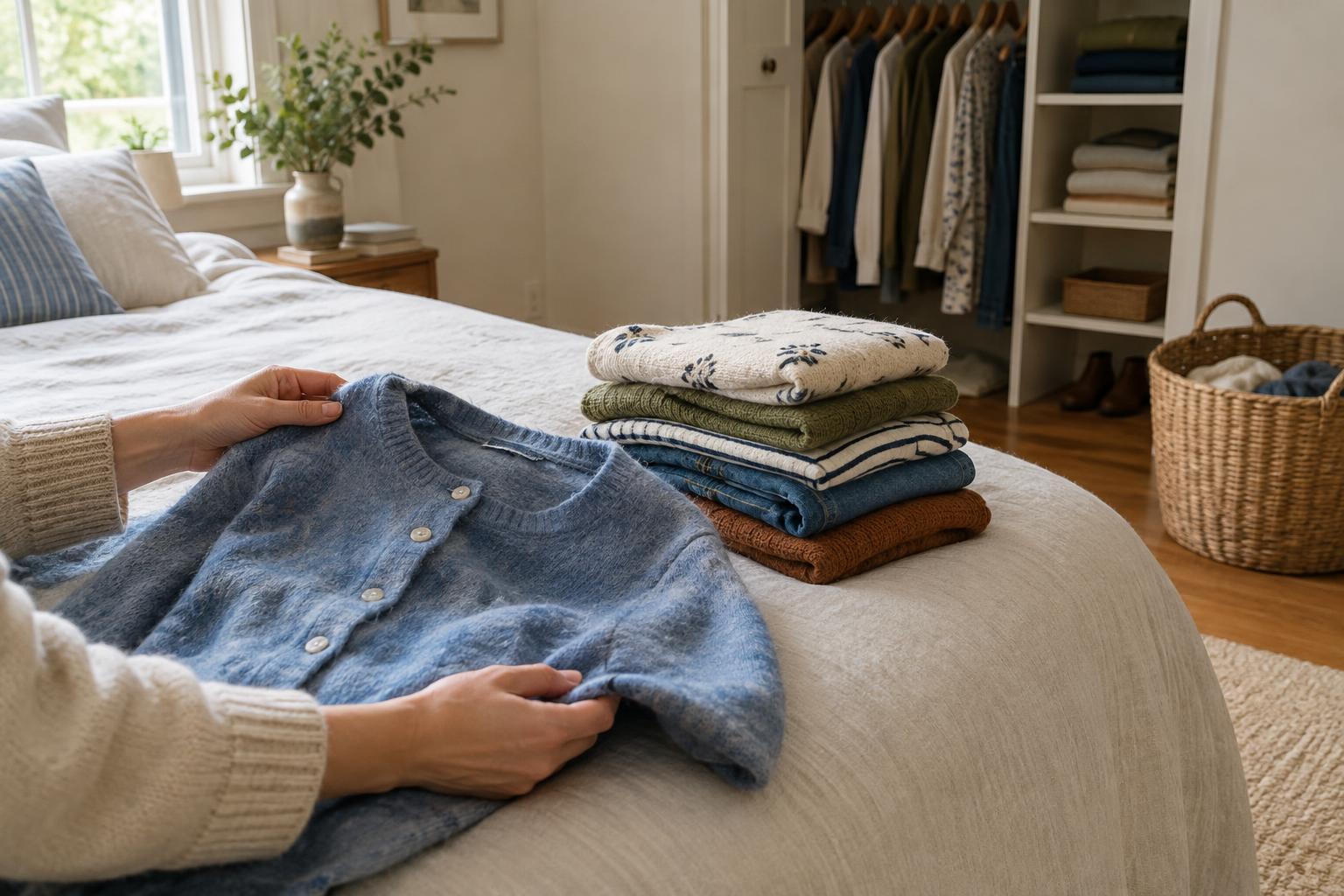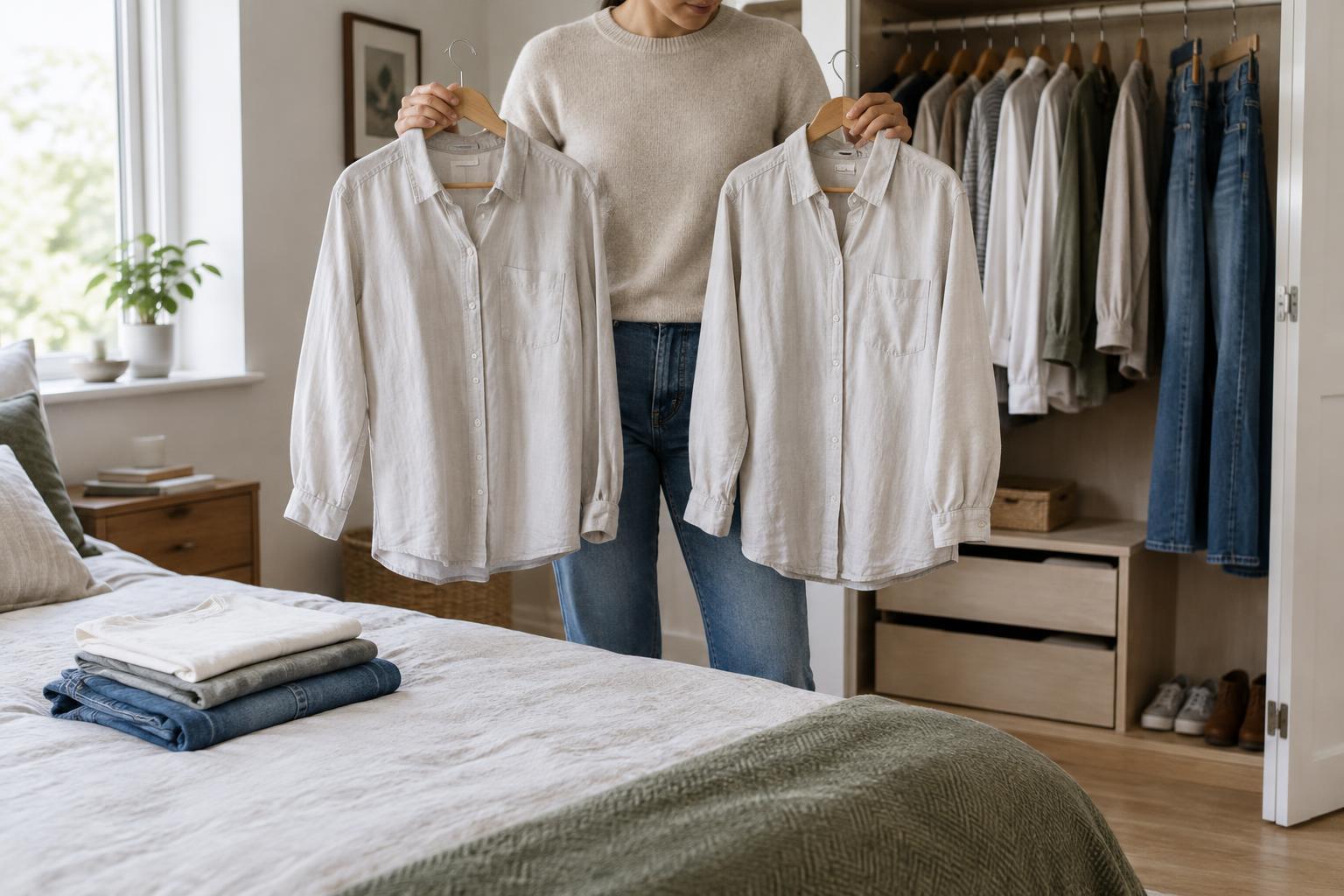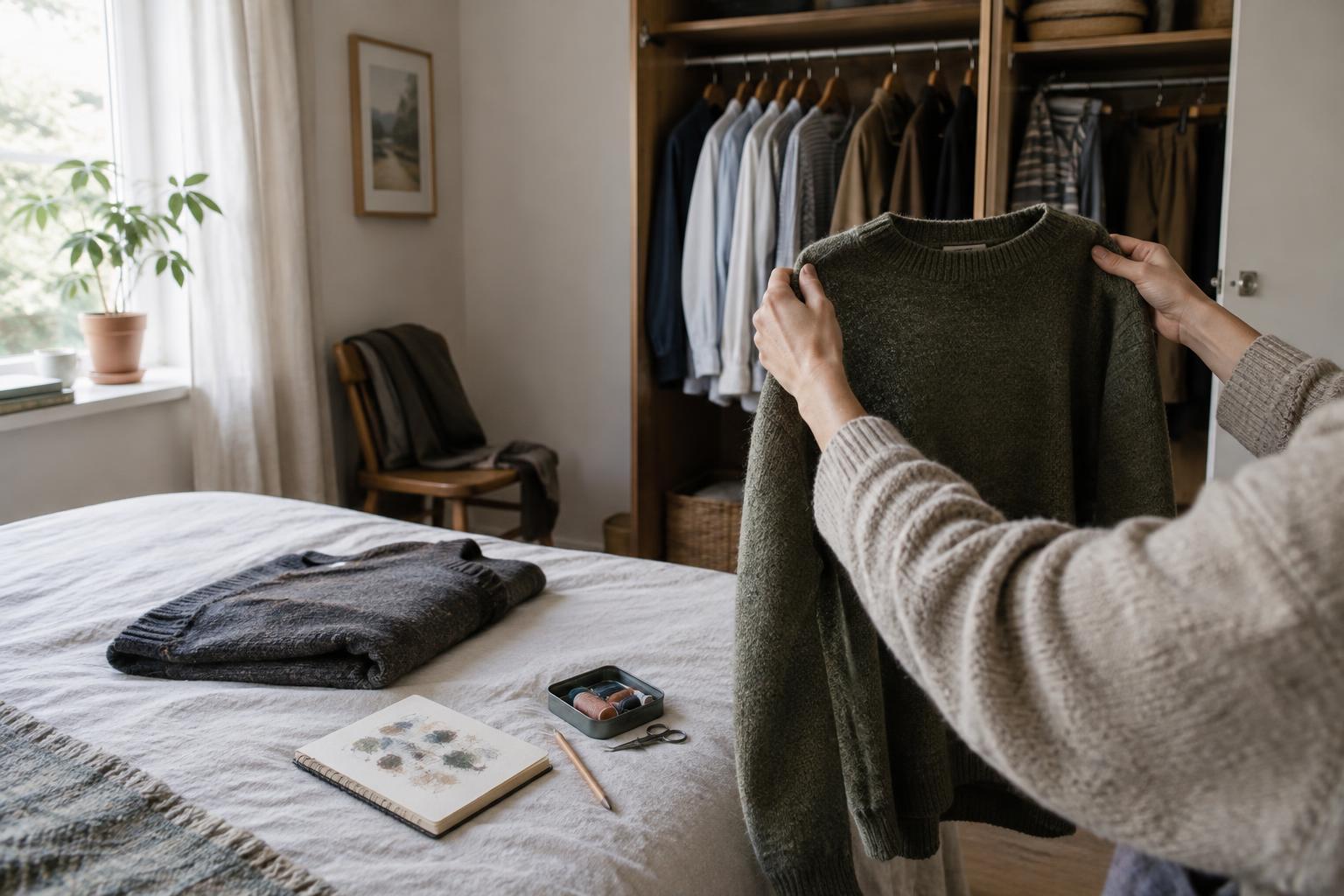
Start with a small, useful question
A crowded wardrobe can make it hard to remember which clothes earn their space. You may reach for the same few pieces while others stay on their hangers, but a single clear-out rarely tells you why. Tracking what you wear replaces vague impressions with a record of everyday choices. The aim is not to wear every item an equal number of times. It is to see whether your clothes suit the life you actually lead.
Begin with a question you can act on, such as “Which work clothes do I avoid?” or “Do I use all these similar shirts?” Choose a manageable period, perhaps several ordinary weeks, and note any unusual travel, weather, or changes in routine. A short snapshot can reveal habits, but it cannot fairly judge a winter coat during warm weather or an outfit kept for occasional events.
Choose a tracking method you will keep using
A wear log can be as simple as a note on your phone, a page by your closet, or a list of items marked each time you wear them. If you prefer a visual reminder, turn hangers in one direction and reverse them after wearing the garment. That method works best for hanging clothes; a short list may be easier for folded items and shoes. You do not need to record every accessory or build a detailed spreadsheet unless you find that helpful.
Give items recognizable names, such as “blue linen shirt” rather than “shirt 3.” Record what you actually wore, not just what you tried on. A brief note about why you chose or rejected something can be more useful than a wear count: “too warm for indoors,” “needs a button,” or “only works with shoes I no longer own.” Keep the process light enough that you can do it at the end of a normal day.
Look for patterns, not a pass-or-fail score
At the end of your tracking period, look at both the frequently worn pieces and the untouched ones. Repeated choices may show which fabrics, fits, colors, and care needs work for you. A rarely worn item is a prompt to investigate, not an automatic candidate for removal. Ask whether it fits comfortably, works with other clothes, suits your current routines, and is easy enough to care for.
It helps to separate “not needed lately” from “unlikely to be worn.” A formal outfit, rain gear, or a seasonal layer may have a clear purpose despite little use in your log. On the other hand, five similar tops that all lose out to one favorite may be telling you something. If you are unsure, place a small group of questionable items apart from your daily clothes and revisit them when the relevant season or occasion arrives.
Make a decision for each overlooked item
Once you know why a garment sits idle, choose a response that matches the problem. Keep it if it fills a real need, even an infrequent one. Repair a missing button, worn seam, or other fixable issue if you expect to wear it afterward. Try a different pairing if the item is comfortable but difficult to style. If it no longer fits your needs, consider offering it to someone who wants it, donating it where accepted, or selling it if the effort makes sense.
Avoid turning the log into a deadline for getting rid of clothes. Passing on an item only to replace it later can create more work and waste. Likewise, keeping something solely because it once cost money does not make it useful now. Give yourself room for sentimental pieces, changing sizes, and uncertain routines; just name those reasons honestly rather than letting them blend into a pile of forgotten clothes.
Let the record guide future purchases
Your most useful finding may be about shopping, not clearing space. Before buying another garment, check what your log says about similar items. If you seldom wear delicate fabrics because washing them is inconvenient, another delicate piece may face the same problem. If one pair of trousers is constantly in rotation, ask what makes it work: fit, pockets, comfort, or compatibility with the rest of your wardrobe.
Use those observations to make a short list of genuine gaps and features to look for. When a need remains after you have tried what you own, you can look for a durable option, including secondhand, that fits your routine and care preferences. Continue tracking only as long as it helps. An occasional check-in is enough to keep your wardrobe connected to your daily life without making clothing another task to manage.