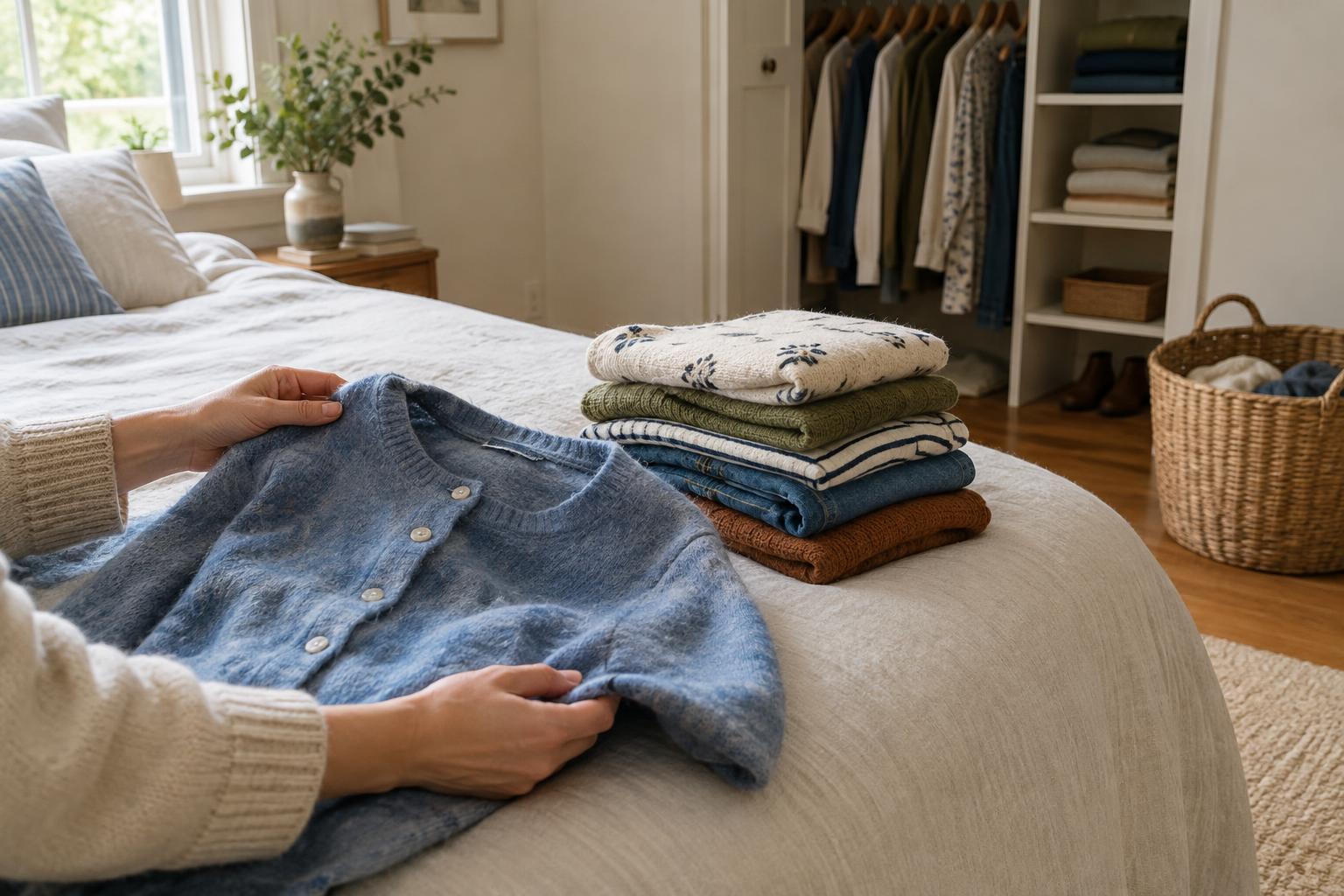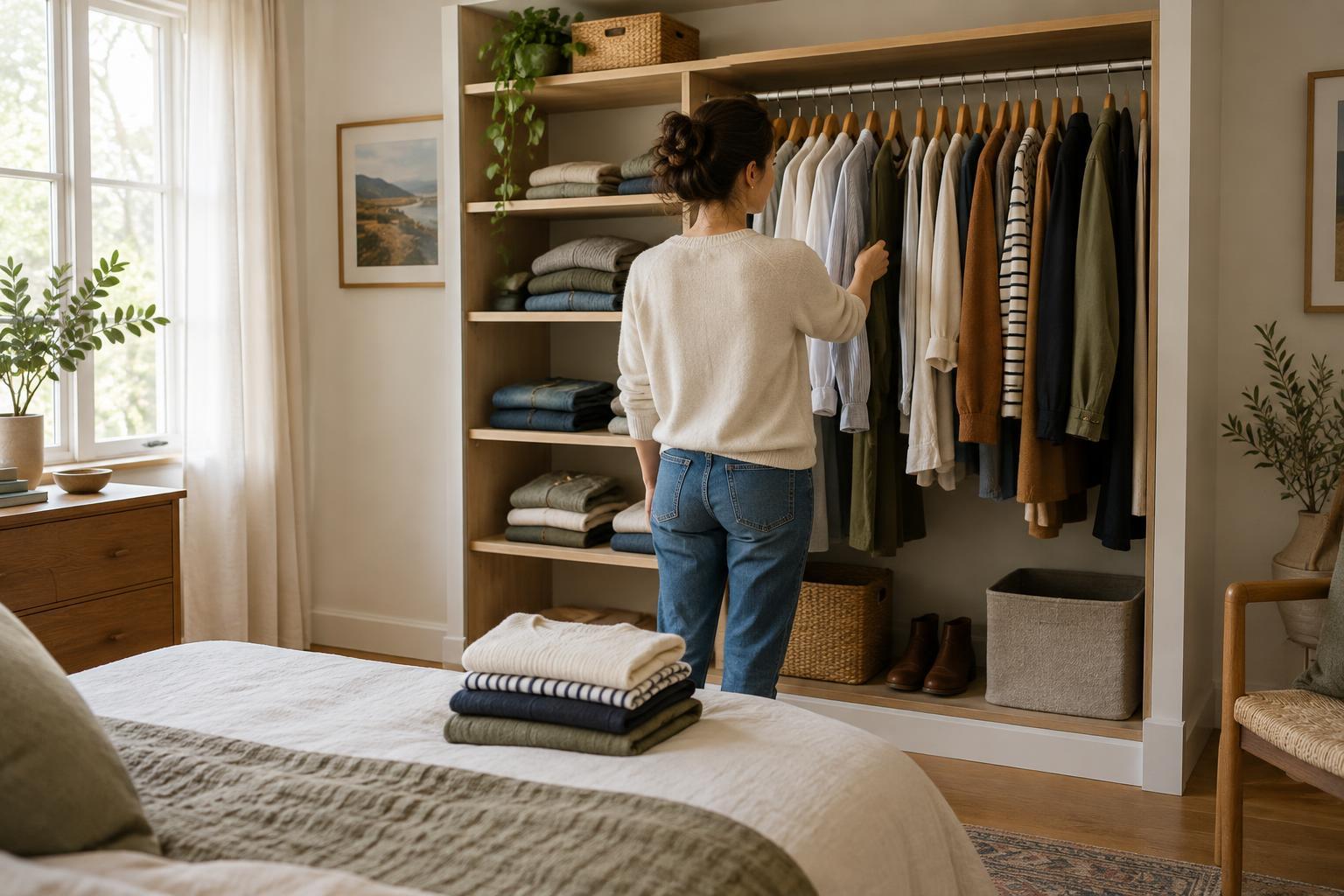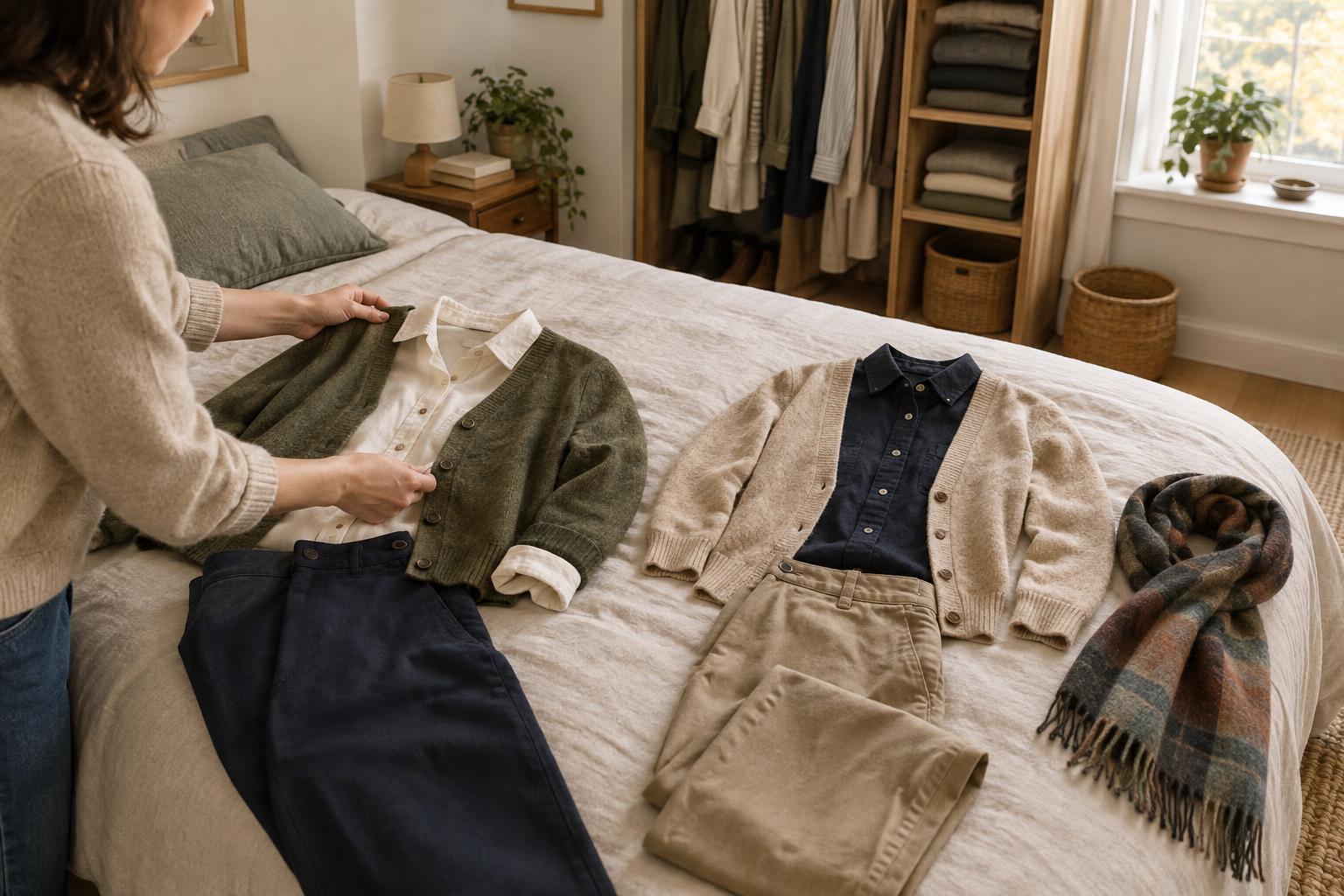
Start with what counts as a duplicate
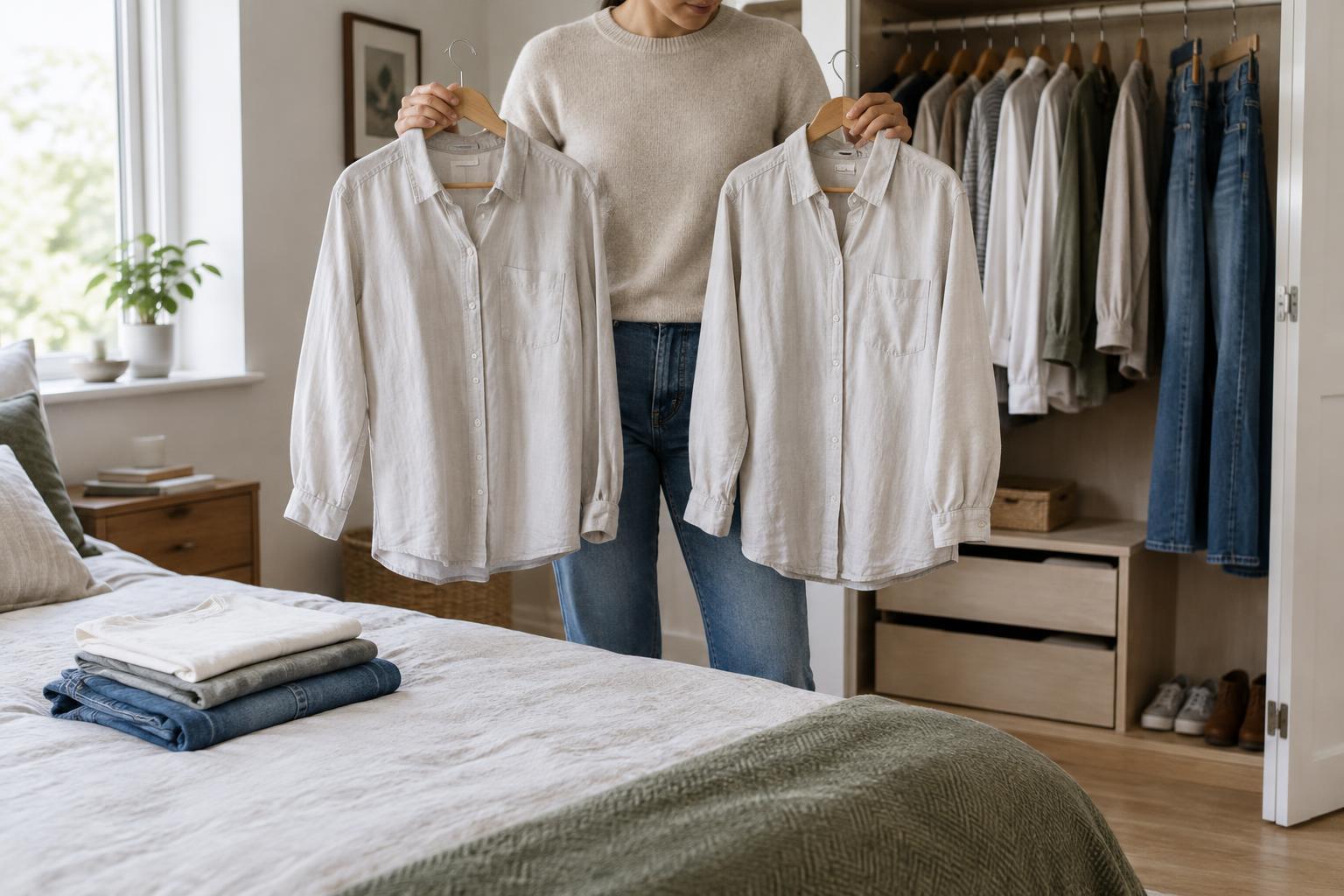
A wardrobe duplicate is not simply an item that looks like another. Two black T-shirts might serve different purposes if one is sturdy enough for errands and the other fits comfortably under a jacket. Conversely, shirts in different colors may be duplicates if you reach for them in exactly the same situations. The useful question is: would I choose these items for the same outfit, weather and activity?
Pull similar items into one place so you can see the full group. Sort by function rather than color alone: everyday tops, work trousers, exercise layers, occasion clothes and so on. This makes it easier to spot both genuine overlap and reasons for keeping more than one. If you wear a particular item often between laundry days, having a second one may be practical rather than excessive.
Compare the items you actually wear
Start with the duplicate you instinctively choose first. Try it on, then try the others. Notice whether each item fits your body as it is now, stays comfortable while you sit and move, and works with clothes you already wear. Check details that matter in daily use: a neckline that holds its shape, pockets you use, a fabric you like against your skin or a length that stays tucked in.
Next, look at condition and care. An item with a loose seam may be worth keeping if you will repair it; one that repeatedly loses its shape in the wash may be less useful despite looking good on a hanger. Avoid making a decision based only on what cost the most or what you hope to wear someday. The better keeper is usually the one that earns its space through regular, comfortable use.
If two items seem equally good, ask whether they solve a real laundry or wear-and-tear problem. You might need several everyday shirts but only one jacket for rare occasions. There is no universal target number: your routine, climate, storage space and access to laundry all affect what is useful.
Give uncertain pieces a fair test
Some duplicates are difficult to judge because they have not been worn recently. Put the uncertain pieces where you can reach them and deliberately wear each one during an ordinary day. A brief try-on may not reveal sleeves that creep up, shoes that rub or trousers that need constant adjustment. After wearing an item, ask whether you would gladly choose it again over its closest alternative.
You can also set a short review period that fits your routine. Keep the uncertain items separate from your clear favorites, then note which ones you reach for without prompting. Make allowances for season and occasion: an unworn winter layer tells you little if you are sorting in warm weather. If an item is unsuitable for the current season, decide when you will review it instead of keeping it indefinitely without a plan.
Keep backups with a purpose
A backup is helpful when replacing an item would be inconvenient and you expect to use the spare. That might be a second pair of well-fitting work trousers or an extra layer that covers the gap while one is being washed. It helps to name the purpose of the backup. If you cannot say when you would wear it, it may simply be another item to store and maintain.
Do not let a worn-out favorite become an automatic reason to keep every similar piece. Check whether the favorite can be repaired and whether the proposed backup actually fits and feels right. Likewise, avoid holding several uncomfortable items in case they become useful later. Keeping one genuinely serviceable spare is different from keeping a pile of compromises.
Make the next step easy
Once you have chosen what to keep, put those items back where you can see and use them. Set aside clothes that need a specific repair, and decide when you will do it or seek help. For items you no longer need, consider offering clean, wearable pieces to someone who wants them, using a suitable secondhand channel or checking a local donation program’s guidelines. Heavily damaged items may need a different route; check what options are available where you live.
Finally, notice what the duplicates taught you. Perhaps you repeatedly bought a color you admire but rarely wear, or kept searching for a better version of a shirt that does not fit your routine. Remembering those patterns can help you pause before buying another near-match. The goal is not the smallest possible wardrobe, but one in which each piece has a clear chance to be worn.