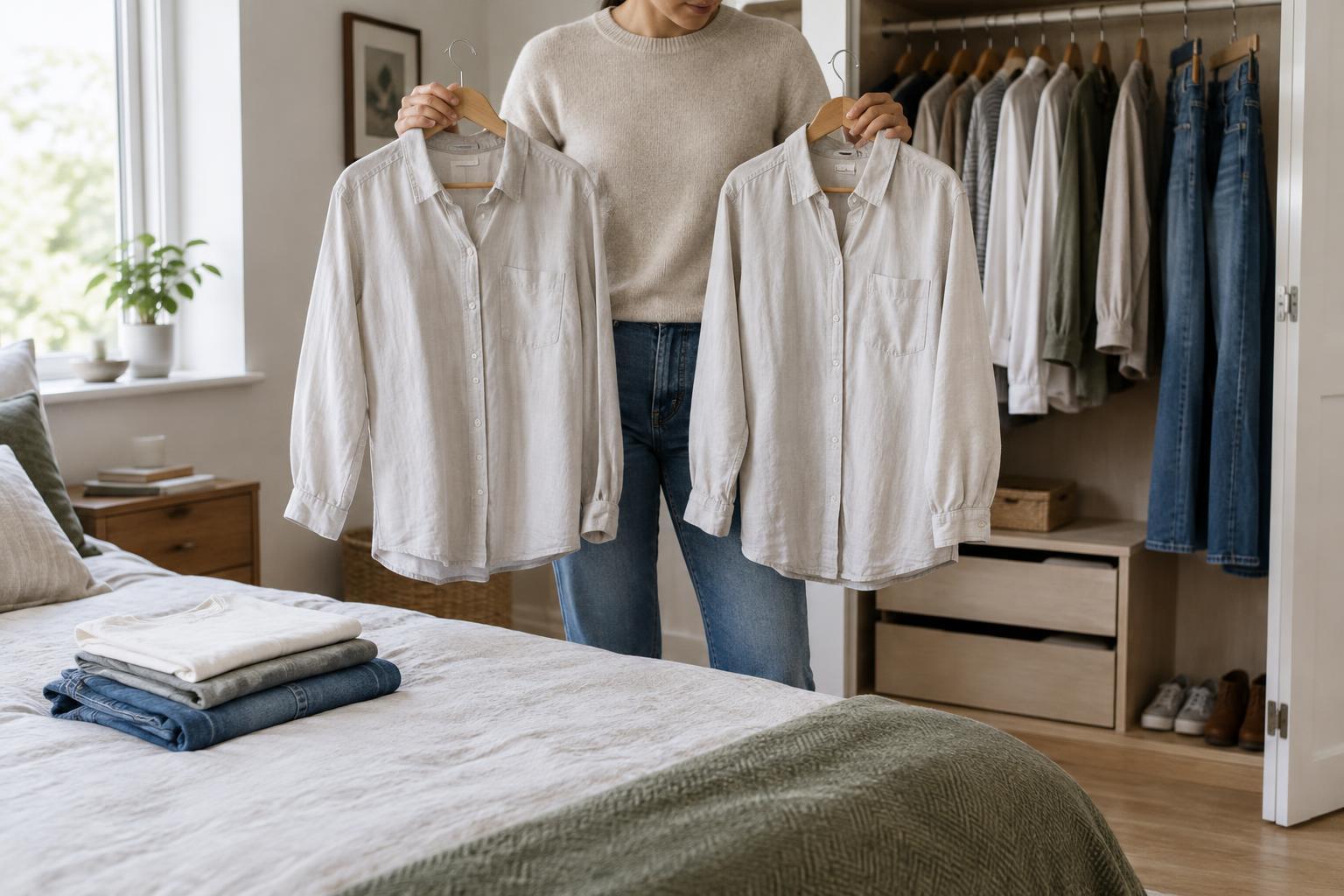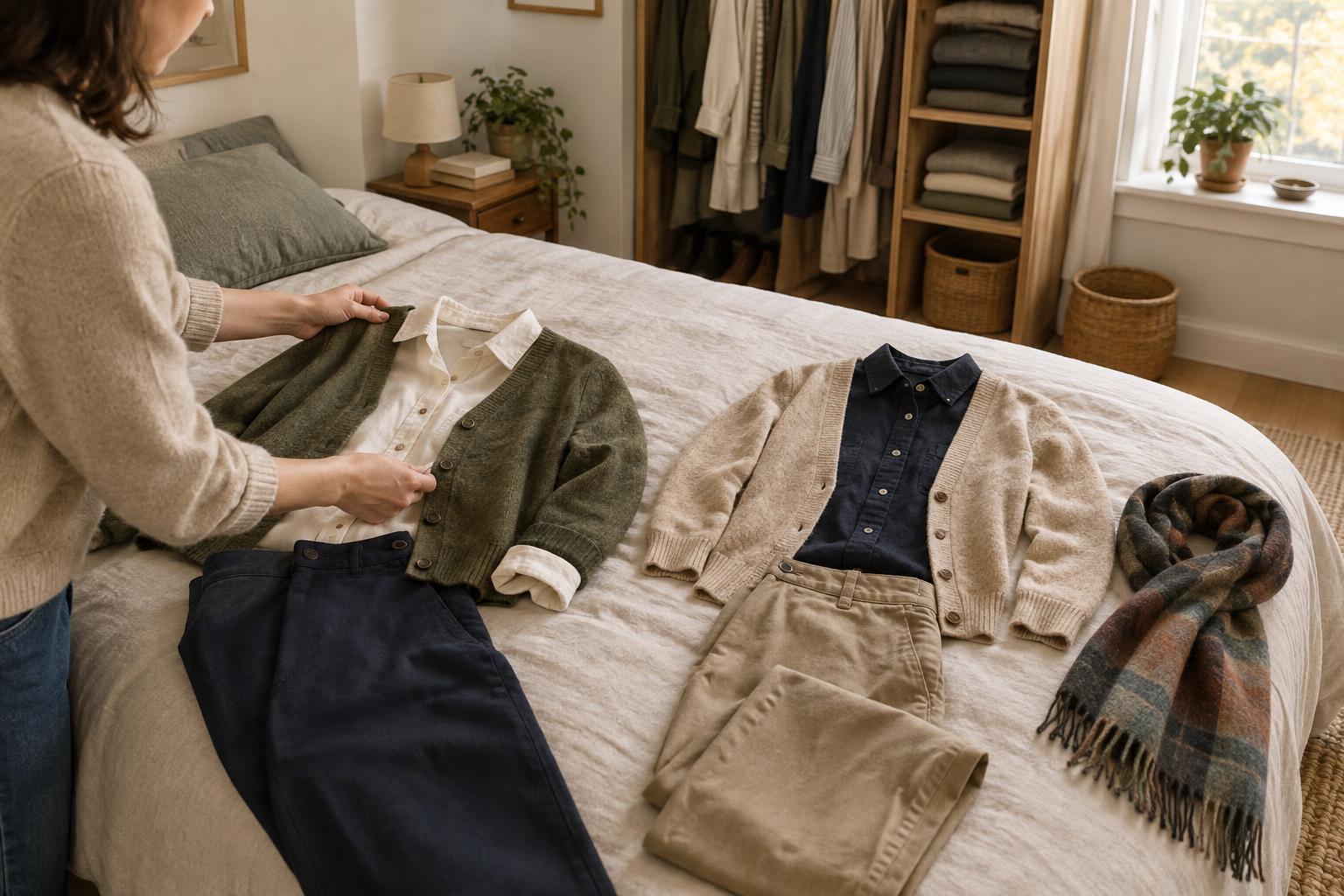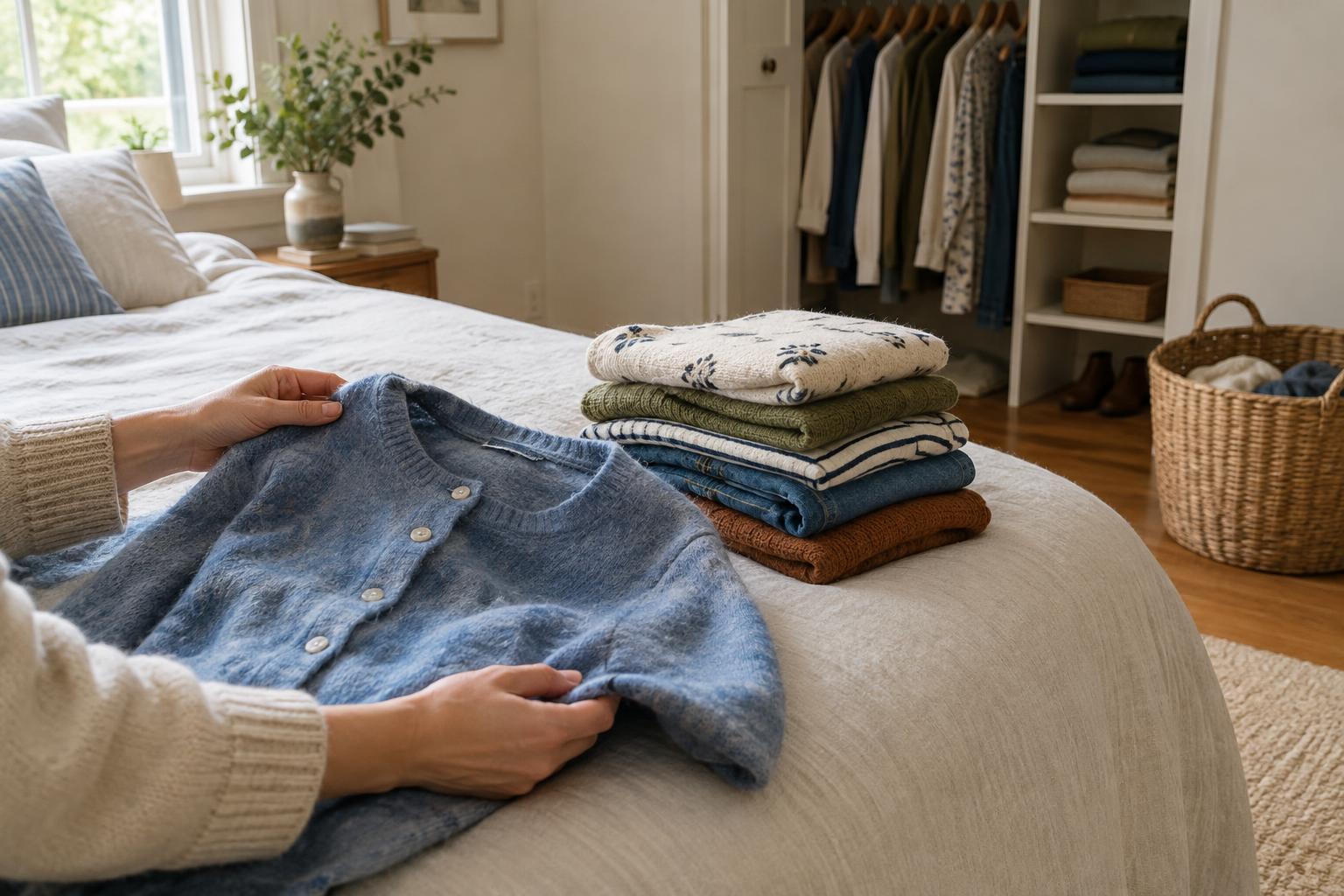
Start with the reason the clothes matter
A sentimental garment is rarely just fabric. It might remind you of a celebration, a person you miss, a hard-won achievement or a time when life felt different. That meaning deserves attention. It does not, however, mean every item needs permanent space in your wardrobe.
Before sorting, name what each piece represents. Try a simple sentence: “This coat reminds me of my first job,” or “These shirts belonged to someone I love.” Separating the memory from the object can make the decision clearer. You may find that one garment carries the story strongly, while several others have been kept because they happened to be nearby.
Give yourself a manageable sorting session
Avoid pulling out every sentimental item at once if the pile feels overwhelming. Choose a small group, such as clothes from one life stage or one drawer. Set aside enough time to handle the pieces without rushing, and leave room to stop. An unfinished edit is better than a hurried decision you regret.
Make three groups: clothes you want to wear, clothes you want to keep as mementos, and clothes you are unsure about. Putting something in the unsure group is a valid decision for today. Keep that group contained, perhaps in one labeled box, and choose a time to look again. This prevents “decide later” from quietly becoming an unlimited storage plan.
Choose what earns a place
For clothes you still wear, ask whether they fit your life now. A piece can be both meaningful and useful, but sentiment alone does not make an uncomfortable or damaged garment a practical wardrobe staple. If you would enjoy wearing it after a small repair or alteration, consider whether you are willing to arrange that work. If not, it may belong with your keepsakes rather than among your everyday clothes.
For keepsakes, focus on pieces that tell a distinct story or feel especially personal to hold. A single scarf may recall someone more vividly than a bag of their old clothes. You can set a storage limit that suits your home, such as one shelf or box, then choose your favorites within it. The limit is not a measure of how much you care; it is a way to care for both the objects and the space you use every day.
Be cautious with items that belong to someone else or may matter to other family members. Ask before altering, donating or discarding them. If the clothes are yours to decide on, you can still take your time. There is no need to turn a sensitive task into a test of decisiveness.
Keep the memory in more than one form
If you want to remember a garment without storing it, photograph it in good light. A picture of the whole piece and a close-up of a distinctive detail may be enough. Add a short note about who wore it, where it came from or what happened while you had it. Those details can be easier to forget than the garment itself.
You might also keep a small part, such as a patch or button, if removing it feels appropriate. A garment that is no longer wearable could become a useful textile item, but only if you genuinely want the finished result. Repurposing is not an obligation, and an unfinished project can create its own kind of clutter. Sometimes a photo and a written memory are the simpler choice.
Let go with care, then make the edit last
For pieces in good condition, consider offering them to someone who would welcome them or taking them to a secondhand shop or donation point that accepts that type of clothing. Check the recipient’s needs before dropping anything off. Worn-out pieces may have fewer options; look into local textile collection rules rather than assuming every fabric can be recycled. It is also reasonable to acknowledge that some items have reached the end of their useful life.
Once you have chosen your keepsakes, store them clean and dry in a place you can access without disturbing your daily wardrobe. Give the clothes you wear enough room to be seen and used. In the future, when another meaningful garment enters your life, you can ask: Do I want to wear this, preserve it or record its story another way? Editing sentimental clothes is not about forgetting. It is about making deliberate room for what matters most.