Start with a quick inspection
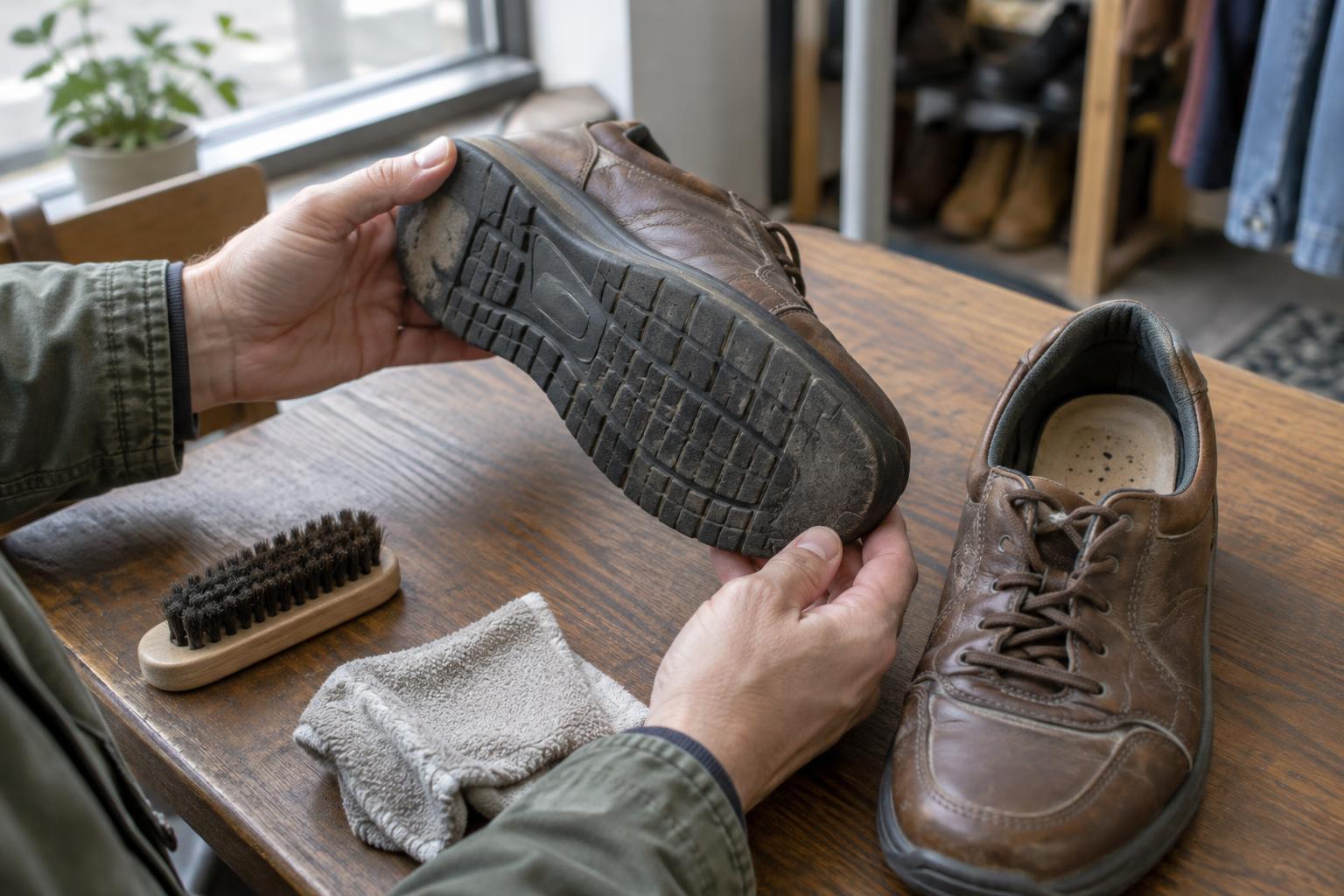
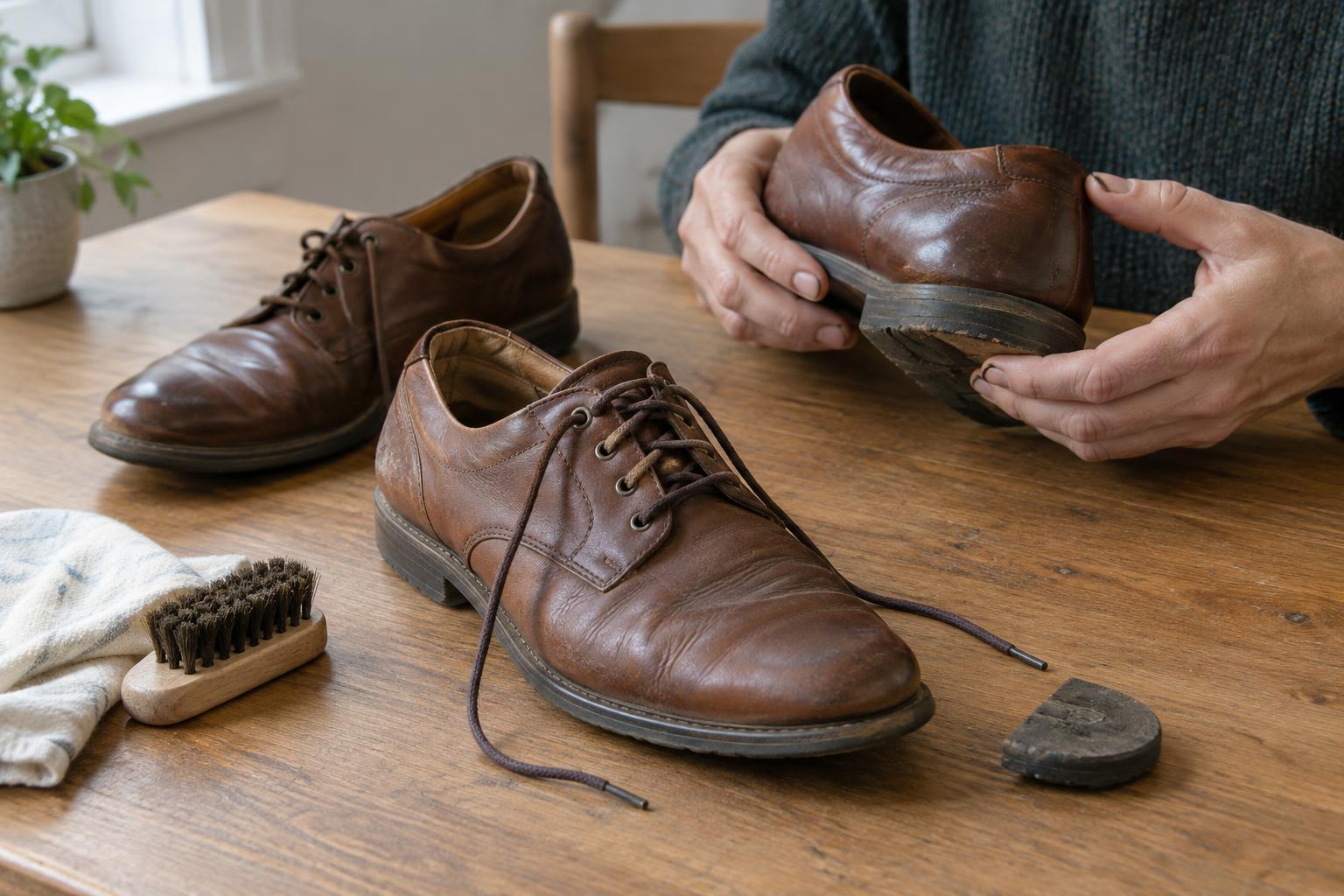
Before reaching for glue or deciding to replace a pair, look at where the wear is happening. Check the uppers, seams, soles, heels and inside lining. Bend each shoe gently and look for gaps where the upper meets the sole. Set the shoes on a flat surface to see whether the heels sit evenly. If the shoes are wet or muddy, let them dry and clean them first; dirt can hide damage and make a repair harder to assess.
Ask whether the problem is cosmetic, affects comfort or changes how the shoe supports your foot. A scuff is different from a sole that is pulling away under the ball of the foot. If a shoe feels unstable, slips unexpectedly or has a sharp part exposed, stop wearing it until the problem is fixed. Continuing to walk in it can make a small repair more difficult.
Good fixes to try at home
Start with parts that are easy to replace. Fresh laces can make shoes easier to fasten securely, while replacement insoles may improve comfort when the original ones are flattened or worn. Check that a new insole does not make the fit too tight. For shoes with removable insoles, take the old pair along when shopping so you can compare shape and thickness.
Minor surface wear is often manageable, too. Brush away dry dirt, then use a cleaner suited to the shoe material, testing it first on a less visible spot. Leather conditioner or polish may soften the look of light scuffs on suitable leather finishes. Fabric and suede need different care, so avoid treating every upper the same way. Allow shoes to dry away from direct heat, which can damage some materials.
A small section of trim or a lightly lifted edge may be a candidate for shoe adhesive if the surrounding material is sound. Follow the product directions, work in a ventilated space and allow the full curing time before wearing the shoes. Do not use glue to disguise extensive separation, a moving heel or a sole that must flex across a large area. A quick patch in those places may fail when you are walking.
Repairs better left to a cobbler
A cobbler is a useful next stop when the repair needs tools, durable materials or precise alignment. Depending on the shoe’s construction, they may be able to replace worn heel tips, add a protective sole layer, restitch a seam or secure a separating sole. Broken zippers, loose hardware and damaged linings may also be worth asking about. Not every shoe can be repaired in the same way, so describe the problem and let the repairer inspect the pair.
Pay particular attention to uneven wear. If one heel has worn down far more than the other, or the shoe tilts when placed on a level surface, replacing a heel tip alone may not solve the issue. Deep cracks in a sole, crumbling material or an upper that has torn away from its attachment point can limit what a repair will achieve. A cobbler can explain whether a fix is likely to hold up for the way you use the shoes.
Bring both shoes, even if only one looks damaged. Their wear patterns provide useful context, and a repairer can check whether matching work is needed to keep the pair feeling consistent. If the shoes are needed for daily wear, ask how long the repair will take before leaving them.
Decide whether repair makes sense
The best repair is one that returns a pair to comfortable, dependable use. Consider the overall condition: a sturdy shoe with a worn heel tip is a different prospect from a pair whose uppers, lining and soles are all failing. Fit matters as much as condition. Repairing shoes that have always pinched or slipped may only preserve a problem you do not enjoy wearing.
Ask what the repair would involve, what it would cost and what limitations would remain. Compare that with how often you expect to wear the shoes, rather than judging by what you originally paid. Sentimental value can matter, too, but it helps to be clear about whether you want wearable shoes or an item to keep. There is no need to repair every pair at any cost; the goal is to avoid discarding useful footwear when a sensible fix is available.
Make the next repair easier
Small habits can slow wear and make damage easier to catch. Remove mud and grit, let damp shoes dry thoroughly between wears when possible, and store them where they will not be crushed. Use a shoehorn if you tend to flatten the back of a shoe while putting it on. Check heel tips and sole edges occasionally rather than waiting until the underlying structure is exposed.
Keep spare laces and a note of any care products that work for your shoes. When a seam opens or a sole begins to lift, deal with it promptly and avoid wearing the pair until you know it is secure. Repair is not about making every shoe last forever. It is a way to get more use from the pairs that still fit, function and deserve a place by the door.