Start with the job the shoes need to do
A secondhand pair is only a bargain if you will wear it. Before browsing, decide where the shoes will be used: occasional events, daily walking, work, or wet weather. Shoes for regular use deserve a closer inspection than a pair you expect to wear briefly. Know your usual size, but do not rely on the number printed inside. Brands and styles fit differently, and a previous owner may have changed the shape of the upper.
If you are shopping in person, bring the type of socks you would normally wear with the shoes. For an online listing, look for clear photos of both shoes from above, below, behind, and inside. Ask for those views if they are missing. Photos cannot tell you everything about fit or odor, so factor that uncertainty into your decision.
Read the soles for wear and repair needs
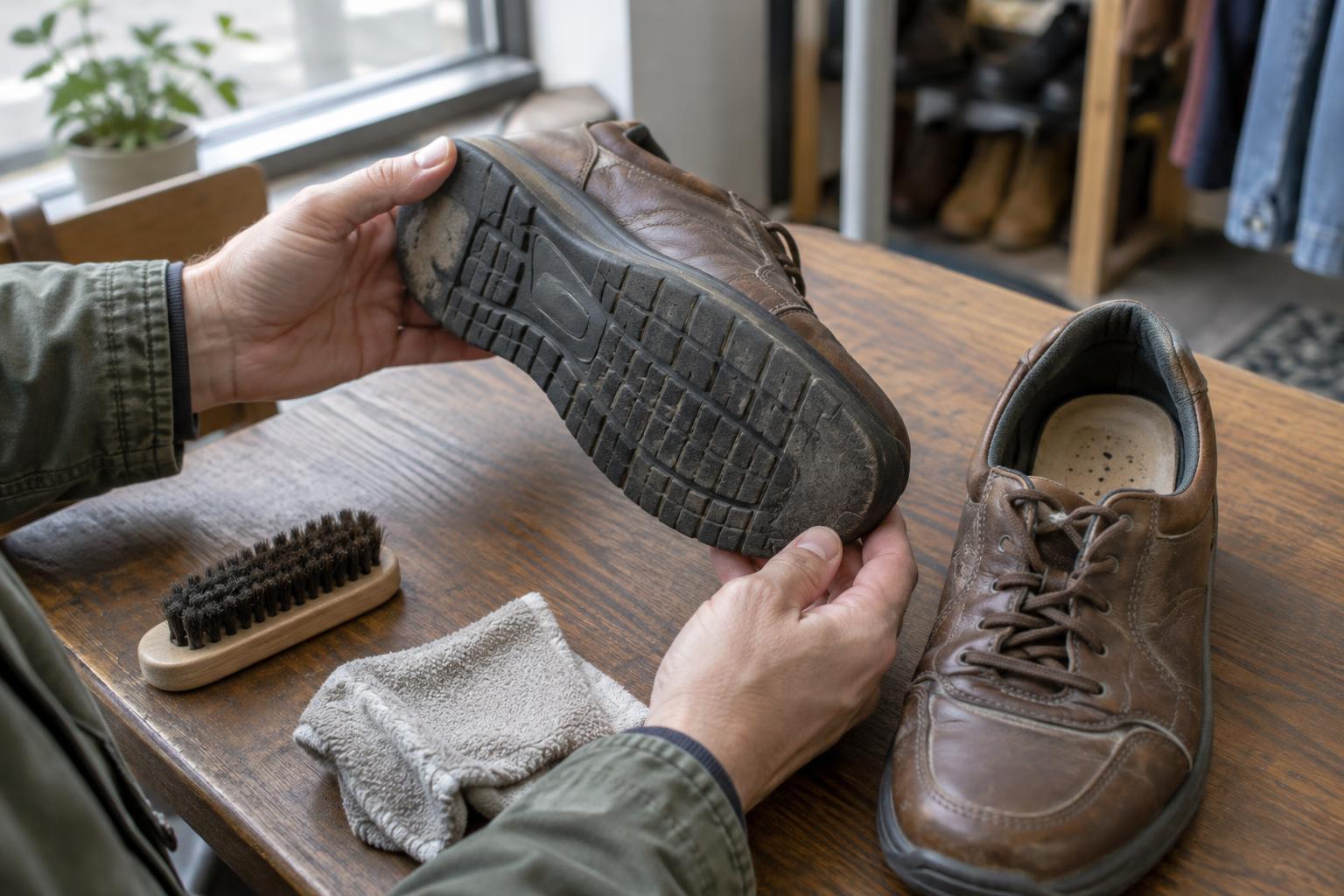
Turn each shoe over and compare the tread. Even wear with plenty of material remaining is a better sign than a heel worn sharply on one edge or a smooth patch under the ball of the foot. Check both shoes: one may have far more wear than the other. Gently flex the forefoot to look for cracks, and inspect the seam or join where the sole meets the upper. Gaps, crumbling material, or peeling adhesive may mean the shoes need repair before use.
Set the pair on a level surface and look at it from behind. Do the heels stand reasonably straight, or does one lean noticeably? Press the heel area and sole with your hands to check for loose parts or spots that feel unusually thin. Some dress shoes and boots can be resoled, while many lightweight shoes are harder to repair. If repair is part of your plan, check what a local repair shop can do before buying rather than assuming every sole can be replaced.
Check fit and remaining support
Inside the shoes, look for deep impressions in the footbed, compressed lining, or a heel cup that has lost its shape. Removable insoles can sometimes be replaced, but a new insole will not fix a badly worn sole or an upper that no longer holds your foot securely. Feel for hard ridges, exposed seams, and rough spots that may rub. Compare the left and right shoes for changes in shape.
Try on both shoes and take more than a few steps if the seller permits it. Your toes should have room, your heels should not slip excessively, and the shoes should not pinch or force your feet into an uncomfortable position. Pay attention to how they feel rather than hoping they will soften later. For footwear you plan to rely on for long walks or demanding activity, substantial wear is a stronger reason to pass.
Inspect the inside and plan a sensible clean
Look into the toe and heel areas for stains, damaged lining, trapped dirt, or visible growth. A strong persistent odor, dampness, or signs of mold are good reasons to leave a pair behind. Check whether the material can be cleaned in a way you are comfortable with: smooth leather, canvas, suede, and mixed materials need different care. Not every shoe can be washed or soaked without damage.
Once home, remove loose dirt, clean the shoes according to their materials, and let them dry thoroughly in a well-ventilated place. If the insoles are removable, take them out to inspect and clean them separately, or replace them if suitable replacements fit. Follow product directions for any cleaner you use; a quick wipe does not guarantee that shoes are fully sanitized. If you have a foot condition or particular hygiene concern, it may be simpler to choose another pair.
Make the final decision about use, not just price
Before paying, add up the likely work: cleaning, replacement laces or insoles, and any repair the shoes need. Then ask whether you would still choose this pair at that total cost. Cosmetic scuffs can be acceptable, especially on shoes meant for occasional wear. A poor fit, failing sole, or odor you cannot comfortably address is less easy to overlook.
Buying secondhand can keep a usable pair in circulation, but passing on the wrong shoes is a thoughtful choice too. The best find is one you can clean, wear comfortably, and maintain—not merely one with a low price tag.