Start with the setting and the seller
A secondhand sofa or armchair can offer plenty of useful life, but upholstery is harder to assess than a wooden table. Fabric can conceal spills, padding can hold odors, and seams offer places for pests to hide. Plan enough time to inspect the whole piece rather than deciding from a photograph or a quick glance.
Ask whether the furniture has been kept indoors and whether the seller knows of any spills, smoke exposure, pet odors, or pest problems. An answer is helpful context, not a substitute for checking yourself. If possible, view the piece in good light before paying, and ask permission before removing cushions or lifting it to inspect underneath. A seller who cannot accommodate a thorough look may simply be in a hurry, but you can still decide that the uncertainty is too much for you.
Check odors before you get used to them
Pause near the furniture when you first enter the room. Notice whether you smell smoke, fragrance, dampness, pet odor, or a sour or musty scent. Then smell the cushions, arms, back, and underside individually. Odors may be stronger where fabric meets padding or where a spill soaked through. Heavy perfume or deodorizer is not proof of a problem, but it can make an underlying smell harder to judge.
Think about your own tolerance and the space where the piece will go. Airing out and surface cleaning may help a mild stale smell, but persistent odors embedded in foam or batting can be difficult to remove. If you would be unhappy living with the smell as it is, do not buy on the assumption that one cleaning session will fix it.
Look beyond the visible fabric
Examine the seat, arms, back, and any removable cushions in bright light. Lift cushions and check both sides, the platform beneath them, piping, seams, and creases. Look for discoloration, rings around old spills, sticky areas, worn fabric, and stains that reappear on the underside. Run a hand over the upholstery to feel for dampness or stiff patches, provided the seller is comfortable with a hands-on inspection.
A small mark on a removable, washable cover may be manageable. A large stain that has reached the padding is a different commitment. Before counting on a cleaning method, check the care label if there is one; some fabrics should not be cleaned with water. Even when a method appears suitable, test it in an inconspicuous spot. Include the likely cost and effort of cleaning, replacement covers, or reupholstery in your decision.
Inspect seams and the frame for pest signs
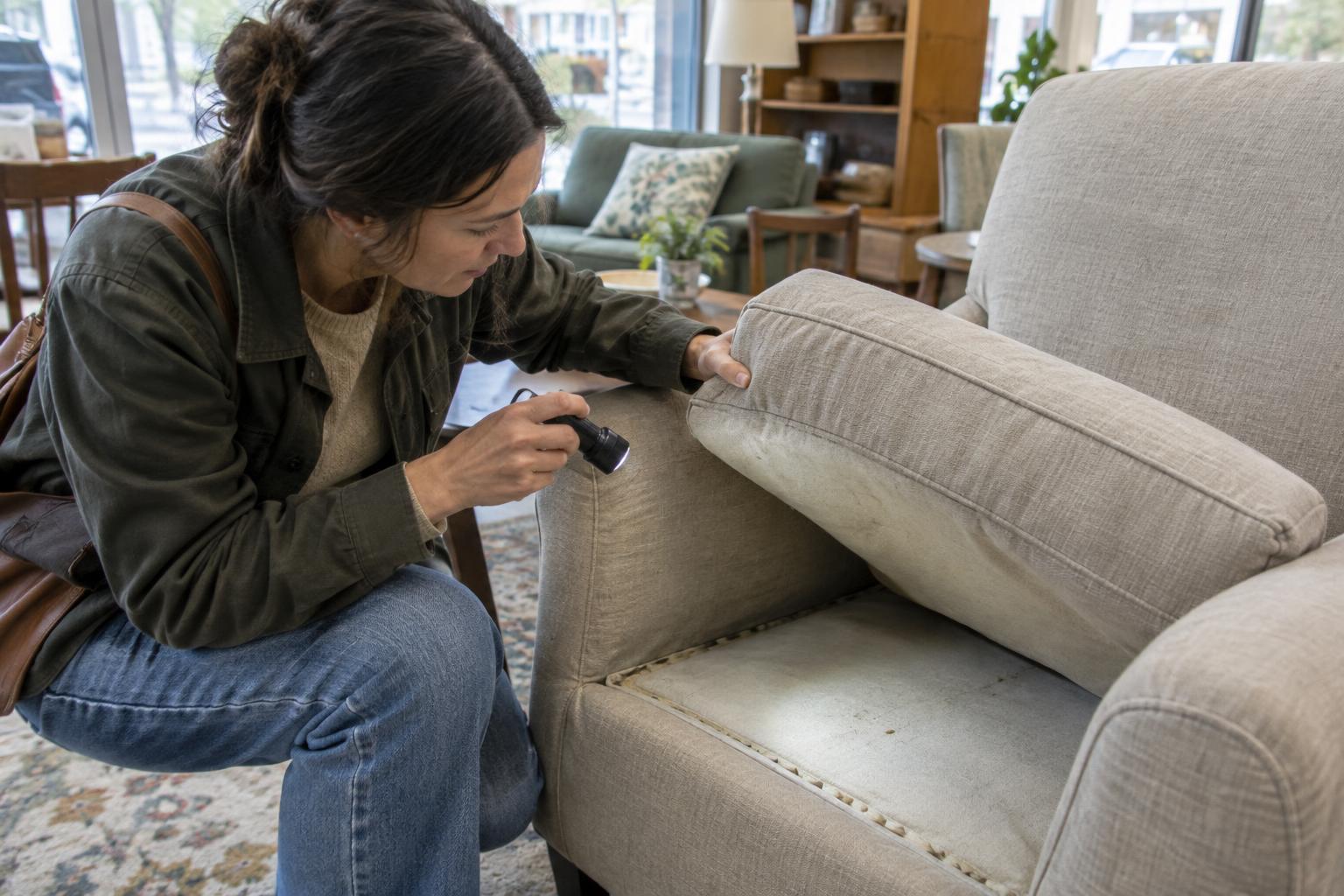
Use a flashlight to check seams, tufts, cushion zippers, the spaces where arms meet the seat, and the fabric or dust cover underneath. Look for live insects, shed skins, small pale eggs, or clusters of dark spots. These can be signs of a pest problem, though marks alone may have other causes and identifying an insect can be difficult. Also check for evidence of other pests, such as droppings or gnawed material.
Do not assume that a clean-looking seat means the entire piece is clear. If you find insects or suspicious signs that you cannot confidently explain, the simplest option is to pass. Buying the item and trying to solve a possible infestation at home can create much more work than finding another chair or sofa. Avoid spraying an uncertain find with pesticides as a shortcut; products and treatments have specific directions and may not be appropriate for upholstery.
Make the decision before loading it
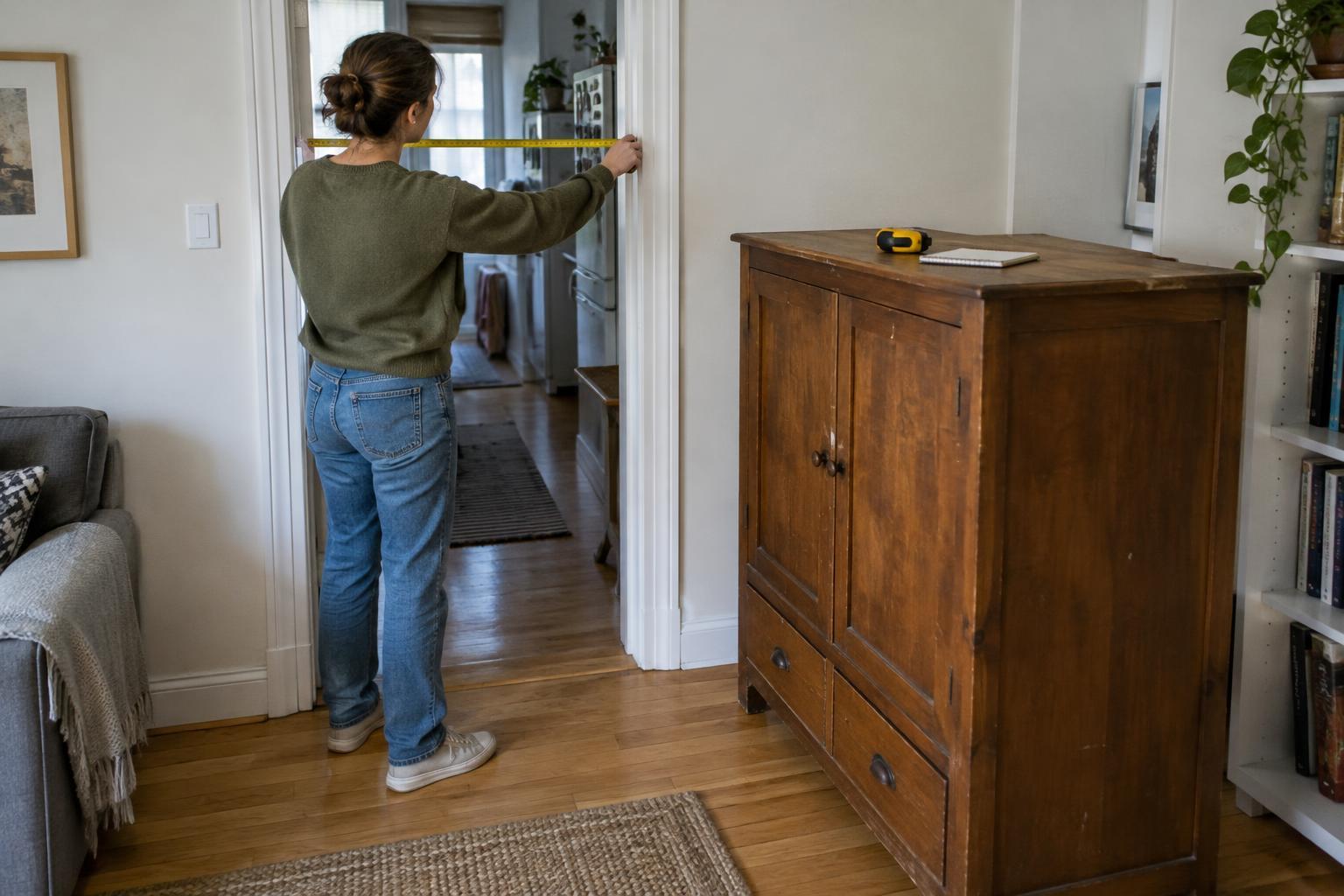
Finish with a practical check: sit on the piece, listen for creaks, and see whether the cushions support you evenly. Inspect the legs and frame for looseness, and measure the furniture and your doorways before arranging transport. A low asking price is less appealing if the piece needs extensive cleaning, repairs, or a difficult delivery.
If you choose to buy, keep it covered during transport so it stays clean, then inspect it again before placing it in its final spot. Vacuum accessible crevices and follow the fabric’s care guidance for any further cleaning. If the inspection leaves you uneasy about odors, stains, or pests, walking away is a sound secondhand-shopping decision. The useful find is the one you can bring home with confidence, not merely the one you can bring home cheaply.